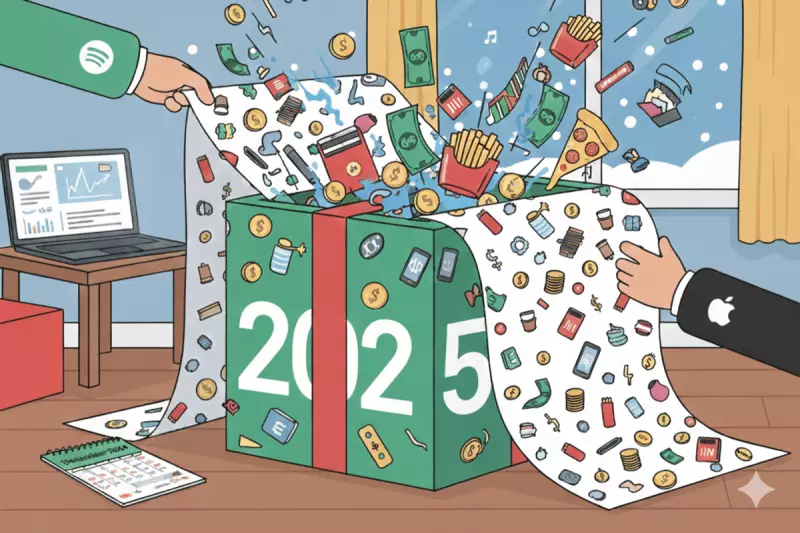
As 2025 draws to a close, a new corporate ritual has cemented itself alongside mince pies and carol singing: the annual data 'wrap'. What began with Spotify Wrapped has exploded into a deluge of unsolicited year-in-review summaries from banks, food delivery apps, and even supermarkets, leaving many feeling over-exposed and underwhelmed.
The Unstoppable Rise of 'Wrapification'
This year, Spotify Wrapped achieved a staggering 200 million engaged users within just 24 hours of its launch, marking a 19 per cent increase from 2024. The feature, which analyses a user's annual listening habits, has become a festive fixture. At City AM's offices, the release prompted a familiar frenzy as colleagues compared their musical tastes—though Deputy Comment Editor Anna Moloney notes her own results, featuring a 'listening age' of 65 and top artists Taylor Swift and ABBA, gave her pause.
However, the phenomenon is no longer confined to music. December now brings a 'whole cavalry of brand data wraps' charging from all corners of digital life. Strava, Deliveroo, YouTube, Apple Photos, and even the Tesco Clubcard app now offer their own versions. The result is a month where opening any app risks confronting a cheerful slideshow of one's own consumption, from countless 'al desko' meal deals to nostalgic photos of former partners set to festive tunes.

The trend was so pervasive it was satirised on Saturday Night Live with a sketch about a fictional Uber Eats Wrapped, where a user faced their chicken nugget consumption. Remarkably, Uber launched the real feature just a day later.
A Sisyphean Loop of Our Own Making
But what do we truly gain from these data breakdowns? For Moloney, the value is dubious. Spotify Wrapped first shames her 'pedestrian' tastes, then reinforces them by creating a playlist of her most-played songs. This playlist, inevitably consisting of favourites, then dictates her listening for the coming year, ensuring next year's Wrapped is nearly identical.
This creates a 'Sisyphean Tay Tay listening loop', trapping users in their own algorithmic echo chambers rather than encouraging exploration. The experience with financial apps can feel even more invasive. When Lloyds Bank offered a spending review, Moloney's instinct was to 'hurl the device across the room', especially with a curious partner looking on.
Seeking an Unwrapped Future
The plea for 2026 is simple: leave the year unwrapped. The constant reflection, packaged as festive fun, often feels less like a gift and more like a corporate intrusion into private habits. The author argues for letting the past stay in the past, freeing us from the cycle of data-driven self-scrutiny that now defines December.
In other festive observations, Moloney highlights unique London holiday highlights. These include a magnificent, medium-sized tuna centrepiece at the Mandarin Oriental Mayfair's party—so large it was mistaken for a sculpture—and the enduring joy of Dickens' A Christmas Carol, particularly the line 'And Tiny Tim – who did NOT die!'. She recommends productions at The Old Vic and The Lost Estate's immersive dining experience, even in the post-Christmas 'Betwixtmas' period.
Finally, returning from a ski trip to Obertauern in Austria—a resort famous for featuring in The Beatles' film Help!—Moloney offers a top tip for nervous skiers: professional lessons make a world of difference. It was a revelation on her fourth skiing outing, proving sometimes the simplest solution is the best.