

Leicester Square's 'Disneyland Paris' LED Advertising Plan Rejected by Westminster Council
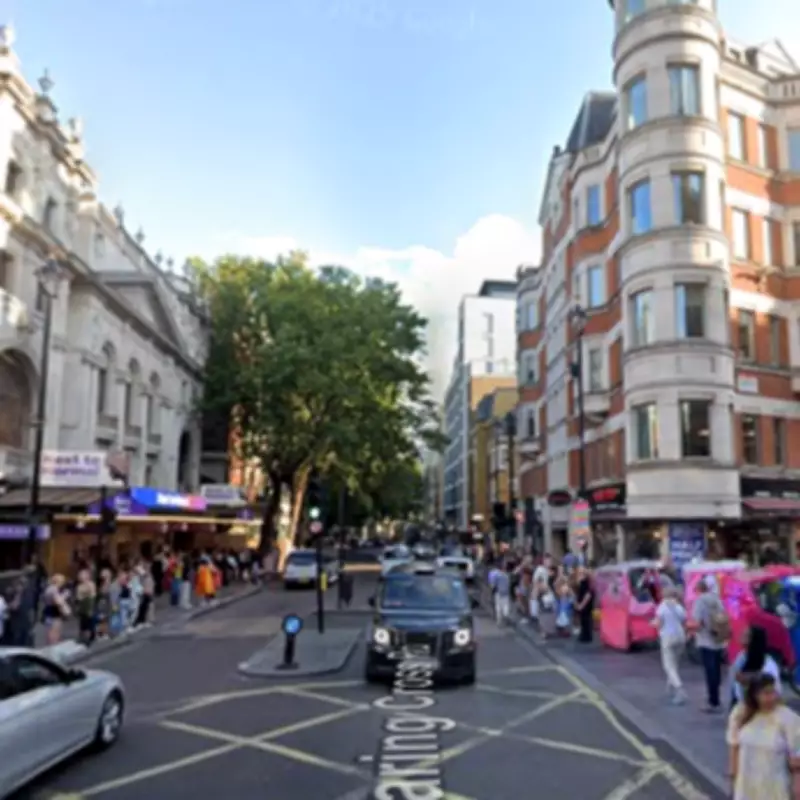
Plans for what were described as "excessive" LED advertising screens in London's Leicester Square have been formally refused by Westminster City Council's planning sub-committee. The proposal, which would have installed five continuous bright illuminated bands across the building at 39 Charing Cross Road, was criticized as being more suited to a theme park than the historic central London location.
Conservation Concerns and Visual Impact
The application by Banner Holdings Limited sought to place LED screens across several floors of the prominent building at the junction of Charing Cross Road and Cranbourne Street. However, the sub-committee ruled that the proposal would harm the character of the Leicester Square Conservation Area, where special consideration must be given to preserving or enhancing the area's appearance.
Council Case Officer Sebastian Knox recommended refusal, stating the advertising was on an "excessive scale." The draft decision letter emphasized that the screens would damage the appearance of both the building and the wider area, failing to maintain the conservation area's character and harming the setting of the Grade II listed Hippodrome.

Divergent Views on Entertainment District Advertising
During the sub-committee meeting, Chair Councillor Patrick Lilley famously remarked that the LED screens "would be more fitting for Disneyland Paris." This sentiment was echoed by objector Michael Riley, who has visual processing difficulties and argued the bright lights would create overstimulation, potentially making Leicester Square a "no-go zone" for thousands with similar conditions.
In contrast, Ward Councillor for St James's, Councillor Louise Hyams, supported the proposal, stating that Leicester Square's position as the center of London's entertainment district made it the "perfect location" for such advertising. Meanwhile, Henry Squire from Squire and Partner Architects claimed the signage would support local businesses and enhance the building's appearance in keeping with the area's character.
Planning Arguments and Final Decision
The planning application, represented by SM Planning Associate James Dawe, argued that the proposed advertisements were well-designed and preserved the site's contribution to the conservation area without harming amenity or public safety. Dawe emphasized there was no conflict with relevant development plan policies and respectfully requested consent be granted.
Despite these arguments, the sub-committee ultimately refused the advertisement consent at their meeting last Tuesday (March 10). The decision highlights ongoing tensions between commercial development and heritage preservation in one of London's most iconic public spaces, setting a precedent for future advertising proposals in conservation areas across the capital.






