

Air Canada Chief Executive Announces Departure Following Language Controversy
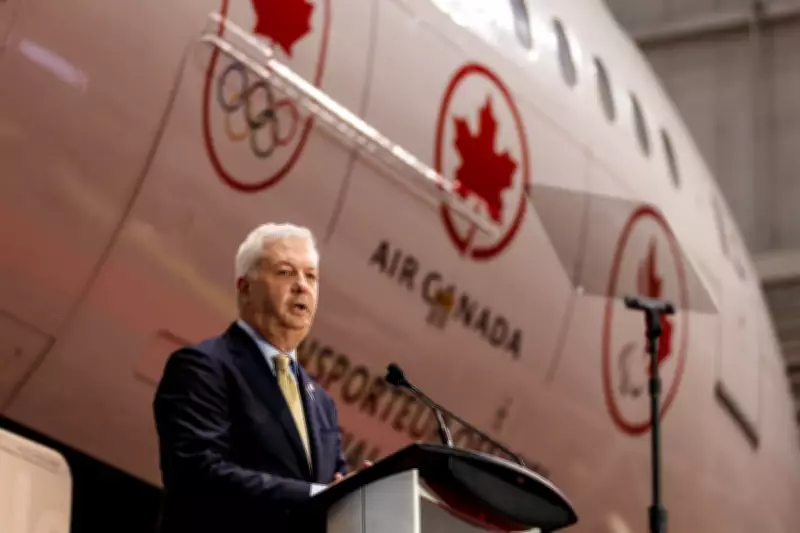
Michael Rousseau, the President and CEO of Air Canada, will step down from his leadership role after facing widespread backlash for a video tribute addressing a fatal plane crash that featured minimal French language content. The airline confirmed on Monday that Rousseau will retire by the end of the third quarter of 2026, though he will continue to lead the company and serve on its board of directors until that time.
Controversial Tribute Sparks National Outrage
The controversy erupted last week following a tragic incident at New York's LaGuardia Airport, where an Air Canada Jazz flight collided with a fire truck on the runway after landing. The collision claimed the lives of two pilots, Antoine Forest and Mackenzie Gunther, both praised by aviation experts for taking actions that potentially saved passengers' lives.
In response to the tragedy, Air Canada released a four-minute condolence video featuring Rousseau. The executive spoke only two French words throughout the entire presentation - "bonjour" and "merci" - despite the company being headquartered in Montreal, Quebec, where French is both widely spoken and the official language.

Violation of Bilingual Requirements
The incident highlighted significant issues with Air Canada's compliance with Canada's Official Languages Act, which mandates that services be provided in both English and French. The airline's own corporate policy explicitly requires all public communications to be delivered in both official languages.
Prime Minister Mark Carney expressed being "extremely disappointed" by Rousseau's unilingual message, describing it as showing a "lack of compassion" toward the crash victims and their families. The criticism was particularly pointed given that pilot Antoine Forest was francophone, as were several passengers aboard the flight.
History of Language Controversies
This was not Rousseau's first encounter with language-related criticism. In 2021, he faced significant backlash for delivering a high-profile speech in Quebec entirely in English. At that time, Rousseau responded to reporters by noting he had lived in Montreal for 14 years and suggesting it was a "testament to the city" that he hadn't needed to learn French.
Despite promising to take French courses and reportedly spending 300 hours studying the language, Rousseau acknowledged in a subsequent statement that he remained "unable to express myself adequately in French." He apologized for how his "inability to speak French" had "diverted attention from the profound grief of the families" affected by the LaGuardia crash.
Political and Public Reaction
The controversy quickly escalated beyond public criticism. By March 27, the office of the commissioner of official languages had received more than 2,000 formal complaints regarding the incident. In Quebec, where lawmakers have taken legislative steps to protect the French language from perceived threats, politicians overwhelmingly passed a motion calling for Rousseau's resignation.
Online commentary added to the firestorm, with one social media user noting incredulously: "The Air Canada CEO has lived in Montréal for decades, and he knows less French than a literal POLAR BEAR," referencing a recent animal transfer where a French-speaking trainer accompanied a bear from Quebec to Calgary to help with adjustment.
Broader Implications for Corporate Leadership
The incident raises important questions about corporate leadership in bilingual nations and the expectations placed on executives of major national institutions. Air Canada, as Canada's largest airline and a company headquartered in Quebec's largest city, faces particular scrutiny regarding its language policies and cultural sensitivity.
Rousseau's planned departure marks a significant leadership transition for the airline as it navigates both the aftermath of the LaGuardia tragedy and the ongoing challenges of operating in Canada's unique bilingual context. The company must now address both its internal language policies and its public communications strategy as it prepares for new leadership in the coming years.






