

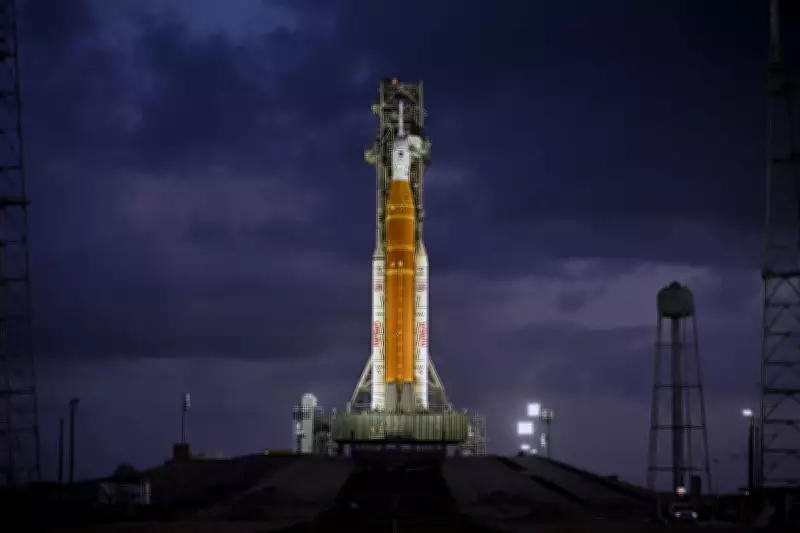
Artemis II Launch: A Historic Return to Lunar Exploration
NASA engineers are making final preparations for the Space Launch System (SLS) rocket at Complex 39B in Florida, as crowds gather for the highly anticipated Artemis II mission. This fully crewed rocket launch, scheduled for Wednesday evening, represents the first time humans will leave lower Earth orbit since the Apollo 17 mission in December 1972.
Milestones and Diversity in Space Exploration
The Artemis II crew, consisting of three Americans and one Canadian, will embark on a 10-day test flight that includes significant milestones. NASA astronauts Christina Koch and Victor Glover will become the first woman and first person of color to fly into cislunar space, while Canadian Space Agency astronaut Jeremy Hansen will be the first non-American to achieve this feat. The mission aims to break distance records, potentially surpassing the Apollo 13 mission's mark of 248,655 miles from Earth.
In pre-flight interviews, Koch and Glover emphasized the broader significance of their roles. "If we're not going for all and by all, we're not truly answering all of humanity's call to explore," Koch stated. Glover added, "I hope we are pushing the other direction, that one day we don't have to talk about these firsts." This comes amid changes in NASA's public recognition of diversity efforts following recent political shifts.

Technical Details and Mission Objectives
The SLS rocket and Orion capsule, standing at 322 feet tall, will undergo a staged ascent. NASA has addressed previous technical issues, including a heat-shield problem and a helium leak, with an 80% chance of favorable weather for launch. If delayed, backup windows are available over the following five nights.
Key mission objectives include:
- Photographing the moon's south pole from 4,000 to 6,000 miles high for future landing sites.
- Testing hardware and life-support systems essential for upcoming Artemis missions.
- Monitoring astronaut health in microgravity and increased radiation environments.
Commander Reid Wiseman highlighted the challenges of close-quarters living, noting, "Like clicking a pen cap can annoy somebody over 10 days in a small capsule." The crew will spend their journey in a capsule with an interior volume similar to a small camper van.
Future Plans and Economic Impact
Artemis II serves as a foundation for NASA's ambitious plans, including a proposed $20 billion moon base by the end of the decade. Despite delays and budget overruns, NASA Administrator Jared Isaacman affirmed, "When we arrive to the moon, we're there to stay." The excitement in Florida is palpable, with hotels in Cape Canaveral and Cocoa Beach fully booked due to spring breakers and launch spectators.
This mission not only reignites lunar exploration but also sets the stage for future human landings, with Artemis IV scheduled for 2028. As NASA pushes the boundaries of space travel, the world watches with anticipation for this historic step back to the moon.






