

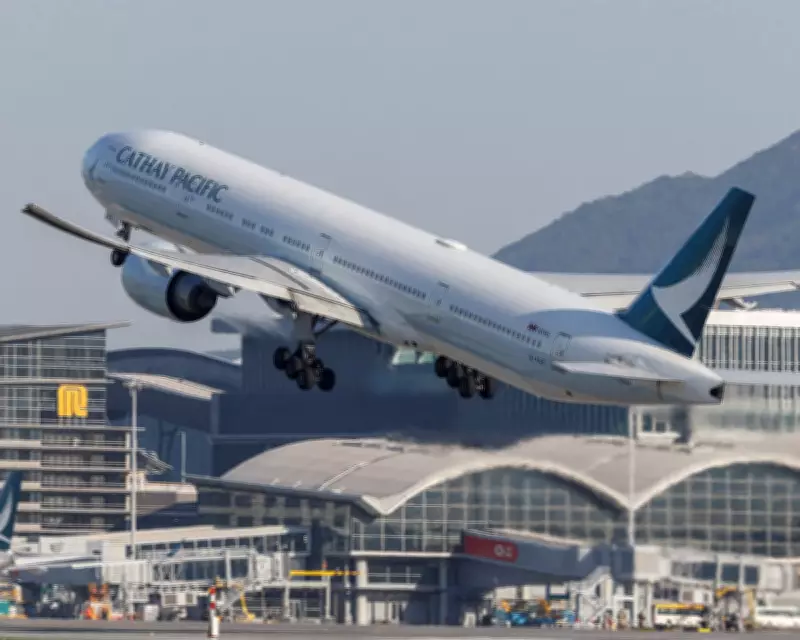
Asian Airlines Implement Fare Hikes as Travel Patterns Shift from Middle East to Asian Stopovers
The ongoing conflict in the Middle East is triggering significant disruptions across global energy markets, with ripple effects now directly impacting air travel costs and consumer behavior in Australia. Major Asian carriers including Cathay Pacific, AirAsia, and Thai Airways have officially joined Australian and New Zealand airlines such as Qantas and Air New Zealand in raising airfares. This strategic move comes as international travelers increasingly opt for stopover destinations in Asia, avoiding traditional Middle Eastern hubs due to security concerns and regional instability.
Five Critical Ways the Middle East Conflict Is Reshaping the Australian Economy
The "largest supply disruption in history" in global oil markets, stemming from the US-Israeli military actions against Iran and subsequent tensions in the Strait of Hormuz, is producing tangible consequences far beyond mere petrol price fluctuations. While initial market reactions were subdued under assumptions of a brief conflict, prolonged uncertainty over trade resumption through this crucial maritime chokepoint is now driving broader economic adjustments.
1. Accelerated Adoption of Electric Vehicles
Australia was already experiencing a robust transition toward electrified transportation before the Middle East conflict intensified. However, recent spikes in petrol prices have dramatically accelerated this trend. February automotive data reveals new battery electric vehicle sales are occurring at nearly double the rate compared to the previous year.

James Voortman, Chief Executive of the Australian Automotive Dealer Association, confirms that dealerships are reporting substantially increased EV sales since petrol prices began climbing. "Most dealers anticipate an exceptionally strong March for EV sales," Voortman states. He attributes this surge to previously hesitant consumers making definitive purchase decisions. "Numerous fence-sitters are now decisively coming off the fence," he explains. The Tesla Model Y and BYD Sealion 7 currently lead Australian EV sales, with hybrids and electric vehicles now constituting approximately one-third of all new car purchases nationwide.
2. Mounting Pressure on Mortgage Holders
As oil prices represent the single most significant contributor to global inflation—adding costs to virtually all goods and services—interest rate expectations are shifting rapidly. The ASX rate tracker now indicates a 66% probability of an imminent rate hike, a substantial increase from just 22% a week ago when a shorter conflict seemed likely.
Australia's four major banks unanimously predict a rate increase, followed by another potential hike in May. According to analysis by Canstar, if these forecasts materialize, mortgage holders with an $800,000 debt could face an additional $363 in monthly repayments by May compared to the beginning of the year.
Sally Tindall, Canstar's Data Insights Director, cautions that the longer-term outlook remains highly uncertain. "The cash rate may indeed rise in coming weeks, but if the conflict's fallout severely impacts the Australian economy and job market, the Reserve Bank could be compelled to revert to rate cuts in the relatively near future," Tindall observes.
3. Escalating Costs for Travel, Freight, and Dining
Nearly all forms of transportation and freight are becoming more expensive, with these increased costs inevitably passed on to consumers. This affects everything from airline tickets to parcel delivery services, with many customers already noticing additional surcharges on their invoices.
Geelong-based D&D Worldwide Logistics warns Australian businesses to prepare for a new wave of freight cost increases. "Road transport operators have confirmed fuel levy adjustments, and more carriers across ocean and air freight are expected to follow as global diesel and jet fuel prices continue their upward trajectory, driven directly by the ongoing Middle East conflict," the logistics firm reports.

Jet fuel prices have now reached levels not seen since early 2022 following Russia's invasion of Ukraine. If the Middle East conflict becomes protracted, rising fuel and fertilizer expenses will further translate into higher food prices for consumers. Australian farmers are confronting soaring costs for urea, an essential fertilizer ingredient, which has increased by over 30% in the past month according to Trading Economics. The Middle East, a major urea producer, has seen prices spike dramatically in recent weeks. This nitrogen fertilizer is extensively used across Australia for vegetables, canola, and cereal crops including wheat and barley.
4. Potential Shift Toward Recycled Plastics
The cost of plastic is fundamentally connected to global crude oil prices, since the resins used to manufacture packaging materials are petroleum derivatives. With Australia importing over 90% of its plastic as either resins or finished packaging, sustained oil market disruptions will inevitably lead manufacturers to pass higher input costs to food producers and retailers.
According to Roelof Vogel, a circular economy researcher with extensive global packaging industry experience, this market disruption could make recycled plastic a more viable alternative for Australian businesses. Currently, the industry considers recycled plastic prohibitively expensive, with the Australian Council of Recycling noting production costs can be 50% higher than imported virgin plastic.
"If we experience a truly sustained long-term increase where oil prices remain elevated, then suddenly recycled plastics begin to appear much more attractive, and that substantial cost difference may no longer be 50%," Vogel explains.
5. Medical and Industrial Helium Shortages
Australia imports helium, a critical industrial gas used to power MRI machines and other essential medical, research, and manufacturing technologies, primarily from Qatar. The Gulf nation produces approximately one-third of the world's helium as a byproduct of liquefied natural gas production. However, Qatar has suspended operations following Iranian strikes on the Ras Laffan Industrial City, where its helium facilities are located.
While the Australian government has stated no immediate helium supply risks are apparent, they continue monitoring potential supply chain disruptions. Professor Dongke Zhang, Director of the University of Western Australia's Centre for Energy, emphasizes that party balloon shortages represent the least concerning aspect of potential helium scarcity.
"Hospitals nationwide universally use helium to service MRI machines and advanced diagnostic equipment, and for operating major research facilities in physics, chemistry, and advanced energy technology," Zhang states.
Australia's sole helium plant in Darwin closed in 2023. A new enterprise, Natural Helium Tasmania, recently obtained exploration licenses and expects to commence operations within eighteen months. Simon Talbot, the company's Commercial Executive, notes helium's pervasive industrial applications: "Balloons represent the crudest form of helium usage. This gas is involved in literally every aspect of daily life, including smartphone manufacturing processes."





