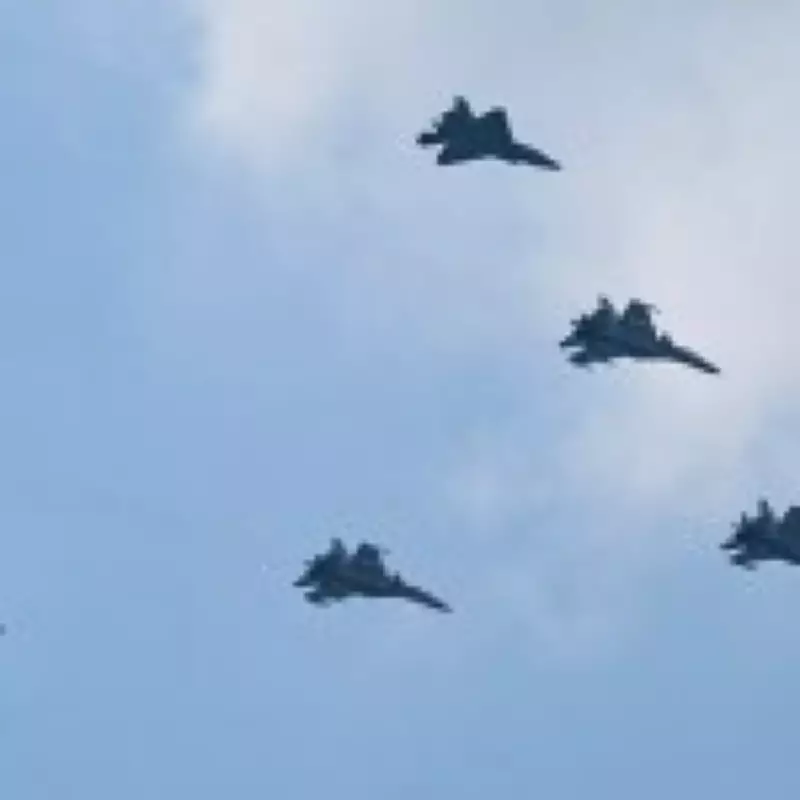
China Imposes Mysterious 40-Day Airspace Restrictions
China has implemented unexplained airspace restrictions across five zones along its northeastern coastline, maintaining these closures for an unprecedented forty-day period without issuing any official justification. The world's second most populous nation announced the restrictions affecting coastal areas, with aviation alerts remaining in force from March 27 through May 6.
Military Implications and Unusual Duration
While Beijing has not disclosed reasons for this sudden aviation decision, analysts believe the extended restrictions suggest potential military preparations in the region. The alerts, formally known as Notice to Air Missions (Notams), typically serve to warn civilian aviation authorities about temporary hazards or military exercises along standard flight paths.
According to the Wall Street Journal, these particular notifications resemble those used during military drills, though previous exercises have never exceeded several days in duration. The current forty-day timeframe represents a significant departure from established patterns.

Geographic Scope and Technical Details
The restricted zones, designated as SFC-UNL with no vertical limitations, effectively create airspace columns extending from ground level to space. The Federal Aviation Authority, the United States aviation regulatory body, indicates these reserved areas span approximately 340 miles from the Yellow Sea to the East China Sea near Shanghai.
Despite these restrictions, current air traffic appears largely unaffected according to flight tracking data from Flightradar24, which shows normal aircraft movement patterns throughout Chinese airspace, including the northeastern region.
Regional Tensions and Expert Analysis
Although the restricted zones do not directly border Taiwan, the extended closures have raised questions about Beijing's strategic intentions. China consistently views Taiwan as a breakaway province and has openly expressed aspirations for eventual reunification with the island territory.
Ray Powell, director of Stanford University's SeaLight maritime tracking project, told the Wall Street Journal: 'What makes this especially notable is the combination of SFC-UNL with an extraordinary 40-day duration—and no announced exercise. That suggests not a discrete exercise but a sustained operational readiness posture—and one that China apparently doesn't feel the need to explain.'
Despite ongoing tensions between China and Taiwan, which currently lack formal diplomatic relations, American intelligence assessments indicate Beijing is not preparing for an immediate invasion of the island. The extended airspace restrictions nevertheless represent an unusual military-aviation development that continues to puzzle international observers.