An Unforgettable Journey Through Time
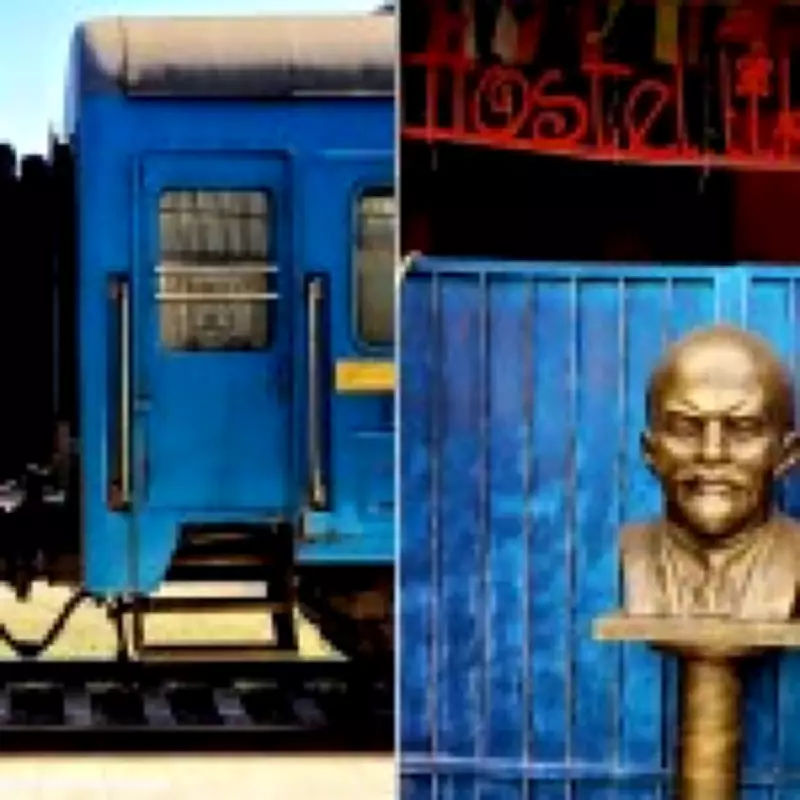
It is the middle of the night, and our train has stopped in Ungheni, a Moldovan city on the border with Romania. Not to let passengers on or off, but because we are on Europe's last Soviet sleeper train, and Moldova's rail network still operates like it did back in the USSR. We are traveling on the Prietenia train, which means 'Friendship train' in Romanian. The two countries are close allies, sharing deep cultural, linguistic, and historical ties. Today, they are particularly friendly, thanks to Moldovan President Maia Sandu's pro-EU government, which seeks protection from Russian threats and alignment with Western Europe. As we rest in our basic but functional cabin, complete with thick, itchy blankets that look suspiciously like surplus from the Gulags, the train is hoisted up, and its wheels are switched out from Romania's standard EU width to wider Soviet gauge tracks.
A Journey Designed for Locals
This journey was never designed for tourists. It is basic, efficient, and certainly not glamorous. It simply exists as it always has, and for locals, it is just a regular train ride. Still, it is a surreal experience that feels like stepping into a time capsule of the former East. We start by taking a Wizz Air flight from Luton to Romania's capital, Bucharest, also known as the 'Paris of the East' for its beautiful buildings, tree-lined boulevards, and swish cafés. Romania is actively promoting tourism, pouring money into accommodation and public transport, and it shows. This is especially noticeable when compared to Moldova, which is considered the least visited and poorest country in Europe. Last year, The Times ranked Bucharest ninth in its roundup of 'the best affordable city breaks in Europe'. In the Old Town, Haussmannian-style architecture dominates, and there is a Belle Époque feel to the place. However, 40 years of communism has also left its mark. Brutalist apartment blocks, some showing signs of significant neglect, juxtapose elegant buildings.
Boarding and Beyond
We board the train in Bucharest, stepping into carriages of the classic ex-Soviet type. We will not reach Chișinău, Moldova's capital, for 14 hours. The wooden panelling shows its age, while the worn carpet has been branded with decades of footprints. But our two-person carriage is warm and cosy, thanks to the perpetually lit coal fire at the front of the train. After a surprisingly good night's sleep, no doubt helped by the copious Bere Chișinău served to us by the barman-cum-head chef, we arrive at our destination.

The 'ugliest capital in Europe' is not everyone's idea of fun. Yet for urban explorers who love dilapidated architecture, visiting abandoned buildings, and seeing nature reclaim inner cities, Chișinău is the ultimate playground. The most prominent example of this is the derelict Observatory of the People's Palace. Once built to 'inspire young Soviet minds through astronomy,' the building is now heavily vandalised and in a state of decay. The dome is a relic of a vanished era. In contrast, locals tell us that 2026 is an exciting time politically for the youth of Moldova, thanks to the president.
A Country That Doesn't Exist
After a few days in Chișinău, it is time to move on. Let the traveller beware: navigating public transport in Moldova takes skill. At the bus stop near the main train station, we are met by multiple white mini buses, known locally as Marshrutkas. These are Moldova's primary form of public transport, operating as shared taxis across the country and on to Transnistria, our next destination. It is exceptionally cheap, but there is no real timetable, and the whole experience is pretty chaotic. Armed with Google Translate, we approach a group of men, who we are told are the bus drivers, and tell them where we want to go. We have to wait until the buses are full before we can leave.

Arriving in Tiraspol, Transnistria's capital, where we are subjected to more border checks, it feels like we are stepping further back in time. Transnistria, or Pridnestrovie as it is called in Moldova, is a breakaway region formed after the fall of the Soviet Union. Internationally, it is recognised as part of Moldova, but technically, it is a country that does not exist. Located between the Dniester River and the Ukrainian border, it has an industrial feel. Just a few short hours are enough to reveal how much we take for granted in the Western world. Transnistria has its own currency, but it is not ratified. Some coins are even plastic. ATMs there do not take Mastercard or Visa, so it is a good job we got cash out before we arrived. There is also not much signal, meaning it is essential to pre-plan your trip on Google Maps and have a list of phrases ready to go in Translate.
We are met by Vlad, our hostel host and tour guide, who takes us exploring the Transnistria way. With him behind the wheel, we start with a local beer tasting before making a pitstop at his mother's house. He needs his toolkit — apparently, in Transnistria, it is OK to break into an abandoned school by removing a boarded-up window with a drill. Later, Vlad takes us for lunch at a canteen where we dine on Borscht, a sour soup made with meat stock, vegetables, and seasonings, and generous helpings of vodka. It is traditional, hearty fare that was the standard dinner for workers across the USSR.
Boarding the sleeper train back to Bucharest, I consider what type of traveller this trip would appeal to. If you do not mind discomfort in exchange for living real-life history, it is a must. It is an opportunity to experience travel as it was in the Soviet era, just as it happened all those years ago. 10/10 recommend for adventurous travellers with an open mind, and who love finding beauty in the mundane.
The Prietenia Train at a Glance
- Wizz Air flies to Bucharest from London Luton from as little as £28. The journey time is 3 hours and 20 minutes.
- The Soviet sleeper train from Bucharest to Chișinău can be booked on the Romanian national train service website or the Moldovan one (it is easier to book on the former).
- Two-bed cabins start from £40 per person. The journey time is 14 hours, with at least 17 stops.