

Unprecedented UK Operation Launched as Iranian Strikes Strand Tens of Thousands
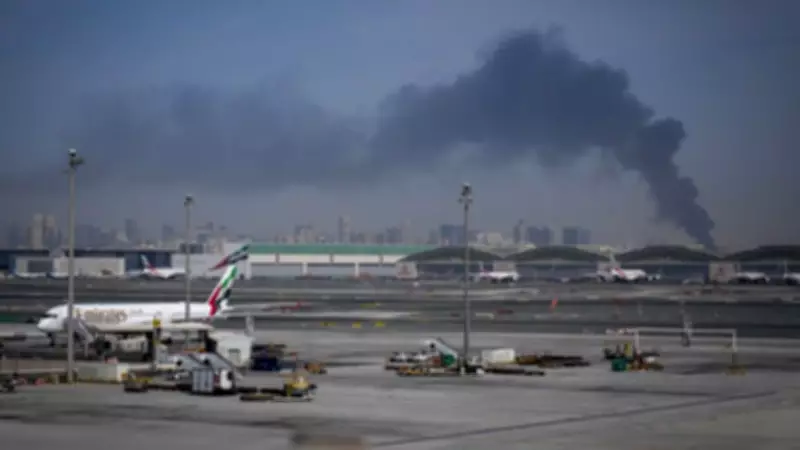
The United Kingdom Foreign Office has initiated an unprecedented consular operation to support approximately 94,000 British citizens stranded across the Middle East following retaliatory Iranian airstrikes that have forced the closure of major international airports, including the world's busiest hub in Dubai and Doha in Qatar. This severe disruption, described as the most significant business interruption in the region since the COVID-19 pandemic, has thrown global travel into chaos with over 3,400 flights cancelled on Sunday alone.
Widespread Airport Closures and Flight Cancellations
Iran launched sustained counterstrikes against military and other targets across the Gulf region in retaliation for US-Israeli attacks that reportedly killed Iran's Supreme Leader, Ali Khamenei. The ongoing rocket fire has compelled authorities to close airspace and ground flights at key airports for a second consecutive day. Beyond Dubai and Doha, disruption has severely impacted airports in Bahrain, Israel, Jordan, Kuwait, the United Arab Emirates, and Saudi Arabia.
Flight tracking service Flightradar24 confirmed the massive scale of cancellations. Aviation analyst Cirium estimates that Emirates, Etihad, and Qatar Airways serve approximately 90,000 passengers daily just through the hubs of Dubai, Abu Dhabi, and Doha. The ripple effects are global, as these airports are critical connection points for international travel. Departure and arrival boards at major UK airports like Heathrow, Gatwick, and Manchester displayed numerous cancelled flights to and from the affected region.

UK Government Response and Evacuation Planning
Prime Minister Keir Starmer stated that around 200,000 British citizens, including residents, tourists, and transit passengers, are currently in the region. Of these, 94,000—primarily in the UAE—have registered their presence on a dedicated online government platform activated after the conflict escalated on Saturday. The Foreign, Commonwealth & Development Office (FCDO) is now managing one of its largest consular cases in recent years, having moved the majority of registered individuals to hotels for safety.
"Over the last two days Iran has launched sustained attacks across the region at countries who did not attack them," Sir Keir said. "They've hit airports and hotels where British citizens are staying. This is clearly a dangerous situation." Officials are actively developing contingency plans for potential evacuation routes should Gulf airspace remain inaccessible. British nationals are currently advised to stay in place, follow local authority instructions, and monitor rapidly changing FCDO travel advice.
Personal Accounts of Stranded Travelers
The human impact of the crisis is stark. Jo Hummel, 43, from the Isle of Wight, was traveling back from Thailand with her husband and two children when their Qatar Airways connecting flight from Doha to London was cancelled. "We touched down into Qatar and people were opening up their phones and there was a national alert coming through in Arabic. We realised something was going on," she recounted. Initially planning to stay at the airport, the family was relocated to a hotel by the airline.
"I had to get them out of bed this morning because drones were exploding in the sky above us and we have big windows. It's quite frightening," Ms. Hummel added. "As a mother, I'm scared out of my wits and trying to keep calm, but also be organised. I don't think anything will leave until it's safe." Similar scenes unfolded globally; in Bali, over 1,600 tourists were stranded after five flights to the Middle East were cancelled or postponed.
Safety Incidents and Travel Advisory Updates
The retaliatory strikes have caused direct casualties and damage. UAE officials reported that four people were injured at Dubai International Airport, while a drone strike at Zayed International Airport in Abu Dhabi resulted in one fatality and seven injuries. An explosion and fire also occurred near the entrance to the Fairmont The Palm hotel in Dubai.

In response, the UK Foreign Office has issued new travel advice, urging against all but essential travel to Bahrain, Israel, Palestine, Qatar, and the United Arab Emirates. The department's statement emphasized, "British nationals in Bahrain, Israel, Palestine, Qatar and United Arab Emirates can register their presence to receive direct updates from the FCDO on the situation in the Middle East. You should continue to follow travel advice and the advice of the local authorities."
Industry Warnings and Long-Term Implications
Travel industry analysts warn that disruptions could persist for days. "For travellers, there's no way to sugarcoat this," said Henry Harteveldt, an analyst with Atmosphere Research Group. "You should prepare for delays or cancellations for the next few days as these attacks evolve and hopefully end." Airlines may be forced to reroute flights around the region, leading to increased travel times, higher fuel costs, and potentially elevated ticket prices.
The duration of the disruption remains uncertain. Historical precedent suggests hostilities could continue; the last joint US-Israeli attacks on Iran resulted in twelve days of continued conflict. As the situation develops, the UK government's massive support operation underscores the scale of the crisis facing tens of thousands of stranded British travelers amid escalating Middle East tensions.





