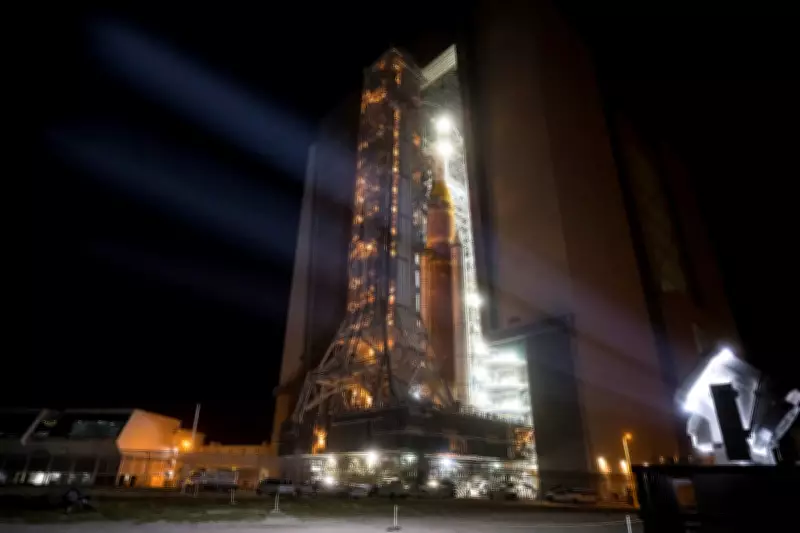
NASA's monumental Space Launch System rocket and Orion spacecraft embarked on a slow, deliberate journey from the Vehicle Assembly Building at the Kennedy Space Center on March 20, 2026. This critical move signals the agency's renewed push toward lunar exploration, as the Artemis II mission prepares for a crewed fly-by of the moon.
Historic Rollout Amid Technical Challenges
For the second time this year, NASA has transported its moon rocket toward the launchpad, targeting a potential liftoff as early as April 1. The 322-foot (98-meter) rocket, mounted on a massive crawler from the Apollo era, began its 4-mile (6.4km) trek overnight, a process expected to take 12 hours but delayed by high winds. This rollout follows significant setbacks, including hydrogen fuel leaks and clogged helium lines, which forced a two-month delay and required the rocket to be returned to the assembly building for repairs in February.
Crew Preparation and Mission Details
The Artemis II crew, comprising three Americans and one Canadian, has entered quarantine in Houston in anticipation of the launch. Their mission involves a high-speed orbit around the moon without landing, followed by a direct return to Earth. Originally scheduled for completion earlier, the delays have heightened the stakes for this precursor to NASA's planned two-person lunar landing in 2028.

Key milestones include:
- Repairs conducted at the launchpad for fuel leaks, while helium line issues necessitated indoor fixes.
- The use of legacy equipment, underscoring NASA's blend of historical and modern spaceflight technology.
- A focus on safety and precision, as this mission marks the first crewed lunar flight since Apollo 17 in 1972.
NASA officials express cautious optimism, emphasizing that successful repairs and favorable conditions could pave the way for a landmark achievement in space exploration. The Artemis program aims to reestablish human presence on the moon, with future missions targeting sustainable lunar operations.