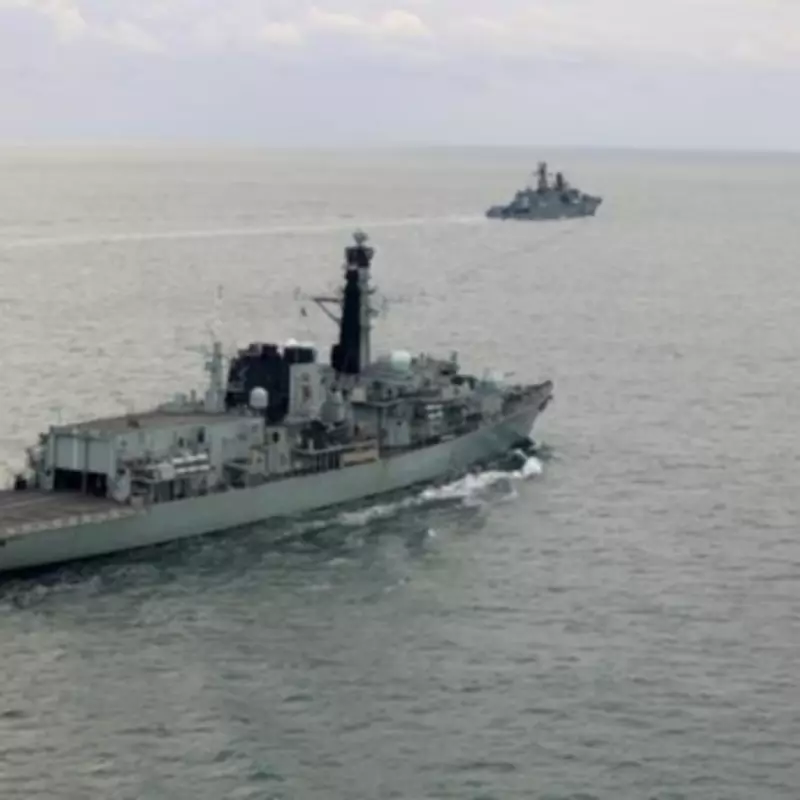
A military base in North West London could soon become the nerve centre of a new multinational naval force, responding to the growing threat from Russia. The UK is rallying allies to train together and defend the seas as part of the Northern Navies Initiative, the head of the Royal Navy has announced.
Statement of Intent Signed
General Sir Gwyn Jenkins revealed that navies from across northern Europe signed a "statement of intent" committing each nation to discuss proposals following a meeting last week. The collective would complement NATO and potentially allow fleets to react more quickly to threats.
The united force would likely be commanded from the Maritime Operations Centre within the Northwood Headquarters, on the outskirts of Hillingdon, the 61-year-old added. Speaking at the Royal United Services Institute (RUSI) think tank, the First Sea Lord said: "We know we have no time to lose, which is why by the end of this year, I want us all to have signed a formal declaration, laying the foundations for what will be a vital and enduring partnership for many years to come."

Sir Gwyn continued: "I aim to create a maritime force that trains, exercises and prepares together. A force designed to fight immediately if required, with real capabilities, real war plans, and real integration."
Details to Be Outlined
Sir Gwyn intends to set out further details on how this could look later this summer. Thus far it has been described as a 'deeper and more evolved' version of the existing UK-led Joint Expeditionary Force (JEF). Created in 2014, the partnership with five Nordic countries, three Baltic states and the Netherlands is designed for rapid response and overseas operations. However, more collective power is now needed to "provide conventional deterrence along our open sea border with Russia", Sir Jenkins said.
Under the 'hybrid navy', nations would be able to substitute and swap equipment, parts and personnel whilst operating common systems and platforms, shared digital networks, logistics and stockpiles.
Rising Russian Incursions
The announcement comes as Russian incursions into British waters jumped by almost a third in the last two years. In 2025 alone, the Royal Navy was required to respond dozens of times in support of homeland defence against Russian Navy surface vessels. However, Moscow's reinvestment in the country's submarine programmes poses the most acute threat, Sir Gwyn said.