

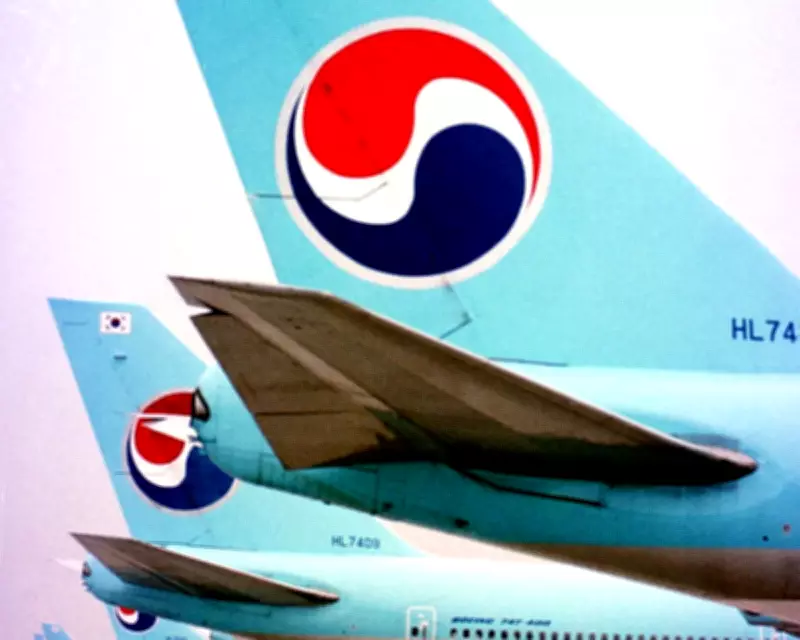
South Korean Airlines Request Jet Fuel Export Redirection Amid Supply Crunch
South Korean airlines have formally asked their government to redirect export-bound jet fuels back to the domestic market, a move that could severely threaten Australian imports of this critical resource. This request comes as the ongoing fuel crisis deepens across Asia, with supply concerns escalating due to the Middle East conflict.
Potential Impact on Australian Jet Fuel Imports
If South Korea proceeds with export restrictions, it could cut off two of Australia's largest sources of jet fuel. Australia relies heavily on foreign jet fuel, importing approximately 80% of the roughly 10 billion liters consumed annually. South Korea currently supplies about 18% of Australia's total jet fuel imports, while China provides around 32%. With China already flagging potential export restrictions, the combined uncertainty affects nearly 4 billion liters of fuel for Australia.
Chris Bowen, the Australian energy minister, has indicated that Chinese jet fuel supplies are assured until late April or early May, but the situation remains volatile. South Korea refines imported Middle Eastern crude oil into petroleum products for export, positioning it as a key fuel supplier in the Asia-Pacific region. Any disruption in these exports would deliver a significant blow to Australia's aviation industry, which is already grappling with rising costs.

Regional Aviation Industry Under Pressure
The request from South Korean airlines highlights mounting pressures across the region. Korean carriers are facing surging fuel costs and tightening supply conditions. For instance, Vietnam has reportedly notified airlines that jet fuel prices could double or triple at local airports, leading to flight cancellations. Similarly, Japan has warned of possible refuelling restrictions, and the Philippines has declared a national energy emergency, with President Ferdinand Marcos Jr. cautioning that grounding planes is a distinct possibility.
In response, several Korean airlines have already taken action. Eastar Jet plans to cancel 50 flights to Vietnam between early May and the end of the month, while Air Busan and Aero K have reduced international services since April. Air Premia is suspending 10 flights on U.S. routes in May. Asiana Airlines has declared emergency management measures, following T'way Air in implementing crisis protocols.
Government Response and Broader Measures
The South Korean transport ministry is relaying the airlines' request to the Ministry of Trade, Industry and Resources, which oversees fuel export policy. However, an official at the industry ministry stated that no such request has been received, and export restrictions are not currently under consideration. Despite this, the government has already imposed energy conservation measures, including mandatory vehicle use restrictions for public sector workers.
South Korea has capped petroleum prices and limited exports of gasoline, diesel, and kerosene since March 13, following U.S.-Israeli strikes on Iran. Naphtha export controls were implemented recently, though jet fuel has so far been excluded. As the world's largest jet fuel exporter, any restrictions by South Korea would have far-reaching implications for global trade relationships.
President Lee Jae Myung visited a strategic oil reserve facility as part of the government's response to the crisis, though it has not yet declared a national energy emergency. The situation remains fluid, with airlines like Jeju Air adopting strategies such as stockpiling and introducing more fuel-efficient aircraft, like the Boeing 737 MAX, to mitigate high fuel prices.






