A forgotten Victorian railway beneath Crystal Palace Park once used air pressure to propel carriages across South London, offering a 50-second journey for sixpence. The line, known as the pneumatic or atmospheric railway, operated for just months in 1864 before being demolished.
How the air-powered railway worked
Instead of a steam locomotive, the system relied on a steam-powered fan to create changes in air pressure, pushing and pulling the carriage along the track. The Illustrated London News described it in September 1864 as "one very long, roomy, and comfortable carriage, resembling an elongated omnibus, and capable of accommodating some 30 or 35 passengers." The publication noted that "the motion is much steadier and pleasanter than ordinary railway travelling."
Thomas Rammell's grand vision
The project was conceived by Thomas Webster Rammell, who used Crystal Palace Park as a proving ground for a larger London Pneumatic Railway network connecting Whitehall and Waterloo. However, a financial crash in 1866 halted construction, and the Crystal Palace line was demolished in October 1864, just months after opening.

Remnants and speculation
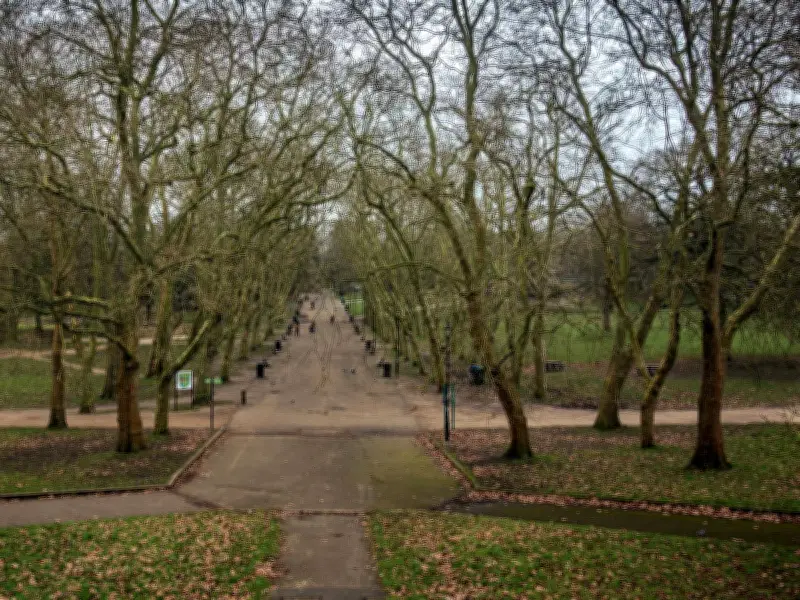
Today, no visible trace of the railway remains above ground. A local rumour suggests one carriage was buried underground after demolition; a 1970s dig to find the so-called "lost carriage" yielded no results.
Modern parallels
The concept resembles Elon Musk's Hyperloop system proposed in 2019, which also uses air pressure for propulsion. American innovator Max Schleinger similarly experimented with a high-speed rail system using air pressure, demonstrating a scale model in his garden.