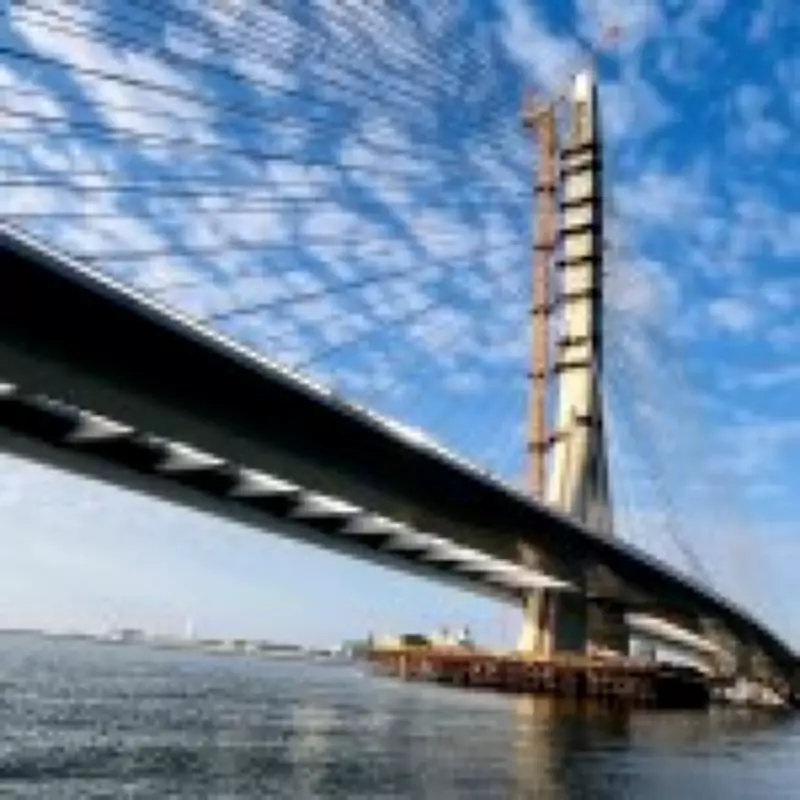
Taiwan has opened the world's longest single-mast cable-stayed bridge, a 920-metre structure engineered to withstand earthquakes of magnitude seven and above. The Danjiang Bridge spans the mouth of the Tamsui River near Taipei, connecting Bali District with New Taipei City.
Record-Breaking Design and Engineering
Designed by Zaha Hadid Architects, the bridge's main span measures 450 metres, around 30 metres longer than Russia's Yugra Bridge, which had held the world record since 2000. Officials say the new crossing will ease chronic traffic congestion by linking major highways and expressways on both sides of the river.
Seismic Resilience and Monitoring
Taiwan's Highway Bureau confirmed the bridge was specially engineered for the island's seismic conditions because of its location on the boundary of active tectonic plates. State-of-the-art sensors have been installed throughout the structure to monitor wind forces, cable stress and the bridge's overall structural integrity in real time. If readings exceed safe limits, the system automatically alerts the bridge control centre so traffic restrictions can be introduced to reduce pressure on the crossing.

Aesthetic and Functional Features
The bridge's striking single-mast design was developed to maximise structural performance while preserving views of the sunset over the Tamsui estuary. Its sculptural concrete mast rises 200 metres into the air and was intentionally designed to remain as slender as possible while supporting the huge central span during extreme weather and seismic events. Dedicated pedestrian walkways and cycle lanes have also been included, along with provisions for a future extension of the Danhai light rail network across the river.
Construction Timeline and Delays
Although the bridge's main structure was completed in October last year, crews have spent recent months laying asphalt and installing lighting, sound barriers and additional road facilities ahead of its public opening. Plans for the Danjiang Bridge were first put forward almost 30 years ago but were repeatedly delayed by environmental reviews, redesigns and failed bidding processes before construction finally began in 2019.