

Uber's Ambitious Plan for Flying Taxis in London by 2030
London could witness the launch of flying taxis as early as 2030, according to Uber's latest projections. The ride-hailing giant, in partnership with Joby Aviation, is pushing forward with plans to introduce electric vertical take-off and landing (eVTOL) aircraft to the city's skies. This initiative aims to transform urban mobility by offering a futuristic alternative to ground-based transport.
Revolutionizing Commutes with Speed and Efficiency
Sachin Kansal, Uber's chief product officer, emphasized London as a high-priority market for this technology. He stated that users would greatly appreciate a feature enabling them to bypass traffic congestion, potentially reducing travel times from hours to mere minutes. For instance, a 10-mile journey across central London, which can take over 90 minutes during peak hours, might be completed in just 10 minutes using a flying taxi.
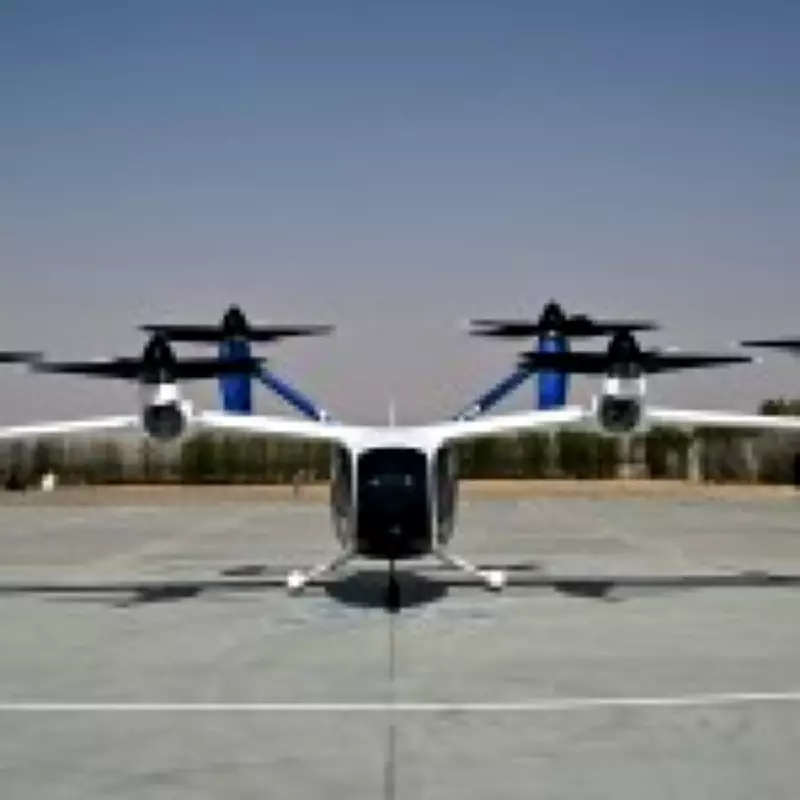
The primary advantage is time savings, Kansal explained. While the aircraft itself promises an amazing experience, the ability to reclaim an hour of one's day is truly transformative. Joby's eVTOL aircraft are designed to launch like helicopters, tilt forward to cruise like planes, and reach speeds of up to 200 mph. Each vehicle can carry a pilot and four passengers, cover up to 100 miles on a full battery, and recharge from empty in about 10 minutes.

Affordability and Infrastructure Development
Contrary to expectations of exclusivity, Uber plans to price flying taxi fares comparably to its Uber Exec premium tier. In central London, a 10-mile Uber Exec trip typically costs between £50 and £70, depending on traffic and demand. Passengers will have the option to book shared trips or entire aircraft, traveling via vertiports—landing pads located on rooftops, in car parks, or repurposed helipads.
Uber's model includes stitched journeys, where a car transports passengers to vertiports and another picks them up upon landing for the final leg. Additionally, these eVTOLs are significantly quieter than conventional aircraft, operating at around 55 decibels—similar to a loud conversation in a restaurant. Sachin Kansal noted that infrastructure needs are minimal, requiring only a few strategically placed vertiports with adequate space, approach angles, and charging facilities.
Regulatory Hurdles and Public Confidence
Despite the optimism, significant challenges remain. Before any commercial service can commence, the aircraft must receive certification from the Civil Aviation Authority (CAA). The regulator must approve safety standards, and operators need licenses covering pilot training, routes, and maintenance. Local authorities could also oppose vertiport construction if residents raise concerns about noise or other issues.
Jonathan Nicholson from the CAA indicated that flying taxis are very close to becoming a reality, provided they meet safety requirements. However, broader issues of public confidence persist. Autonomous vehicles have yet to achieve widespread adoption in the UK, and it remains uncertain how popular self-flying taxis will be until such technologies are normalized.
Global Context and Future Prospects
Uber's partnership with Joby Aviation is already set to introduce flying taxis in Dubai later this year, with other cities in China and the United Arab Emirates pursuing similar ambitions. Joby is currently testing these taxis in Dubai, which will serve as a pilot program before expansion to the US and eventually London. While the dream of soaring above London's traffic is within reach, overcoming regulatory and infrastructural hurdles is essential to make it a daily reality for commuters.






