

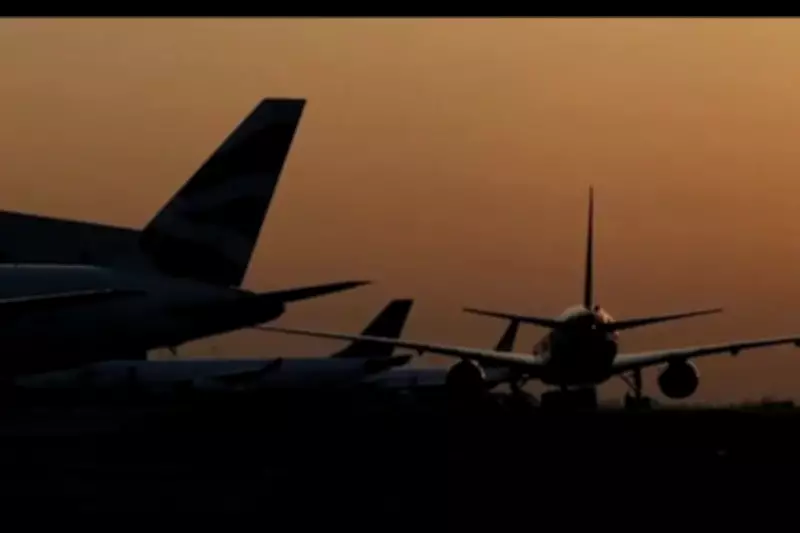
UK Airlines Confront Five-Week Fuel Supply Cliff Edge Amid Global Crisis
Britain's aviation industry is bracing for significant operational disruptions within weeks, as a global jet fuel shortage threatens to ground flights if the conflict in Iran persists through April. Major UK-based carriers currently maintain between five and six weeks' worth of fuel reserves, but these supplies could dwindle rapidly due to the prolonged closure of the vital Strait of Hormuz shipping lane.
Asian Airlines Already Slashing Services
The crisis has already forced several Asian airlines to implement drastic measures. Vietnam Airlines has suspended seven domestic routes indefinitely and reduced international flight volumes, while Korean Air has entered 'emergency management mode.' Germany's Lufthansa has prepared contingency plans to ground aircraft should demand suddenly collapse.
Before the conflict erupted, the Persian Gulf region transported over a quarter of global seaborne oil, creating particular vulnerability for airlines dependent on this supply route. Some Asian carriers have canceled routes through September due to their reliance on Persian Gulf fuel sources.

UK's Relative Insulation Through Diversification
British refineries benefit from more diverse oil sourcing than many Asian counterparts, and most UK airlines have established long-term hedging contracts for jet fuel. This strategic positioning provides the UK aviation sector with greater insulation from immediate supply disruptions.
City AM has learned that most airlines and jet fuel providers in the UK possess approximately five to six weeks of supply before considering measures similar to those implemented by Asian airlines. Ryanair CEO Michael O'Leary has warned of "a risk of supply disruptions in Europe" beginning in May unless oil and gas trade normalizes before that time.
Hedging Provides Price Protection
The jet fuel price has nearly doubled over the past month, with refined aviation products experiencing sharper increases than crude oil due to tighter supplier conditions preceding the crisis. However, most major airlines remain protected from immediate price impacts through fixed hedging contracts extending well into late 2026 and beyond.
International Airlines Group (IAG), parent company of British Airways, has hedged between 60 and 70 percent of its 2026 fuel at pre-crisis prices. Similarly, Ryanair has secured pre-conflict pricing for approximately 80 percent of its supplies through hedging arrangements.
Industry Leaders Express Cautious Optimism
Despite the looming supply concerns, British Airways owner IAG maintains a five to six-week operational runway before fuel shortages would affect its services. A source close to the airline stated there are "no concerns right now" regarding immediate supply issues.
Two of the UK's largest airports have also downplayed fears of near-term operational impacts from market turmoil. An Airlines UK spokesperson confirmed: "UK airlines are currently not seeing disruption to jet fuel supply and continue to engage with fuel suppliers and government to monitor the situation."
Market Response and Political Developments
London-listed airline stocks rallied significantly on Wednesday following former US President Donald Trump's prediction that American operations in the region would conclude within three weeks. Ryanair and IAG shares both climbed over four percent, while Wizz Air and Easyjet closed with gains exceeding five percent as traders anticipated a quicker resolution to hostilities.
Ryanair's Michael O'Leary elaborated on the potential scale of disruption, noting: "We think... maybe 10 percent to 25 percent of our supplies might be at risk through May and June, so like everyone else in the industry we hope the war ends sooner rather than later."
The aviation industry faces a critical period where geopolitical developments will determine whether current fuel reserves prove sufficient to maintain normal operations or whether UK carriers must implement service reductions similar to their Asian counterparts.






