

UK Government Mounts Unprecedented Operation for British Citizens in Middle East
The Foreign Office has launched an unprecedented consular operation to support British citizens across the Middle East, as retaliatory Iranian airstrikes have thrown regional travel into complete chaos and forced the closure of major international airports.
Evacuation Plans Under Development for Tens of Thousands
Sky News understands that UK officials are actively working on detailed plans for potential evacuation routes that could be used to extract tens of thousands of British nationals, should airspace over the Gulf region remain inaccessible. This contingency planning represents one of the largest consular challenges the Foreign Office has faced in recent years.
British Foreign Secretary Yvette Cooper confirmed the government is "working on every possible option" to ensure the safety of citizens. Specialist teams have been deployed to Gulf countries to provide direct assistance on the ground.

"Of course, we want people to get safely home as swiftly as possible," Cooper stated during an interview on Monday morning, emphasizing the urgency of the situation.
Airport Closures Create Global Travel Disruption
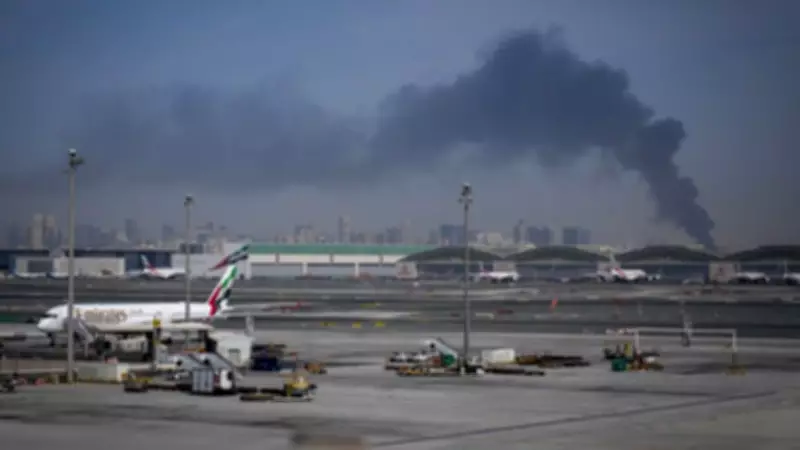
The Iranian counterattacks, launched in retaliation for US and Israeli strikes that killed Iran's Supreme Leader Ali Khamenei, have forced the closure of Dubai International Airport—the world's busiest international hub—along with Doha's Hamad International Airport and other major facilities across the region.
This has created the most severe business and travel disruption in the Gulf since the COVID-19 pandemic, with shockwaves felt across global aviation networks.
- More than 3,400 flights were cancelled on Sunday across seven Middle Eastern airports
- Disruption has affected airports in Qatar, Bahrain, Israel, Jordan, Kuwait, UAE, and Saudi Arabia
- With Dubai and Doha serving as major global transit hubs, the closures are hampering onward travel plans for passengers worldwide
- Even in Bali, over 1,600 tourists were stranded after five Middle East-bound flights were cancelled or postponed
Mass Registration of British Citizens
Approximately 300,000 British citizens are currently in the region, including residents, tourists, and transit passengers. By Monday morning, 102,000 had registered their presence through an online government platform launched after the conflict began on Saturday.
The majority of those registered are in the United Arab Emirates, and most have been relocated to hotels as part of the Foreign Office's emergency response.
Political Response and Military Implications
Prime Minister Sir Keir Starmer addressed the seriousness of the situation on Sunday evening, stating: "Over the last two days Iran has launched sustained attacks across the region at countries who did not attack them. They've hit airports and hotels where British citizens are staying. This is clearly a dangerous situation."
The Prime Minister also confirmed that the UK would permit the United States to use British bases for defensive strikes against Iran, a decision that has drawn criticism from opposition parties concerned about potential escalation.
Foreign Secretary Cooper defended the decision, insisting it was "about the defence of our partners in the Gulf" and protection of countries "where we have so many British citizens and interests." She emphasized that diplomatic solutions remain the government's preferred approach.
Passenger Experiences and Safety Concerns
British travelers have described frightening experiences, with one family from the Isle of Wight reporting they witnessed drones exploding in the sky above their hotel after their connecting flight from Doha to London was cancelled.
"As a mother, I'm scared out of my wits and trying to keep calm, but also be organized," said Jo Hummel, who was traveling with her husband and two children. "I don't think anything will leave until it's safe."

Updated Travel Advice and Industry Impact
The Foreign Office has issued new travel advice, recommending against all but essential travel to Bahrain, Israel, Palestine, Qatar, and the United Arab Emirates. British nationals in these countries are urged to register their presence to receive direct updates.
Aviation analysts estimate that approximately 90,000 passengers per day fly with Emirates, Etihad, and Qatar Airways through Dubai, Abu Dhabi, and Doha alone. The widespread cancellations and potential flight rerouting could lead to longer travel times, increased fuel costs, and eventually higher ticket prices for travelers worldwide.
Henry Harteveldt, an analyst with Atmosphere Research Group, offered a sober assessment: "For travellers, there's no way to sugarcoat this. They should prepare for delays or cancellations for the next few days as these attacks evolve and hopefully end."
Casualties and Infrastructure Damage
The retaliatory strikes have resulted in casualties and significant infrastructure damage:
- Four people were injured at Dubai International Airport
- One person was killed and seven others injured in a drone strike at Zayed International Airport in Abu Dhabi
- An explosion and subsequent fire occurred near the entrance to the Fairmont The Palm hotel in Dubai
The duration of the disruption remains uncertain, with initial estimates suggesting the conflict could continue for several weeks, potentially extending the travel chaos and evacuation requirements for the foreseeable future.





