

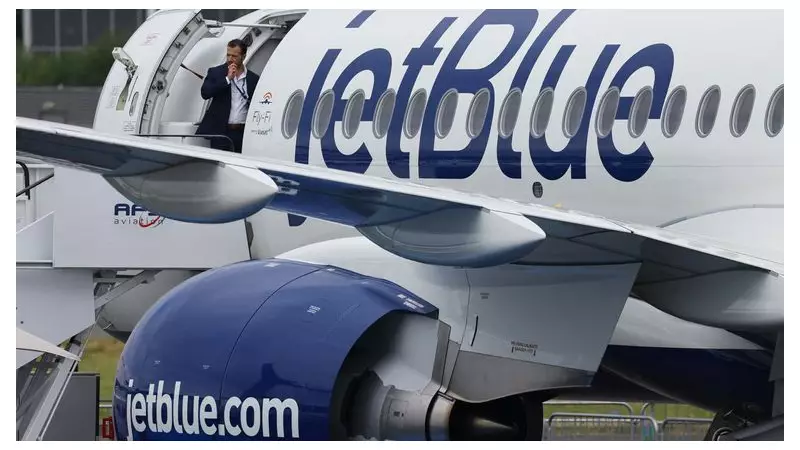
A passenger jet was forced to take emergency evasive action to avoid a potential mid-air collision with a United States Air Force aircraft flying with its transponder switched off near the coast of Venezuela, according to air traffic control recordings.
A Terrifying Close Call in the Caribbean Skies
The incident involved JetBlue Flight 1112, an Airbus A320 travelling from Curaçao to New York on Monday 15 December 2025. While flying approximately 40 miles off the Venezuelan coast, the commercial airliner reported encountering a US Air Force refuelling tanker. The military aircraft was within a few miles and at the same altitude, creating an extreme collision risk.
In the recording, the JetBlue pilot can be heard stating, "We almost had a mid-air collision up here. They passed directly in our flight path... They don't have their transponder turned on. It's outrageous." The pilot confirmed that the Air Force jet subsequently entered Venezuelan airspace.

Escalating Tensions and a Pattern of Danger
A JetBlue spokesperson confirmed the airline had reported the incident to federal authorities and would cooperate fully with any investigation. They praised their crew's training and prompt reporting. Meanwhile, US Southern Command, which oversees military operations in the region, stated it was aware of the event and reviewing the matter, reiterating that safety is a top priority.
This near miss occurs against a backdrop of heightened aviation warnings and military activity. In November 2025, the Federal Aviation Administration (FAA) warned major airlines of a "potentially hazardous situation" when flying over Venezuela and urged extreme caution. The warning followed a fatal accident in January involving a US military helicopter and an American Airlines flight in Washington DC, which killed 67 people.
US Military Buildup and Regional Fallout
The dangerous encounter coincides with a significant US military build-up in the Southern Caribbean, part of President Donald Trump's campaign to pressure Venezuelan leader Nicolás Maduro. This build-up includes:
- Flights by US B-52 bombers along the Venezuelan coast.
- The arrival of the world's largest aircraft carrier in the region.
- New agreements for US military transit through neighbouring countries, with Trinidad and Tobago being the latest to grant approval.
Last week, US forces seized a Venezuelan oil tanker, a move that has significantly cut Venezuela's oil exports and further escalated tensions. The legality of such seizures has been questioned but has not halted their use.
In related news, it is reported that Venezuela's opposition leader, María Corina Machado, escaped to Curaçao with US assistance before travelling to Norway. When questioned, she did not explicitly endorse a potential US invasion but claimed Venezuela had already been invaded by actors like Russia and Iran.






