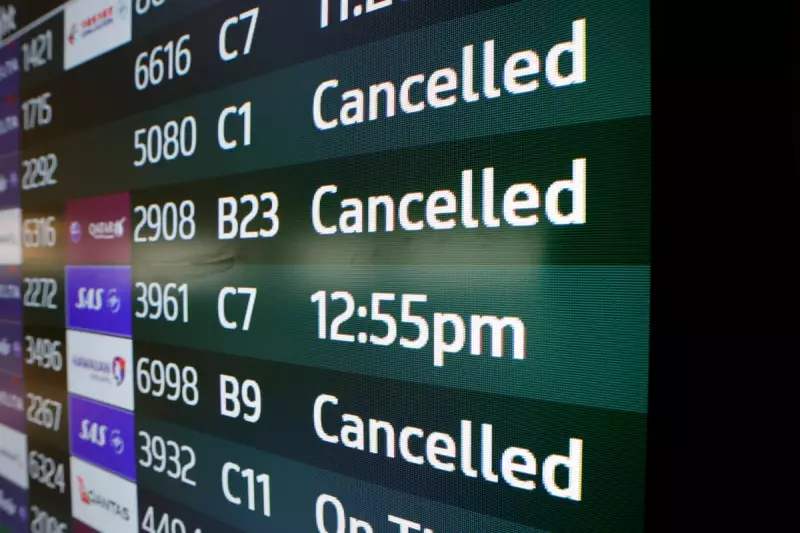
The ripple effects of the ongoing US government shutdown have severely impacted air travel, with airlines forced to cancel more than 1,000 flights for a second consecutive day. The disruption, ordered by the Federal Aviation Administration (FAA), is deepening the crisis of what is now the nation's longest federal shutdown.
The cuts began on Saturday, 7th November 2025, and have so far been concentrated at many of the country's busiest airports. While widespread travel meltdowns have been avoided, the situation is causing significant stress for passengers and raising alarms about the potential for greater economic fallout.
Airports and Passengers Bear the Brunt
Data from the flight tracking website FlightAware revealed the scale of the cancellations. On Saturday, a typically slower travel day, the airport in Charlotte, North Carolina, was the hardest hit, with 120 arriving and departing flights canceled by midday.

Other major hubs including Atlanta, Chicago, Dallas, Denver, and Orlando, Florida, also experienced significant disruptions. Staffing shortages at control centres in Charlotte and Newark, New Jersey, were cited as contributing factors to the slowdowns.
Travellers expressed a mixture of frustration and relief. Emmy Holguin, 36, flying from Miami to the Dominican Republic, voiced a common concern: "We all travel. We all have somewhere to be. I'm hoping that the government can take care of this." Others, like Heather Xu, 46, highlighted the personal cost, noting that not everyone can afford last-minute hotel stays or deal with unexpected disruptions.
The Root Cause: Unpaid Air Traffic Controllers
The core of the problem lies with the nation's air traffic controllers, who have been working without pay for nearly a month. The National Air Traffic Controllers Association (NATCA) has stated that most controllers are on mandatory overtime, working six days a week without pay, with some forced to take second jobs to make ends meet.
This has led to many calling in sick, exacerbating pre-existing staffing shortages and forcing the FAA's hand. The FAA has mandated that all commercial airlines reduce flights, starting with a 4% cut at 40 targeted airports. This reduction is scheduled to be increased again on Tuesday before potentially reaching 10% of all flights by Friday.
US Transportation Secretary, Sean Duffy, has warned that even deeper cuts may be necessary if the government shutdown continues and more controllers are unable to work.
Broader Economic Consequences Loom
Analysts warn that the impact will extend far beyond stranded holidaymakers. If the cancellations intensify closer to the Thanksgiving holiday, the upheaval will be felt across the economy.
Greg Raiff, CEO of Elevate Aviation Group, highlighted the cascading effect: "This shutdown is going to impact everything from cargo aircraft to people getting to business meetings to tourists being able to travel. It's going to hit the hotel taxes and city taxes."
There are also serious concerns for retail and shipping. Patrick Penfield, a professor of supply chain practice at Syracuse University, pointed out that nearly half of all US air freight travels in the cargo holds of passenger planes. Major flight disruptions could lead to higher shipping costs, which would inevitably be passed on to consumers in the form of higher prices, potentially affecting the availability of holiday goods.
As rental car companies report a sharp increase in one-way reservations and some travellers cancel their plans altogether, the economic losses from this aviation slowdown are poised to ripple through tourism, manufacturing, and retail, creating a perfect storm fuelled by political deadlock.