The global financial watchdog has issued a stark warning about potential "fire sale dynamics" emerging within the vast $16 trillion repurchase agreement (repo) market, urging regulators worldwide to intensify their scrutiny.
Amplifying Financial Stability Risks
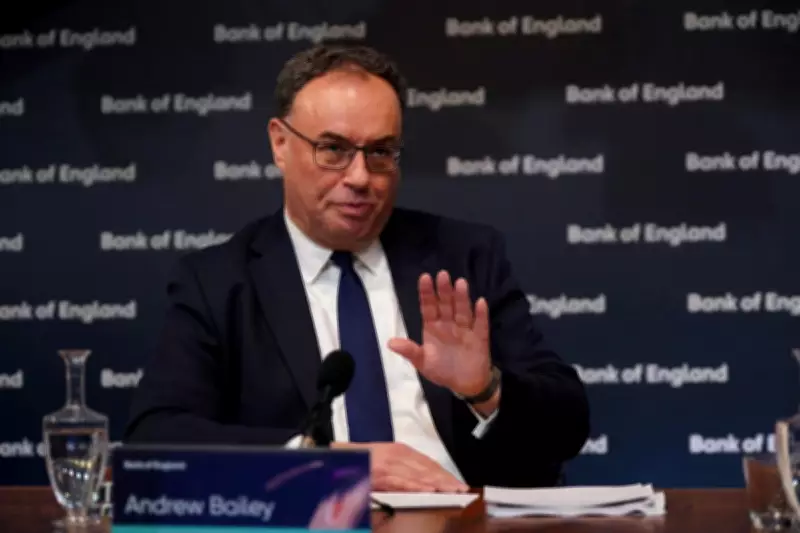
In a significant report, the Financial Stability Board (FSB), chaired by Bank of England Governor Andrew Bailey, has called for authorities to cast a much closer eye over how leveraged trades in the short-term repo market could dangerously amplify financial stability risks on a global scale.
The FSB's primary concern centres on the possibility that leveraged investors, particularly hedge funds, might be forced into rapid asset liquidation during periods of market stress. This could unleash intense downward pressure on sovereign bond markets, creating a vicious cycle of falling prices.

The Mechanism of a Potential Crisis
A repo is a short-term funding agreement where financial institutions obtain liquid cash by selling securities, with a commitment to repurchase them at a slightly higher price shortly thereafter. It is a cornerstone of daily financial plumbing.
The watchdog highlighted that "asset managers such as hedge funds who rely on repo markets to finance their sovereign bond positions may have to rapidly liquidate their asset holdings, leading to fire sale dynamics in the pricing of sovereign debt."
Furthermore, the report cautioned that "demand and supply imbalances can arise quickly in periods of stress" if repo lenders become unwilling or unable to meet sudden spikes in demand for liquidity, freezing a critical source of short-term funding.
Critical Data Gaps and Spillover Risks
The FSB has recommended that regulators urgently address significant data gaps within this colossal market for government bond-backed repo agreements. It advocates for the development of a series of sophisticated "vulnerability metrics" to better monitor and pre-empt potential systemic risks.
Emphasising the international nature of the threat, the FSB added: "Strains in repo and government bond markets may spill over into each other or across multiple jurisdictions." The report stressed that "given the importance of repo markets within the global financial system, it is critical to preserve their functionality, particularly during periods of stress."
Regulators Playing Catch-Up
Alarmingly, the FSB warned that regulators might be falling behind in understanding how the repo market could intensify market stresses. Approximately 80 per cent of repo trades are backed by government bonds, with US Treasuries dominating this activity.
Hedge fund borrowing in repo markets has surged dramatically in recent years, now standing at nearly $3 trillion—representing about a quarter of their total assets. This concentration heightens systemic vulnerability.
The Leverage Problem: Haircuts and Rehypothecation
The report detailed two key mechanisms that build dangerous leverage within the financial system through repo markets. Firstly, many repo trades are conducted with zero haircuts. A haircut is a prudent reduction applied to the market value of an asset when used as loan collateral, which inherently limits leverage. Its absence allows for greater risk accumulation.
Secondly, the practice of collateral rehypothecation—where securities received in a repo trade are reused in further transactions—adds additional, often opaque, layers of leverage to the entire system.
In a related development, Andrew Bailey's Bank of England is reportedly considering the introduction of a minimum haircut for gilt-backed repo trades, a measure explicitly designed to curb excessive leverage and enhance market resilience.
While acknowledging the repo market's vital role in providing liquidity and serving as a low-risk investment for cash-rich institutions, the FSB's message is clear: proactive, coordinated international oversight is now essential to prevent the next financial shock from being magnified through this critical but vulnerable market.