

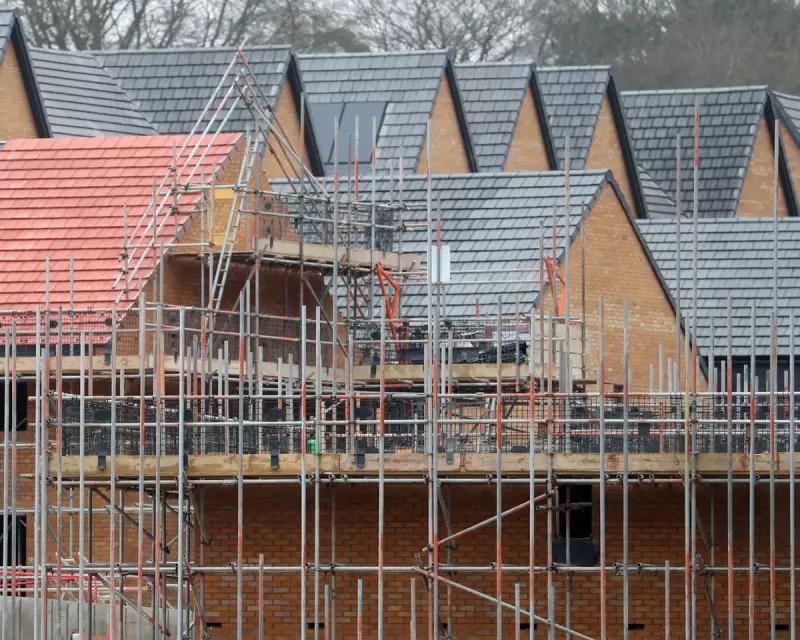
The Labour government's ambitious plan to build 1.5 million new homes by 2029 has sparked controversy as revelations emerge about who ministers are listening to - and who they're ignoring.
Imbalanced Access Raises Environmental Concerns
While Chancellor Rachel Reeves and Housing Minister Matthew Pennycook have held numerous meetings with major property developers, the professional body representing ecologists has been unable to secure a single meeting with ministers despite repeated requests.
The Chartered Institute of Ecology and Environmental Management, which represents professional ecologists working across the UK, requested meetings early in the process but was initially turned down. They finally secured a meeting with civil servants in autumn, but never achieved face-to-face access to ministers.

In stark contrast, Treasury records show Reeves hosted high-level discussions with housebuilding giants Berkeley, Barratt and Taylor Wimpey within just one week of taking office. She has continued meeting housing developers regularly since.
Last-Ditch Attempts to Protect Nature
As the planning and infrastructure bill reaches its final stages before royal assent in the coming days, peers have secured a crucial amendment that would maintain protections for vulnerable species including dormice, nightingales and hedgehogs, along with rare habitats like wetlands and ancient woodlands.
Katherine Willis, the peer who successfully proposed the amendment in the House of Lords, described it as a "pragmatic way out of what are the real things that are blocking development" and a "win-win amendment because it will help developers build houses, but also means that the vast majority of nature, the things the public really care about, will be protected."
The government has shown little willingness to compromise, having previously whipped MPs against environmental amendments and even suspending one Labour MP for speaking out in defence of nature protections.
Ecological Expertise Being Ignored
Sally Hayns, chief executive of the Chartered Institute of Ecology and Environmental Management, expressed deep concern about the situation. "There is a very low level of ecological literacy being displayed by ministers," she stated.
Hayns emphasised that ecologists regularly work alongside developers to help projects proceed smoothly, but their expertise is being sidelined in the current process. "Nothing I have seen or heard gives me comfort that Rachel Reeves understands the importance of nature to economic and social wellbeing, nothing," she added.
The imbalance in ministerial engagement is starkly evident in the official records. Housing Minister Matthew Pennycook has recorded 16 meetings with property developers up to May this year, while holding just four meetings with wildlife and nature groups over the past year.
Meanwhile, developers continue to seek ministerial intervention to overcome environmental obstacles. Vistry, currently building 1,200 homes outside Newton Abbot in Devon, recently sent bulldozers close to a 2,000-year-old protected ancient wetland and has confirmed they are "in contact with Labour housing ministers" seeking help to resolve planning blockages.
With the final Commons vote approaching next week, environmental organisations are making urgent appeals for MPs to support the protective amendments. Joan Edwards of the Wildlife Trusts warned: "This is the last chance saloon for MPs to ensure that the planning and infrastructure bill rolls out development and growth that brings genuine benefits for people and wildlife."






