

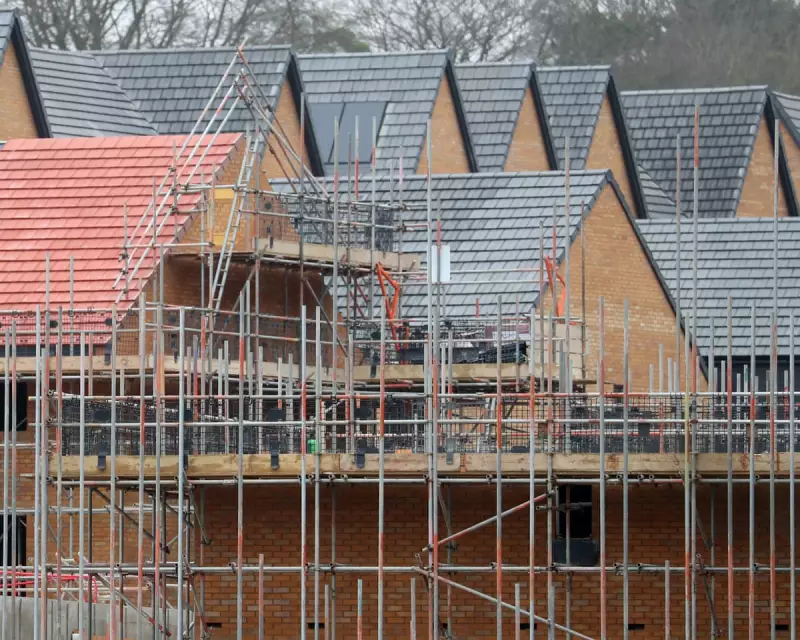
The government is preparing to water down its flagship green building regulations, with plans to allow new homes in England to be constructed without mandatory carbon-cutting battery technology.
A Climbdown on Clean Tech
According to exclusive information, the forthcoming Future Homes Standard (FHS), which is due for publication in early 2026 and will govern how all new homes are built from 2027, is now unlikely to require the installation of home battery storage systems. This represents a significant shift after sustained pressure from housebuilding groups.
The standard is still expected to enforce other rigorous measures, such as mandating solar panels on nearly all new houses and demanding high levels of insulation, with heat pumps becoming the norm for heating. However, the omission of batteries, which pair with renewable generation to maximise self-use of power, has sparked criticism from energy experts.

Impact on Bills and the Grid
Jess Ralston, head of energy at the Energy and Climate Intelligence Unit, warned that the decision would be detrimental to homeowners. "Batteries are really useful for ensuring that homes can use as much of their own power as possible – and that lowers bills," she stated. "New-builds being built from 2027 without the latest cost-saving net zero tech may mean we’re not making the most of our own power, increasing bills and meaning we need more gas from abroad."
Research by the MCS Foundation charity last year indicated that a typical three-bedroom semi-detached home equipped with a heat pump, solar panels, and a battery could save around £1,350 annually on energy costs. While adding a battery would incur an upfront cost of £2,000 to £5,000 per property, the long-term savings for the resident would be substantial.
Beyond individual bills, the move also forfeits a major opportunity for the national electricity grid. Building 1.5 million new homes – as pledged by Labour – without integrated battery storage misses the chance to create a vast, distributed network of storage. This could have helped balance supply and demand, especially as the UK relies more on intermittent solar and wind power.
Housebuilder Pressure and a 'Missed Opportunity'
The Home Builders Federation has lobbied against the inclusion of batteries, arguing for cheaper alternatives like 'switch valves' or diverting excess solar to heat water. Rhodri Williams, the federation's technical director, said builders had "embraced every step of the journey towards zero carbon housing," pointing out that new builds already emit a third of the carbon of older properties.
Academics have condemned the expected U-turn. Jan Rosenow, a professor of energy at Oxford University, called it a "missed opportunity," noting that "installing a battery at the point of construction is cheaper and less disruptive than retrofitting later." He added that housing developers have a history of resisting measures that enhance home energy performance.
Despite the battery omission, Garry Felgate, chief executive of the MCS Foundation, said the Future Homes Standard "could be a gamechanger," still saving over £1,000 a year on bills and generating clean power equivalent to two nuclear stations. The standard is to be announced alongside a 'warm homes plan' for insulating existing housing.
A spokesperson for the Ministry of Housing, Communities and Local Government said: "Our future homes standard is in development and will be published early next year [2026]. This will ensure our new homes are warmer and more affordable and help us to meet our net zero target by 2050."






