Mumbai's Coastal Motorway: A Symbol of Deepening Social Divide
Mumbai's ambitious coastal road project has become a powerful emblem of the city's stark economic disparities. While celebrated as an engineering achievement, this eight-lane motorway faces mounting criticism for primarily benefiting the wealthy minority while creating significant challenges for the majority of residents who depend on public transportation.
The Infrastructure Divide
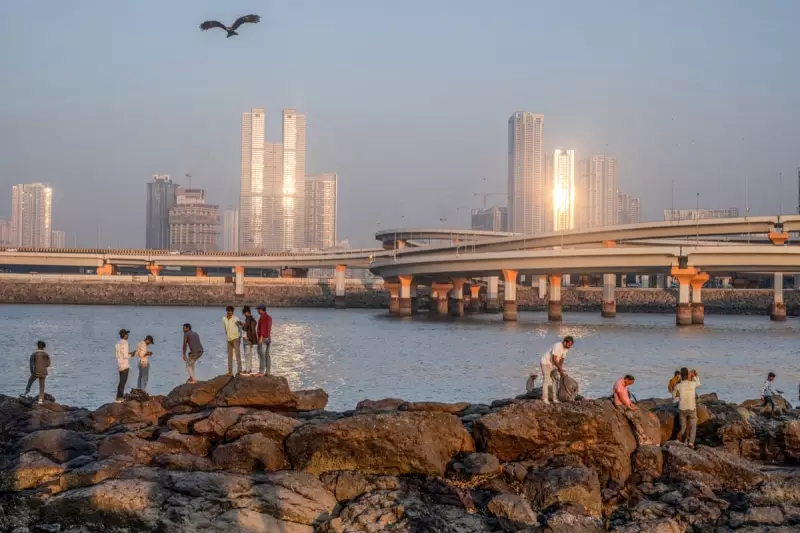
Constructed on land reclaimed from the Arabian Sea, the coastal motorway represents a remarkable feat of engineering that connects northern and southern Mumbai. For car owners, it has transformed travel times, reducing journeys that previously took 45 minutes to just 10 minutes in some cases. The road features an impressive undersea tunnel and sections built on stilts across the shimmering sea, offering drivers panoramic views of the coastline.
However, this infrastructure marvel stands in stark contrast to the daily reality for most Mumbaikars. Approximately 64% of the metropolitan region's 22.5 million residents rely on severely overcrowded buses and trains. The local train network witnesses between seven and ten passenger fatalities daily, highlighting the dangerous conditions of public transport.

Voices of Criticism and Concern
Environmental activist Avlokita Shah describes the road as "exclusively for the elite", arguing that the billions spent on its construction should have been directed toward improving public transport infrastructure. "The funds should have been spent on repairing roads, adding more buses with better routes, and expanding the metro system to benefit the majority," she asserts.
Hussain Indorewala, an architecture and environmental studies professor, characterizes the project as "welfare for the well-to-do". He explains that "it represents a massive transfer of wealth to the rich and imposes costs on the rest of society", highlighting how taxpayer money has been used to create infrastructure that most citizens will never use.
Contrasting Perspectives
For investment banker Vivek Tiwari, the coastal road has been transformative, saving him 45 minutes on his daily commute between Bandra and Nariman Point. "It's an amazing piece of infrastructure and driving on it is glorious," he enthuses. Tiwari suggests that while only a minority currently benefit, the economic growth generated might eventually trickle down to benefit everyone.
Meanwhile, Praveen Shastri, who works as a shoeshiner at Churchgate railway station, expresses indifference toward the project. "What do I know about it?" he shrugs, adding that "it's not for people like me. My commute remains the same – never getting a seat on the train to Borivali where I live."
Environmental and Social Consequences
Environmental anthropologist Nikhil Anand criticizes the motorway as "a 20th-century response to a 21st-century problem". He points to the historical precedent of urban motorways in American cities, which primarily served private car owners while neglecting public transport needs, ultimately leading to increased traffic through induced demand.
The construction has raised significant environmental concerns, particularly regarding the removal of mangrove forests that serve as natural barriers against tidal surges and erosion. Despite protests, the Bombay High Court ruled in December that 45,000 mangrove trees could be removed for the project's second phase.
Impact on Traditional Communities
The Koli fishing community, Mumbai's original coastal inhabitants, has been particularly affected by the construction. Deepak Namaposhe, a 45-year-old fisherman from Khar Danda, expresses deep concern about losing traditional fishing sites and breeding grounds. "By what right can they take land where my father, grandfather and great-grandfather lived and fished?" he questions, worried that accessing the sea will require double the time and fuel while yielding smaller catches.

Accessibility and Urban Experience
Beyond transportation and environmental issues, the coastal road has created another significant loss for ordinary citizens: diminished access to Mumbai's shoreline. Previously, residents from all social classes could easily reach the ocean at various points along the coast, enjoying the beauty and tranquillity it offered as a rare free pleasure in the crowded metropolis.
Now, an eight-lane thoroughfare blocks direct access to the sea. While some subways have been created to allow pedestrians and cyclists to reach new promenades, these are insufficient in number and often require long walks that prove challenging for those already tired after a day's work.
Property Development Implications
The coastal road has become a catalyst for luxury property development along Mumbai's western coast. The reclaimed land has opened up valuable new tracts for construction, leading to what some describe as a "billionaires' row" emerging along the Worli seafront. Property developers are capitalizing on these newly available spaces to build glass towers and luxury apartments worth billions of rupees.
As Mumbai's skyline fills with tower cranes and construction activity intensifies, the coastal motorway stands as both an engineering achievement and a contentious symbol of urban development priorities that appear to favour the privileged few over the needs of the many.