

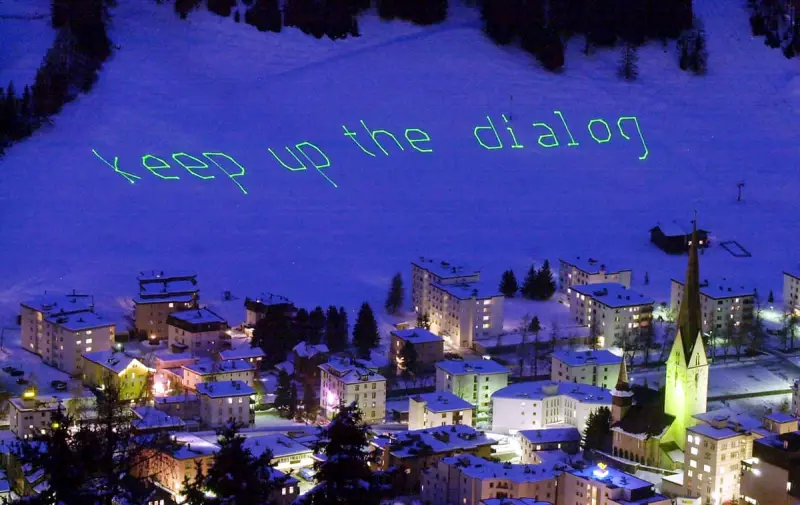
In a striking visual moment from January 25, 2001, a laser beam projected an SMS message onto the snow-covered Bolgenhang slope in Davos, Switzerland, during the World Economic Forum. This image, captured by photographer Juergen Staiger, symbolises the blend of technology and high-level discourse that has characterised the forum over decades. The event, often dubbed a gathering of the world's most influential figures, has a rich history dating back to its inception in 1971, with archives revealing its evolution from a management seminar to a pivotal global summit.
Hot Air in a Cold Climate: The Early Years
The first European Management Symposium, held in January 1971, set the tone for what would become the World Economic Forum. Organised by the Geneva business school, Centre d'Etudes Industrielles, to mark its 25th anniversary, it attracted 500 of Europe's top businessmen. Each paid around £700 to learn from renowned gurus like Herman Kahn and John Kenneth Galbraith. Registration fees were £500, with additional costs for accommodation and travel, making it a costly yet financially successful endeavour. Speakers included Jacques Maisonrouge of IBM and Jean Rey of the European Economic Community, offering expensive words of wisdom to an elite audience.
Networking and Global Influence in the 1990s
By 1990, the forum had transformed into a high-level networking event, described by Alex Brummer as an assembly of the "great and good." Participants, largely captains of industry, paid $7,500 plus expenses for the chance to engage with over 70 government ministers in secret meetings. The Swiss resort of Davos, at 4,400 feet above sea level, faced challenges like snow droughts, but the forum's allure remained strong. Discussions ranged from economic outlooks to Japanese history, with notable figures such as Chancellor Helmut Kohl and Prime Minister Hans Modrow using the event to network on German reunification.

Pricey Previews and Emerging Trends
In 1992, Will Hutton highlighted the forum as the world's most expensive and exclusive getaway, costing members $14,000 per head. A thousand businessmen, academics, and ministers gathered to deliberate on global economic issues, anticipating trends like the rise of Asian economies. The event served as a platform for tomorrow's leaders and yesterday's men, with a focus on the new global economy dominated by Americans and Germans. British concerns were marginalised, reflecting the forum's international scope, and figures like Li Peng of China and Mario Cuomo of New York underscored its global significance.
Throughout its history, the World Economic Forum in Davos has evolved from a management seminar to a crucial hub for global policy discussions, blending innovation with tradition in the Swiss Alps.






