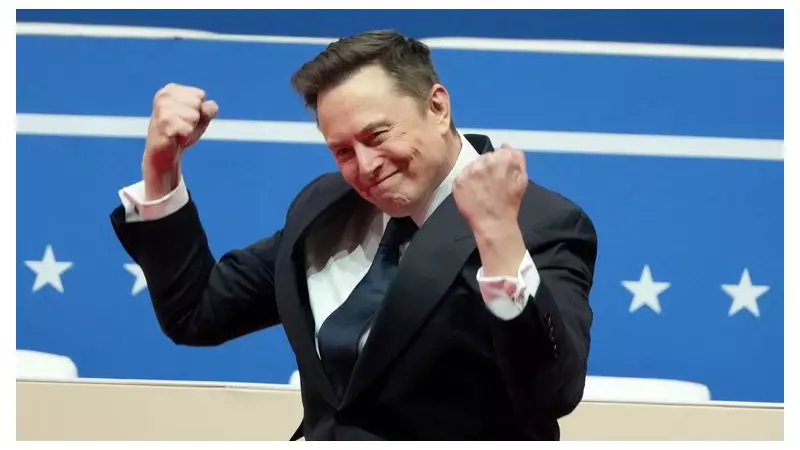
Tesla's board has set the stage for what could become the most substantial corporate payday in history, as shareholders greenlight a staggering $1 trillion financial package for CEO Elon Musk. The tech magnate, already sitting on an estimated personal fortune of $491 billion, could achieve trillionaire status if he meets ambitious performance targets over the coming decade.
The Scale of a Trillion
For most people, conceptualising a trillion dollars - equivalent to £761,910,000,000 - presents an almost impossible challenge. To put this astronomical figure into perspective, if you laid one-dollar bills end to end, they would stretch approximately 156 billion metres. This distance could wrap around Earth's equator 3,890 times, reach the sun from our planet, or make 405 round trips to the moon.
In terms of area coverage, that many dollar notes would blanket roughly 10,339 square kilometres, enough to cover nearly all of Lebanon or Jamaica in currency.

Global Spending Power
Musk's potential wealth opens up extraordinary purchasing possibilities across multiple sectors. In the sporting world, he could acquire virtually every major professional league. The entire English Premier League clubs represent a relative bargain at $30 billion, and even after purchasing UEFA Champions League teams plus the top divisions in Spain, Italy, Germany, and France, approximately $858 billion would remain.
The four major American sports leagues - NFL, NBA, MLB, and NHL - carry a combined valuation around $544 billion. Adding cricket's IPL at $120 billion and Formula 1 at $23.1 billion would still leave change from an estimated total sports acquisition spree costing $829.7 billion.
Corporate Conquests and Property Empire
Musk could strategically target Tesla's competition by purchasing the top 15 largest publicly traded automakers excluding his own company. This shopping list would include industry giants like Toyota ($275 billion), Chinese manufacturer BYD ($120 billion), luxury marques Ferrari ($81 billion) and Mercedes-Benz ($62 billion), alongside BMW ($52 billion), Volkswagen ($50 billion), and Ford ($48 billion). The total bill for this automotive domination would reach approximately $992 billion.
In real estate, Musk could buy every residential property in San Diego County, valued at exactly $1 trillion. For slightly more, he could acquire Seattle's entire housing stock at $1.1 trillion, or opt for Tennessee's residential market valued at $957 billion. Maryland's housing market, priced at $1.01 trillion, would require just a little extra cash.
However, London's property market remains out of reach at nearly £2 trillion ($2.53 trillion), as do America's most expensive markets in New York ($4.6 trillion) and Los Angeles ($3.9 trillion).
Philanthropic Possibilities and Debt Solutions
Following in the footsteps of Microsoft founder Bill Gates, who plans to give away 99% of his fortune, Musk could transform global philanthropy. He could distribute $2,917.32 to every American citizen based on current population estimates, or approximately $14,348.79 for each person in the UK.
On a global scale, every person among the world's 8.2 billion population would receive $121.80 as an early Christmas present.
Alternatively, Musk could address national debt crises, wiping out the entire government debt of Singapore ($1 trillion) or South Korea ($0.99 trillion) in a single transaction. Though this wouldn't make a dent in America's $38.3 trillion debt or the UK's $4.1 trillion obligations, it could revolutionise the financial stability of smaller nations.
The approval of this historic compensation package positions Musk to potentially become the world's first trillionaire, reshaping not just the automotive and technology sectors, but the very concept of personal wealth and its global implications.