

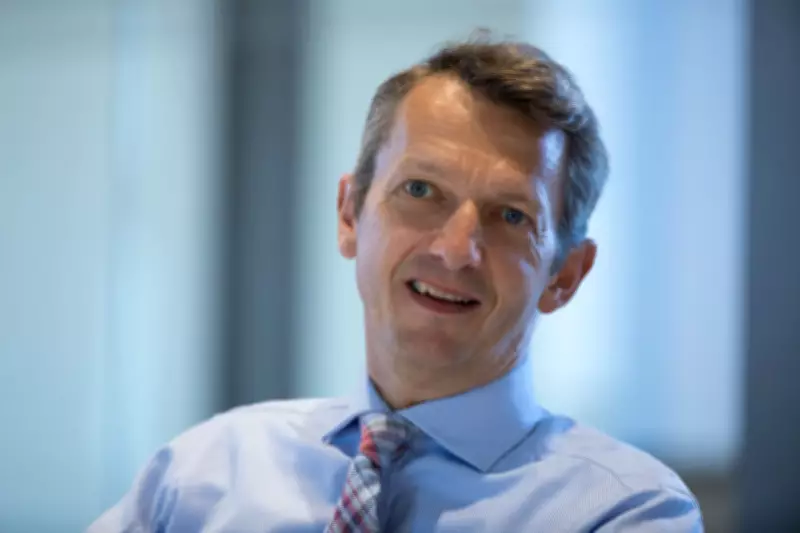
Andy Haldane's Mission to Reignite Britain's Economic Animal Spirits
Former Bank of England chief economist Andy Haldane has embarked on a new mission to revitalize Britain's business landscape through his presidency at the British Chambers of Commerce. In an exclusive interview, Haldane reveals his concerns about the UK's sluggish economy and outlines his strategy to combat excessive risk aversion in the private sector.
From Monetary Policy to Business Advocacy
After serving on the Bank's Monetary Policy Committee for seven years and spending nearly three decades at the heart of Britain's economic policymaking, Haldane brings unparalleled experience to his new role. His transition from central banking to business advocacy represents a significant shift in focus, now prioritizing direct engagement with companies across the nation.
"Speaking to bosses and workers about how they were feeling and behaving was the most enjoyable and useful part of my old job at the Bank," Haldane explains, emphasizing his commitment to understanding frontline economic sentiment.

The Fragility of Business Confidence
Haldane expresses particular concern about the cumulative impact of recent crises on business psychology. Brexit, the pandemic, Russia's invasion of Ukraine, trade tariffs, and Middle East conflicts have created what he describes as a 'punch-drunk' business environment where even minor disruptions prompt excessive caution.
"We've seen for some time how fragile both consumer and business confidence is," he observes. "This feels like another reason for people to keep their powder dry."
Middle East Conflict and Economic Scarring
The economist addresses the ongoing Middle East conflict's potential impact on Britain's fragile economy, noting that markets and economists remain unusually divided about the consequences. While oil prices have climbed sharply since hostilities began, Haldane takes a measured view of the inflationary risks.
"At current levels of energy prices, I think the scarring to the inflation outlook will be uncomfortable but manageable," he states. "I think the scarring to the growth outlook will be more material but manageable. But I think it's the scarring to risk sentiment that is most worrying of all."
Regulatory and Tax System Critiques
Haldane delivers particularly sharp criticism of Britain's regulatory environment and tax system, describing them as significant barriers to business dynamism.
"Businesses are operating in a regulatory quagmire," he declares. "Too many regulators, too much regulation. The government has, frankly, talked tough on that and acted weak."
His assessment of the UK tax system proves even more withering: "With its disjointed, illogical cliff edges and iniquities, it's the very definition of madness. We've got the longest tax code in the world, it does no one any favors. The complexity and inequity in our tax system is ridiculous."
Energy Crisis and Business Support
The former central banker addresses the energy crisis's disproportionate impact on businesses compared to households. While consumers benefit from price caps, approximately one-third of British companies face immediate cost increases without similar protection.
Haldane proposes targeted solutions rather than broad bailouts, suggesting:
- Expanding support for energy-intensive industries beyond the current 7,000 companies
- Creating better resources to help small and medium-sized firms find optimal energy tariffs
- Avoiding unfunded support measures that could worsen fiscal conditions
Refiring Business Dynamism
The central theme of Haldane's new role emerges as reigniting what he calls Britain's "animal spirits"—the psychological drivers of economic risk-taking and investment. He identifies the lack of entrepreneurial vibrancy as "the single biggest reason, by far, why growth has been subdued for the last 20 years."
"It's all about animal spirits, ultimately," Haldane emphasizes. "It's a psychological thing, rather than a financial thing. And this is where the action of the BCC is so important. Our job is not to lobby, it's to lead. It's to do, not just to speak."

Looking Forward
As Haldane prepares to continue his nationwide tour of British Chambers of Commerce branches, his message remains clear: Britain needs both regulatory reform and psychological renewal to overcome its economic stagnation. With his unique background spanning central banking, think tank leadership, and now business advocacy, Haldane represents a distinctive voice in the ongoing debate about Britain's economic future.
The economist's return to the economic frontline signals a renewed focus on practical business concerns rather than abstract policy discussions, potentially marking a significant shift in how Britain addresses its longstanding growth challenges.





