

The landscape of professional sport is undergoing a profound financial transformation. It is evolving from a playground for wealthy enthusiasts into a structured, institutional asset class, fundamentally reshaping how clubs, competitions, and infrastructure are funded across Europe and the globe.
Beyond Banking: Private Capital Fuels Football's New Era
Traditional banks are increasingly stepping back from certain sports financing deals, creating a significant opportunity for private capital. Complex projects like stadium developments, advances on future transfer fees, and financing secured against media rights often fall outside conventional banking risk appetites. In contrast, private funds excel at crafting flexible, asset-backed facilities, especially when combined with potential equity stakes or sponsorship agreements.
A prime example is the estimated £70 million to £80 million financing package provided by Apollo for Nottingham Forest, which is reportedly secured against the club's future broadcast and commercial revenues. This deal highlights how private capital can deliver rapid liquidity in situations where banks have historically been wary of lending against income streams viewed as volatile.

This model is now well-established in English football, with similar revenue-backed structures recently utilised by clubs including Bournemouth, Burnley, and Southampton. The trend is equally visible across Europe. Oaktree's €385 million investment in Inter Milan provided crucial stability after years of financial trouble, with the lender ultimately assuming ownership when the repayment deadline lapsed.
In Spain, Sixth Street's landmark deal with FC Barcelona, which provided capital against future LaLiga broadcast income and commercial assets, demonstrated how private funds can monetise intangible sports rights on a large scale.
Formula 1: A Blueprint for Regulatory Certainty
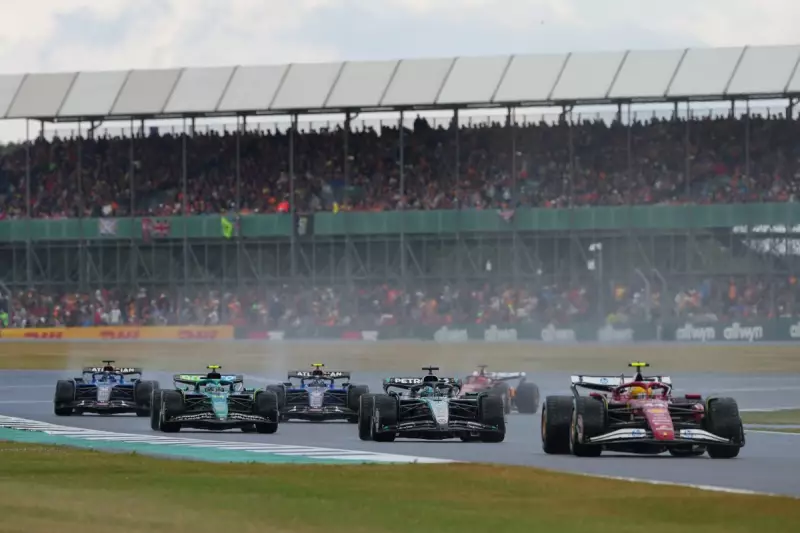
The transformation extends far beyond the football pitch. Formula 1 has become a textbook case of how regulatory clarity can attract serious investment. The introduction of the sport's financial 'cost cap' has made team finances far more predictable, converting previously fragile operations into investable assets with clear revenue lines from prize money and sponsorship.
Under Liberty Media's ownership, initiatives like the global hit series Drive to Survive, alongside upgraded hospitality and digital offerings, have significantly boosted the sport's commercial appeal and valuations. The financial barrier to acquiring an F1 team is now higher than ever, precisely because the asset class has become more stable, transparent, and profitable.
London: The Beating Heart of Sports Finance
These developments point to a deeper institutionalisation of sport. Greater revenue transparency—from centralised media rights and performance-based prize funds to commercial licensing—coupled with regulatory certainty allows investors to price risk more sensibly.
London and the UK sit at the epicentre of this global shift. The nation is home to the Premier League, the majority of Formula 1 teams, world-leading restructuring and insolvency frameworks, and the legal certainty upon which international lenders depend. This powerful combination establishes the UK as the natural hub for structuring complex, cross-border sports financing deals.
The influx of private capital encourages long-term strategic planning. Investors are typically repaid through sustainable club performance and ascertainable revenues, rather than through forced sales or drastic short-term cost-cutting. For sports organisations striving to balance ambitious sporting goals with financial reality, this disciplined, flexible, and long-horizon approach can be truly transformative.
Private investment is not replacing the passion that lies at the heart of sport. Instead, it is providing the sophisticated financial foundation and strategic discipline that modern elite sport increasingly requires to thrive. As this market matures, these innovative financing structures are set to become as integral to the world of sport as the competitions themselves.






