

Rolls-Royce Reverses Course on Electric Vehicle Strategy
In a significant shift for the luxury automotive sector, Rolls-Royce has officially abandoned its ambitious goal to sell only electric vehicles by 2030. The company announced it will continue producing and selling cars equipped with its signature V12 internal combustion engines, responding directly to sustained client demand for these traditional powertrains.
Changing Market Realities Force Strategic Reassessment
Chief Executive Chris Brownridge, who assumed leadership in 2023, explained the decision reflects evolving market conditions and legislative changes. "The legislation has changed," Brownridge stated. "That prediction was based on a different set of circumstances. We recognise some clients would rather have a V12 engine. The V12 is part of our history."
Brownridge emphasized that the previous commitment made under former CEO Torsten Müller-Ötvös was "right at the time" but no longer aligns with current realities. The company's approach now focuses on building what clients specifically order, with Brownridge noting: "For every client who is unsure whether our Spectre is right for them, there will be one that says 'I love it'. We can respond to our client demand ... we build what is ordered."

Spectre's Market Position Remains Undisclosed
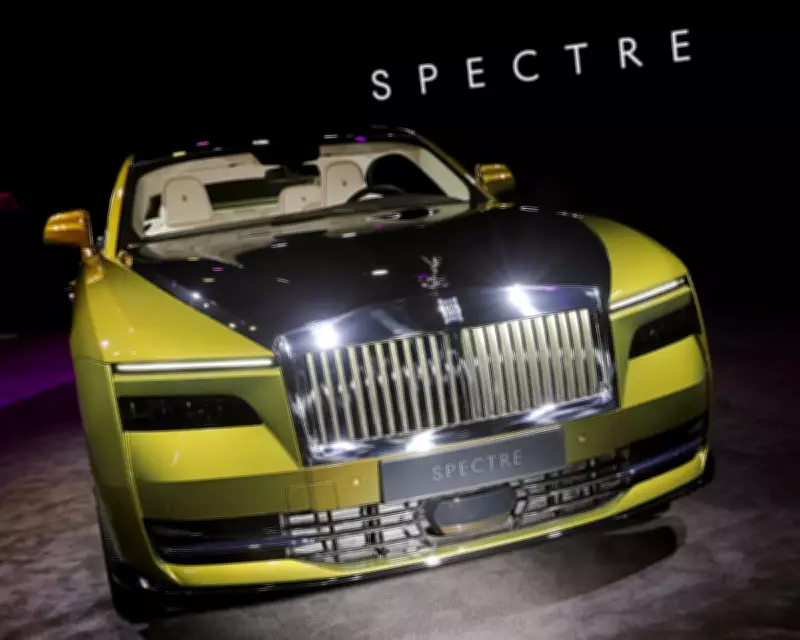
Rolls-Royce launched its first fully electric model, the Spectre, in 2022 with considerable fanfare. At that time, Müller-Ötvös projected the Spectre would account for 20% of annual sales, with a target of reaching 70% by 2028. However, the company has declined to reveal what percentage of current sales actually come from the all-electric Spectre model, leaving industry observers to speculate about its market performance.
Broader Industry Challenges in Electric Transition
Rolls-Royce's strategic reversal mirrors broader challenges facing the global automotive industry's electric vehicle transition. Bentley, another British luxury marque owned by Volkswagen, recently pushed back its full electrification target from 2030 to 2035. This week, Bentley announced plans to cut hundreds of jobs at its Crewe, Cheshire facility as part of restructuring efforts.
The financial implications of electric vehicle strategy shifts have been substantial across the industry. Honda recently informed investors of an expected $15.7 billion (£11.8 billion) impact over coming years as it restructures its electric car division. In February, Stellantis—parent company of Fiat, Jeep, and other brands—announced more than €22 billion (£19 billion) in charges primarily related to revising its electric vehicle strategy.
Geopolitical Factors and Wealth Migration
Brownridge acknowledged additional challenges from geopolitical uncertainty, including US trade tariffs and Middle East conflicts. "It's difficult to predict what's going to happen [in the Middle East]," he said, while noting strong demand growth from the region over the past five years that the company anticipates will continue.
The CEO also observed evidence of ultra-high-net-worth individuals relocating from the UK. "If you zoom in, you see a mobility of ultra-high net worth individuals across Europe, particularly in the UK," Brownridge explained. "We've seen a number of our clients moving away from the UK to different locations, whether that be in Europe or other parts of the world."
Manufacturing Expansion Amid Strategic Shift
Despite the electric strategy reversal, Rolls-Royce continues to invest in its manufacturing capabilities. The company, headquartered in Goodwood, West Sussex and owned by German automaker BMW, produces approximately 5,600 vehicles annually. A £300 million expansion project at the Goodwood plant is underway, designed to enhance capacity for building more bespoke, customized vehicles that cater to the specific preferences of its affluent clientele.
This strategic pivot highlights the complex balancing act luxury automakers face between embracing technological innovation and preserving the traditional elements that define their brand heritage and appeal to their exclusive customer base.






