

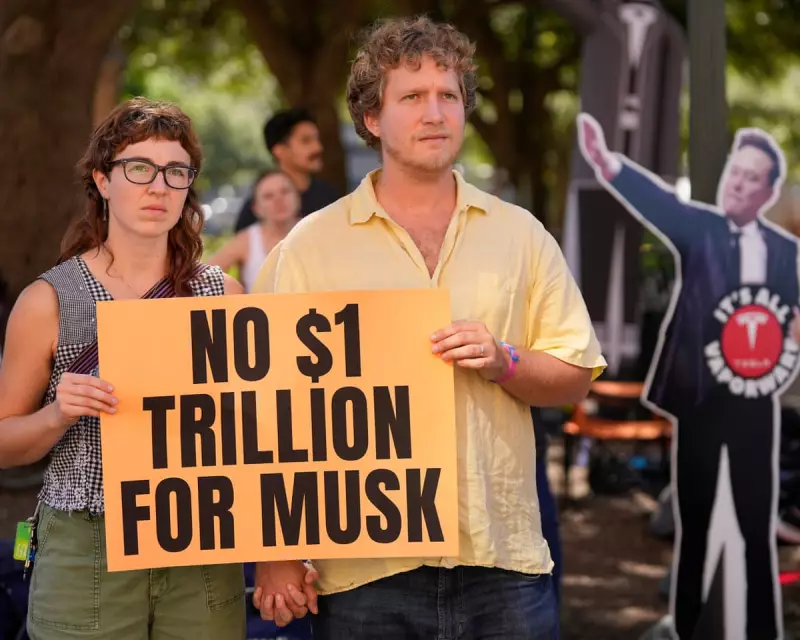
Tesla investors have overwhelmingly supported chief executive Elon Musk's controversial $1tn compensation package, placing the world's wealthiest individual on course to become the first trillionaire in history.
Shareholders Defy Brand Concerns
Despite mounting concerns about brand damage linked to Musk's political activities and public behaviour, Tesla shareholders voted on Thursday to reinstate the colossal pay deal that could become the largest corporate payout ever recorded. The package requires Musk to achieve ambitious targets, including increasing Tesla's market valuation from its current $1.4tn to $8.5tn.
Dan Ives, managing director at Wedbush Securities, summarised the prevailing sentiment among investors: "Musk is Tesla and Tesla is Musk. Despite some of the brand damage Musk has caused to Tesla during his political stint, the AI future at Tesla depends on Elon."

The Brand Damage Toll
Market research firm Strategic Vision documented a significant decline in public regard for Tesla following Musk's acquisition of Twitter (now X) in 2022. The electric vehicle manufacturer has faced commercial challenges, with sales suffering as Musk's alignment with former President Donald Trump and controversial public statements alienated left-leaning consumers.
Additional factors contributing to brand concerns included reports of Musk's alleged drug use, his endorsement of far-right political parties, and instances of him making fascist-style salutes at political rallies. In March, analyst Ives warned that Tesla faced a "brand tornado crisis moment" as backlash against Musk's conduct became a global issue.
Why Investors Remain Loyal
Several factors explain shareholder loyalty despite these controversies. Tesla shares have surged by nearly two-thirds since May, when Musk announced his departure from the Trump administration. Third-quarter deliveries significantly exceeded Wall Street expectations, boosted by American consumers utilising expiring federal tax credits for electric vehicles.
Neil Wilson, an investment strategist at Saxo Markets, highlighted cultural differences in investment approaches: "Money talks in the US more. The US has a far more entrepreneurial, free-wheeling, go-get-'em attitude so they are inclined to let innovators innovate. Plus Musk is a one-off – without him Tesla would be nowhere."
The compensation package includes additional incentives beyond market capitalisation growth, such as delivering 20 million Tesla vehicles, 10 million self-driving car subscriptions, 1 million humanoid robots, and 1 million robotaxis. These ambitious targets require the kind of technological innovation Musk has demonstrated at Tesla and SpaceX.
While automotive analyst Matthias Schmidt acknowledged that Musk has created substantial wealth for shareholders, he questioned whether Tesla's core car business has peaked and described its autonomous vehicle plans as "certainly not the best in the market." Nevertheless, most Tesla investors appear willing to bet $1tn that Musk can deliver on his promises.






