

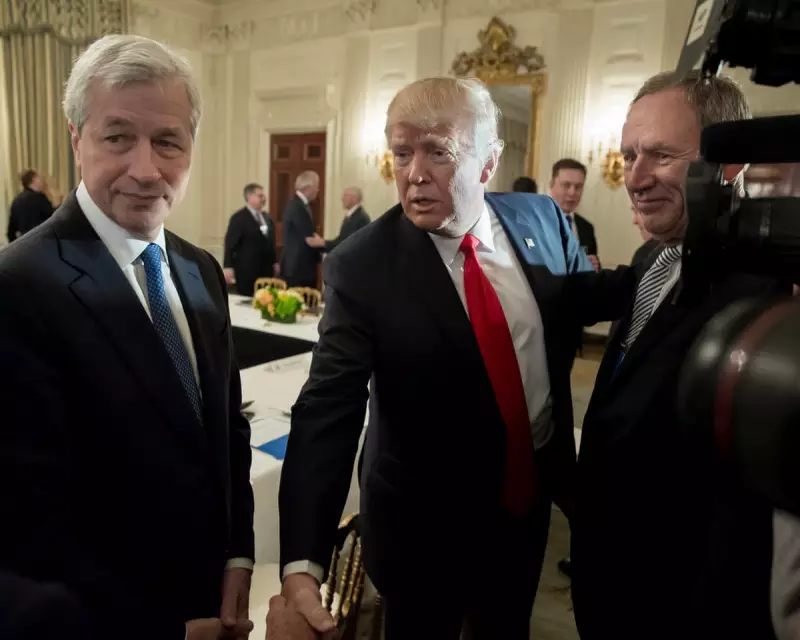
The Dramatic Unravelling of a Powerful Alliance
The relationship between Donald Trump and Jamie Dimon, once seen as a symbol of corporate America's embrace of the populist president, has spectacularly collapsed into legal warfare. What began as a mutually beneficial partnership in the aftermath of Trump's 2016 election victory has now culminated in a staggering $5 billion lawsuit that exposes deep personal and political fractures.
A Promising Start in the Post-Election Era
Following Donald Trump's unexpected election triumph in 2016, corporate leaders across America rushed to align themselves with the new administration. Business titans including General Motors' Mary Barra and Disney's Bob Iger joined Trump's newly formed economic advisory council, eager to influence the incoming president's aggressively pro-growth agenda. Among this elite group stood Jamie Dimon, the formidable chair and chief executive of JP Morgan Chase, America's largest and most influential banking institution.
Dimon's participation represented a significant coup for Trump's political credibility. As the most prominent figure on Wall Street, celebrated for steering JP Morgan through the treacherous waters of the 2008 financial crisis, Dimon brought substantial legitimacy to the new administration. Despite being a lifelong Democrat, Dimon's presence suggested that even traditional political opponents recognised the potential benefits of engaging with Trump's unconventional presidency.

The Gradual Deterioration of Relations
The initial optimism surrounding their relationship began to falter during Trump's first term. While Dimon initially tolerated controversial decisions such as America's withdrawal from the Paris climate agreement, he drew a firm line following Trump's response to the violent white supremacist rally in Charlottesville in 2017. The subsequent disbanding of Trump's economic advisory council marked the first major public rupture between corporate America and the administration.
Personal tensions escalated dramatically in late 2018 when Dimon, addressing speculation about his own presidential ambitions, made pointed remarks about Trump's capabilities and background. "I think I could beat Trump... because I'm as tough as he is, I'm smarter than he is," Dimon declared, adding the cutting observation that "this wealthy New Yorker actually earned his money. It wasn't a gift from daddy."
The Final Breakdown and Legal Confrontation
The relationship reached its nadir following the January 6th Capitol riots in 2021. JP Morgan's decision to close Trump's accounts, which the bank stated was due to legal and regulatory concerns, has now resulted in a massive $5 billion lawsuit alleging political discrimination. Trump's legal action represents the most dramatic escalation in a conflict that has been simmering for years.
Recent months have seen renewed hostilities, with Trump criticising Dimon's support for presidential candidate Nikki Haley and dismissing the banking executive as "highly overrated." Meanwhile, Dimon has publicly warned about the dangers of Trump's attacks on Federal Reserve independence and criticised proposals such as capping credit card interest rates at 10%, which he described as a potential "economic disaster."
Broader Implications for Business and Politics
This extraordinary feud between two of America's most powerful figures highlights the complex and often volatile relationship between political leadership and corporate interests. The conflict echoes similar tensions in other financial centres, notably the dispute between Nigel Farage and NatWest in the United Kingdom, which resulted in significant leadership changes at the banking group.
As both men continue their public war of words, the lawsuit represents more than just a personal dispute; it symbolises the deepening divide between political populism and established financial institutions. With Trump pursuing another presidential campaign and Dimon maintaining his position as Wall Street's most influential voice, this conflict shows no signs of resolution, potentially reshaping the dynamics between future administrations and the banking sector for years to come.






