

Eleven months into Donald Trump's second presidential term, the economic landscape is being felt acutely at the dinner table. A recent report from Atlanta, Georgia, paints a stark picture of how food affordability and shopping habits are diverging dramatically across different socioeconomic groups.
The Strain on Safety Nets and Shrinking Budgets
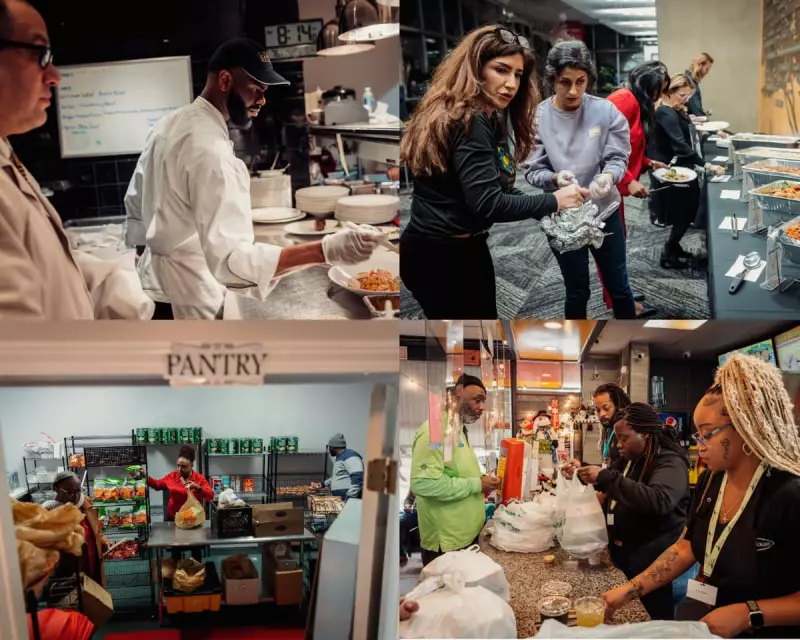
For many, the struggle is daily and severe. Sabrina Carter, who lives alone, hasn't visited a proper restaurant in at least a year. Relying on just $24 a month in food stamps, she finds her budget evaporates quickly. Her occasional treat is cereal or a granola bar. On a Tuesday in December, she visited the Area in Need Missionary House food pantry in Riverdale for essential supplies.
She was joined by Erica Barker, who lost her job with a county contractor a year ago and was visiting a pantry for the first time. Supporting a daughter and grandson without benefits, the family spends $200-$300 weekly, often relying on noodles for dinner. Barker expressed frustration at the judgement some face when seeking help.

Stephanie Jordan, executive director of the Area in Need non-profit, emphasises the importance of respect, noting you never know a person's circumstances. Her organisation's costs are climbing sharply. They now serve over 500 people a month, up from roughly 280 last year. Demand surged when SNAP benefits were paused during a federal government shutdown and has not receded.
"It's not over. We are seeing that in our budget right now," Jordan stated. With unit costs up 30% and relentless demand, she has begun borrowing from the charity's housing support budget. "We didn't know that this was coming," she added, highlighting the pervasive uncertainty felt by many, which Carter described as a "shaky" and "not a good feeling" year.
Navigating New Realities and the Pursuit of Quality
Others are navigating fresh starts and tightened belts. Yolanda Thomas, recently relocated to Atlanta after her New York home was sold for missed tax payments, spends $400-$500 monthly on food for herself and her husband. While acknowledging DeKalb county is cheaper than Roscoe, New York, she noted the lack of public support, having no insurance until she finds local employment.
Entrepreneur Carl Hilton is feeling the pinch, citing a simple breakfast of bacon, eggs, and grits now costing around $20, compared to $6 or $7 previously. He spends well over $500 a month on food. However, as a self-described foodie, he refuses to compromise on exploring Atlanta's vibrant culinary scene with his partner, trying new places weekly.
The food business itself is a challenging arena. Nizakat Noori, a 29-year-old Afghan refugee and mother of four, caters through the Refugee Women's Network's Chef's Club. She dreams of opening a family restaurant. However, ingredient costs have risen about 30%, a significant pressure as she sends money to family in Afghanistan and strives to maintain the authentic taste of her dishes, like chicken kabob and kabuli pulao. "I don't want to change my seasonings... But I have to work," she explained.
The programme is thriving, according to Marmar Stewart, its entrepreneurship development coordinator, growing from 23 to 50 chefs from conflict zones worldwide. Catering bookings are solid, offering competitive prices and a compelling social mission.
The High End: Caviar Bumps and Cautious Spending
At the more affluent end of the spectrum, trends tell a different story. Stacie Simmonss, a teacher, finds value at Fork in the Road in Tucker, paying $64 for five quality meals. The restaurant's general manager, Justin Blake Johnson, says they've only raised prices by about a dollar on a couple of items, keeping the average plate around $13 by focusing on word-of-mouth and value.

Yet, even luxury establishments note shifting habits. Sara Soendergaard, an assistant general manager at the high-end Capital Grille steakhouse in Buckhead, observed that while private business bookings remain strong, residential diners are eating out less frequently. The restaurant has implemented three price increases this year due to rising costs for premium beef, with more expected. The challenge, she says, is making customers see the value in a $300 steak dinner.
For some, spending remains unchecked. Drone pilot Rosby Cobb spends about $600 weekly on takeaways and restaurants, rarely grocery shopping. Meanwhile, Andre Melchionda of Arrivato Imports, who supplies Michelin-starred restaurants with wagyu and caviar, notes the trend of "caviar bumps"—small, affordable tastes of luxury. His business is growing, though he acknowledges the impact of tariffs, particularly a 15% duty on European imports, which forces some price increases up the chain.
Melchionda observes a clear divide: "There's about 1% that doesn't really slow down... The middle-upper class is still doing it, maybe a little bit less frequently. But the upper 1, 2, 3%: they're still going to go out." This snapshot from Atlanta underscores a nation where the experience of food—from basic sustenance to extravagant indulgence—is increasingly defined by economic standing.





