

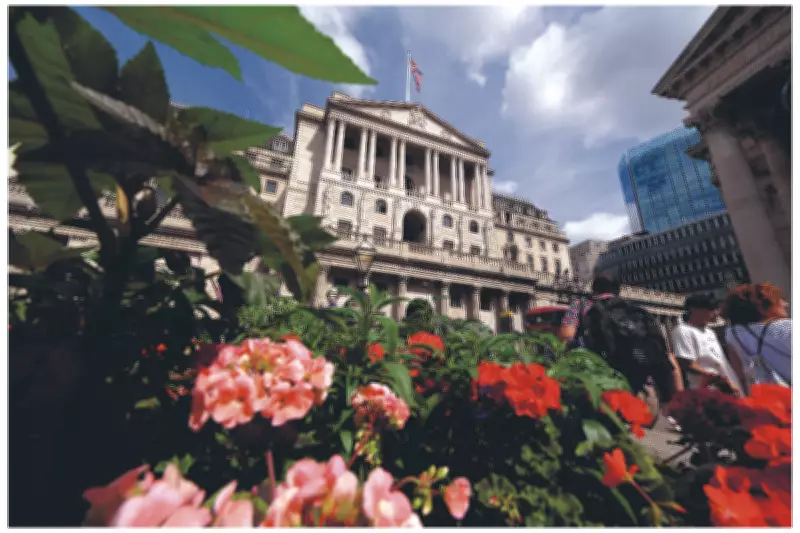
The Bank of England is widely anticipated to keep interest rates unchanged at 3.75 per cent during its upcoming monetary policy meeting, as officials continue their struggle against persistent inflationary pressures. This decision, expected to be announced next week, marks a cautious stance from the central bank amid mixed economic signals.
Inflation Data and Economic Context
Recent figures have shown a slight uptick in inflation, with the consumer price index (CPI) rising to 3.4 per cent in the year to December, compared to 3.2 per cent in the previous month. Some economists attribute this minor increase to seasonal factors, such as heightened travel activity during the Christmas period. They argue that a softening labour market provides sufficient evidence that price growth will moderate in the coming months.
However, analysts at ING have criticised the Bank's approach, describing policymakers as "significantly more cautious" than the available statistics justify. In a note, ING's UK economist James Smith and colleagues pointed to the lasting impact of the 2022 energy-driven inflation spike, which has made the Bank wary of premature rate cuts.

Monetary Policy Committee Dynamics
The monetary policy committee (MPC) is expected to vote in favour of holding rates, with key members including chief economist Huw Pill, deputy governor Clare Lombardelli, and external members Megan Greene and Catherine Mann. Governor Andrew Bailey may once again serve as the swing voter, as MPC members weigh different factors influencing price growth.
Dovish rate-setter Alan Taylor recently suggested that further trade diversion from China, driven by President Trump's tariffs, could accelerate the decline of inflation in the UK. Meanwhile, BNP Paribas economist Dani Stoilova predicts a 7-2 vote to maintain rates at 3.75 per cent, citing concerns over recent jumps in energy costs, food prices, and high inflation expectations.
Budget Impact and Future Projections
The Bank is also poised to provide clearer projections on how Budget measures might affect inflation. Last year, Lombardelli indicated that early analysis showed Rachel Reeves' decision to cut energy subsidies from household bills could reduce inflation by approximately 0.5 percentage points from April, aligning with Office for Budget Responsibility (OBR) forecasts.
Research from Capital Economics suggests that CPI inflation could plummet to the Bank's two per cent target from April, thanks to Budget measures and lower-than-expected price growth in areas like water bills and private school fees. Economists caution, however, that another "awful April" surprise is possible, given past unexpected inflation readings.
Despite this, the report indicates that a dip in price growth might prompt the Bank to cut interest rates to as low as three per cent this year, which would be below current market expectations. This highlights the ongoing debate among economists about the timing and extent of future monetary policy adjustments.






