

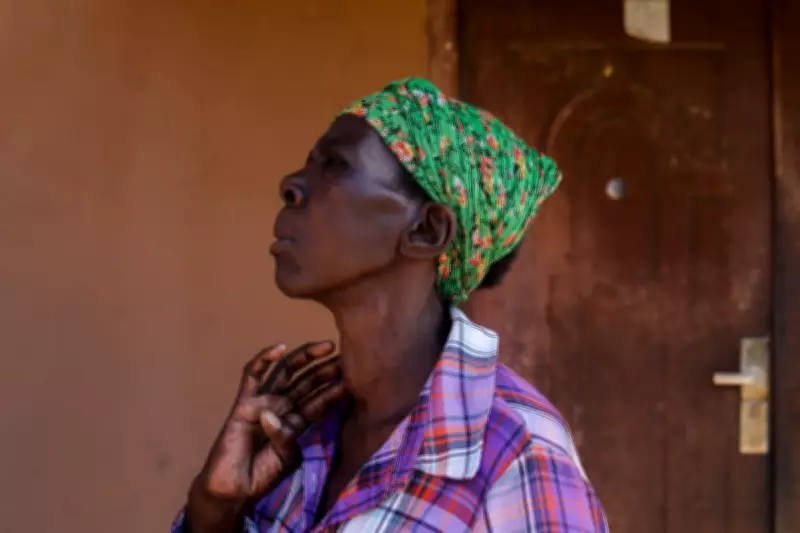
In late 2023, Boitumelo Mosege fell ill with hyperthyroidism, her neck swelling and body itching. The 53-year-old farmer from Molepolole, Botswana, was forced to give up work and now relies on her children's sporadic income and her mother's pension to buy 2,000 pula (£77) worth of medication each month. By May, she had gone three months without medicine. 'I felt like I had lost my life right there,' she said. 'I felt suicidal.'
Nearby, Kelly Jansen cares full time for her 83-year-old father, Gerhardus, who uses a wheelchair. They spend a third of his pension on medication and supplies. Jansen, 39, searches for an electric wheelchair donation. 'I want my life back,' she said.
Public Health Emergency Declared
Last year, President Duma Boko declared a public health emergency due to shortages of essential medicines, 10 months after defeating the long-ruling party. Health procurement had long been dysfunctional, but a multi-year economic downturn from collapsed diamond demand—80% of Botswana's exports—exacerbated the crisis. Unemployment rose to 21% among the 2.5 million population as of March 2025, with nearly 29% of 15- to 35-year-olds jobless.

Boko blamed the Central Medical Stores (CMS), the state health procurement agency, for raising drug prices. Thabo Lucas Seleke, a University of Botswana health policy lecturer, said CMS problems were known since 2010. 'It is a breeding ground for corruption,' he said. 'It has not improved, it is getting worse.' The health ministry did not comment.
Economic Roots and Consequences
Botswana's diamond wealth transformed it from one of the world's poorest countries at independence in 1966. It funded free education and HIV/AIDS treatment, achieving a 2024 GDP per capita of $7,695 (£5,697), Africa's fourth highest. However, healthcare outcomes lag; maternal deaths exceed those in similarly wealthy nations.
Natural diamond prices have fallen 60% in four years due to lab-grown stones, shrinking Botswana's economy by 3% in 2024 and 1% last year, per the IMF. Rising fuel prices from US-Iran tensions will further strain the oil-importing country. 'It doesn't have much other buffer,' said independent analyst Marisa Lourenço.
Personal Stories of Hardship
Oratile Olorato Kgatle, 26, has applied for public relations jobs for 18 months without a single interview. Living with her aunt and limited by Erb's palsy, she sought psychiatric help in January. 'I could feel that light just dimming with each day,' she said.
Phenyo Tanka, 39, graduated in agriculture in 2011 but never found a job. After her husband's redundancy as a mining engineer, the family stopped eating out and fired their domestic worker. Tanka now sells homemade cakes and plans a toilet paper factory. 'I have two girls and I want them to know that they can also be independent,' she said.






