

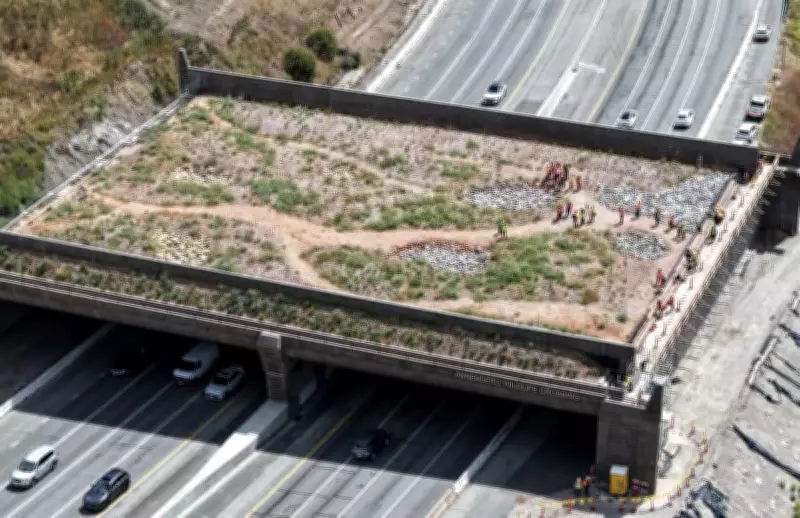
Atop a massive wildlife bridge in California this week, butterflies filled the air. A red-tailed hawk soared above as a gentle breeze rustled the 6,000 native plants, including poppies and purple sage. Below the quiet expanse of rocks and vegetation, a 10-lane freeway carries 400,000 cars each day, but the bridge offers a safe passage for animals.
Project Nears Completion Despite Criticism
When the Wallis Annenberg Wildlife Crossing broke ground four years ago in northern Los Angeles County, enthusiasm was high. It promised to be the largest structure of its kind in the world, allowing mountain lions, bobcats, and lizards to cross the 101 freeway safely. However, recent weeks have brought negative attention. The Murdoch-owned California Post published an op-ed in March, written by two authors from the conservative Manhattan Institute, criticizing the $114 million project for cost overruns. They labeled it a "jobs program for environmentalists" and a "multimillion-dollar bridge to nowhere." Other conservative voices, including Fox News and former Trump transportation secretary Sean Duffy, joined the criticism.
Beth Pratt, California regional executive director for the National Wildlife Federation and the public face of the crossing, faced a swift backlash. She received messages calling her a moron and a cat lady, along with threats to her physical safety. "The hate was really ugly," she said. "We had to contact law enforcement." Despite this, the wildlife crossing is nearing its finish line. Pratt announced at an Earth Day event this week that the project will be officially "open for animal business" on December 2.

Addressing Delays and Costs
Pratt acknowledged that not everything went according to plan due to environmental and economic factors. Originally scheduled for completion in 2025, the project broke ground in 2022 but faced two years of record rains and flooding. The construction schedule was revised, with a new estimated completion date of 2026. "We have experienced no major delays since then," Pratt said. Regarding the cost increase from $93 million to $114 million, she noted that inflation played a significant role. The National Highway Construction Cost Index rose 67% since 2021, impacting projects nationwide. She pointed out that the crossing's cost increase of 23% was less than the average for highway construction during that period.
When asked about Pratt's criticism of the California Post story, co-author Christopher Rufo told the Guardian that "Beth Pratt seems like a quirky, well-meaning woman who has no business running a major infrastructure project," reiterating concerns about delays and budget overruns.
Security Measures and Continued Work
The National Wildlife Federation has hired security and updated protocols to ensure the safety of Pratt and other organizers. "Not everyone agrees on conservation projects, and we have always been transparent in talking about cost and timing," Pratt said. "But if bullies think they're going to stop the work, they don't know me. I'm from Boston." At the Earth Day event, the crossing was peaceful, blending into the hillsides. Butterflies and caterpillars have already found their way to the plants, a positive sign according to Jewlya Samaniego, who co-managed the project's plant nursery. A western fence lizard named Bob and a rattlesnake have made homes at the site, demonstrating the project's success in promoting biodiversity.
Construction continues beyond the freeway overpass. Workers are building a second large structure to bridge a local road and connect the overpass with steep hillsides. Once completed over the summer, they will haul in 3 million cubic feet of soil—enough to fill half of SoFi Stadium—to bridge the gap. Berms will block noise and light, and wildlife-proof fencing will be installed along the freeway.

Monitoring and Future Impact
Jeff Sikitch of the National Park Service said more than 50 cameras will be placed on the crossing and adjacent areas to capture animal movements. He has been part of a two-year study of five target species that will benefit from the bridge, comparing their movements before and after the crossing opens. "The amount of available, protected habitat we do have in the Santa Monica Mountains is prime, great habitat for these species," Sikitch said. "It's even supporting our last remaining large carnivore, the mountain lion."
Pratt became emotional announcing the opening date, saying, "This project that is decades in the making—open for business."





