Political Battle Erupts Over Inflation Blame Game
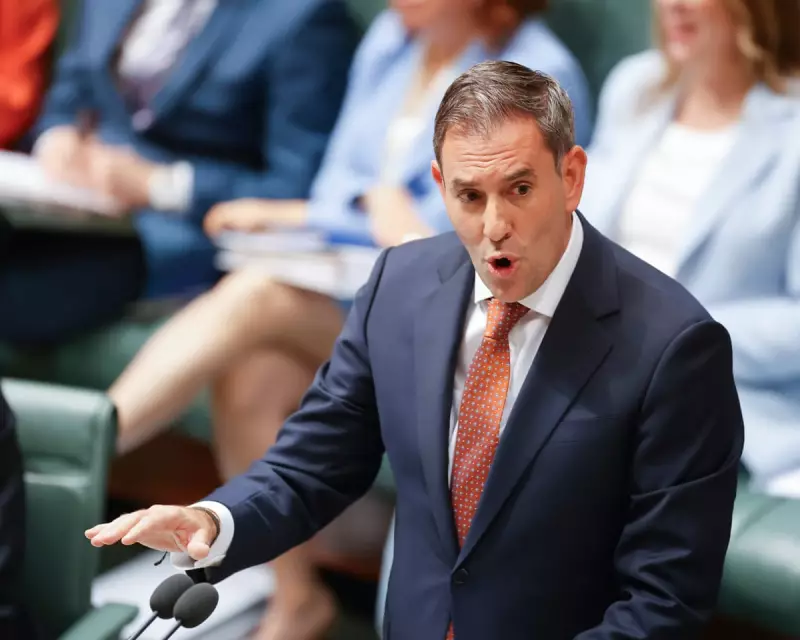
The Coalition has seized on rising inflation figures to launch a sharp political attack against Treasurer Jim Chalmers and the Labor government, accusing them of a 'spending spree' that's wrecking the nation. Liberal staffers escalated the confrontation this week by distributing 'Jimflation' stickers to the Canberra press gallery, directly targeting the treasurer.
What Exactly is 'Jimflation'?
Shadow Treasurer Ted O'Brien introduced the term 'Jimflation' during parliamentary proceedings on Tuesday, describing it as 'Australia's inflation crisis' that's 'destroying our national prosperity.' The portmanteau combines the treasurer's first name, Jim, with inflation, creating a memorable political slogan.
Following the Reserve Bank's decision to hold interest rates while increasing inflation forecasts for the next 18 months, O'Brien repeatedly blamed what he called Labor's 'spending spree' for the unwelcome economic developments.

Jim Chalmers swiftly dismissed the accusations, countering that if government spending was truly the decisive factor in interest rate decisions, then the Coalition needed to explain why there were three interest rate cuts this year, including two occurring after the March budget.
Examining the Economic Reality
At its core, inflation results from too much money chasing too few goods. There's undeniable evidence that the public sector's economic role has expanded significantly since the pandemic and Labor's 2022 election victory.
According to Parliamentary Budget Office figures, Commonwealth expenses as a share of GDP are expected to remain around 27% over the coming years. This represents approximately a two percentage point increase from pre-pandemic levels, equating to an additional $60 billion annually.
Jonathan Kearns, chief economist at Challenger and former Reserve Bank official, acknowledged that public spending has 'obviously added to demand' over recent years and contributed significantly to economic growth. However, he highlighted crucial subtleties often overlooked in political debates.
'The question is whether we would have tolerated the alternative: having lower demand and lower inflation,' Kearns stated. He noted that GDP per capita has been falling for two years and questioned whether Australians would have preferred even steeper declines.
The Public Services Dilemma
The inflation debate raises difficult questions about which spending programs could realistically be cut to alleviate price pressures, and whether Australians would genuinely feel better off without them.
If Labor bears responsibility for adding economic demand that kept inflation higher than otherwise possible, it also deserves credit for delivering overdue pay rises to aged care and childcare workers, reducing medicine costs, and boosting bulk billing services.
Independent economist Chris Richardson suggested moving beyond the 'blame game,' noting that while government spending was certainly a factor, 'there's no simple line of sight from the government spending more to that generating inflation.'
Richardson identified a broader issue requiring political attention: Australia's poor productivity performance. 'We've had magnificent growth in our living standards over time and we keep expecting this baby's going to bounce back,' he remarked.
He challenged the government to use what he described as 'the closest thing to a free hand that we've seen in decades' to pursue meaningful economic reform.
As the inflation debate dominates Parliament, the arguments may become irrelevant if the current uptick proves temporary on the path toward the Reserve Bank's 2.5% target. Meanwhile, Australians continue expecting improved public services across healthcare, education, aged care, and childcare - expectations that necessitate government spending and complicate simple narratives about fiscal responsibility.