

Economists Warn Fuel Tax Cuts Could Worsen Shortages and Inflation in Australia
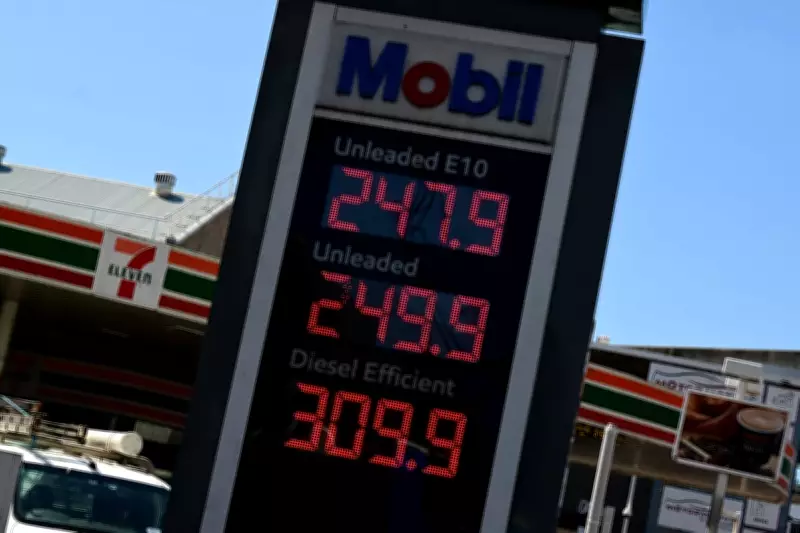
Economists are issuing stark warnings that cutting Australia's fuel excise would be a "very bad idea," potentially worsening petrol shortages and adding to inflation. This comes as pressure mounts on the Albanese government to reduce the tax, with diesel prices at a Sydney petrol station reaching 309.9 cents per litre and petrol prices surging to 250 cents per litre, up from 180 cents in early March.
Political Pressure for Tax Relief
Mining billionaire Gina Rinehart, Tasmania's state premier, and Liberal opposition leaders in New South Wales and Victoria have called for the federal government to cut the excise on petrol and diesel. However, the federal Liberals and Nationals have so far avoided joining these calls, and Treasurer Jim Chalmers stated the government is not considering the move.
Richard Holden, an emeritus professor of economics at the University of New South Wales, emphasized that caving to pressure would increase demand, exacerbating existing fuel shortages. He noted that higher prices naturally encourage fuel use reductions among those who can afford it, but Australia faces uncertain supply in the coming weeks without household purchase caps.

Inflation and Economic Risks
Holden further warned that excise cuts risk adding to Australia's high inflation rate by enabling households with sufficient income to spend more. He described such measures as a "political Band-Aid" rather than sound economics. Analysis from the University of Canberra suggests that halving the fuel excise for a month would provide modest relief, with inner-city households receiving about $23, regional households $35, and outer-suburban households $38.
Fabrizio Carmignani, an economics professor at the University of Southern Queensland, argued that revenue from the excise tax would be better allocated to cost-of-living policies targeting poorer households. This perspective is supported by research from the e61 Institute, which found that well-off households benefited most from past excise cuts, as they tend to use more petrol.
Targeted Support vs. Broad Relief
Adit Maitra, an economist at e61, highlighted that lower-income households are disproportionately affected by fuel price spikes, meaning an excise cut would not effectively support those in greatest need. He suggested that Australians under financial strain might be better assisted through boosts to payments like jobseeker, commonwealth rental assistance, and family tax benefits.
In response, a spokesperson for Gina Rinehart's company, Hancock Prospecting, criticized economists for offering a "one-sided assessment," advocating for excise cuts as a long-standing position. Meanwhile, NSW opposition leader Kellie Sloane urged the government to reconsider, calling the excise a "very hefty tax" and requesting transparency in decision-making.
Victorian opposition leader Jess Wilson echoed this sentiment, emphasizing the immediate need for cost relief for households and businesses, despite concerns about shortages and inflation.
Historical Context and Future Implications
The debate recalls the Morrison government's decision to halve the fuel excise in 2022, following Russia's invasion of Ukraine, at a cost of nearly $1 billion per month for six months. This move primarily benefited higher-income groups, underscoring the challenges of implementing broad tax relief in a targeted manner.
As Australia navigates this fuel crisis, economists stress that any policy changes must balance immediate relief with long-term economic stability, avoiding measures that could deepen shortages or inflationary pressures.






