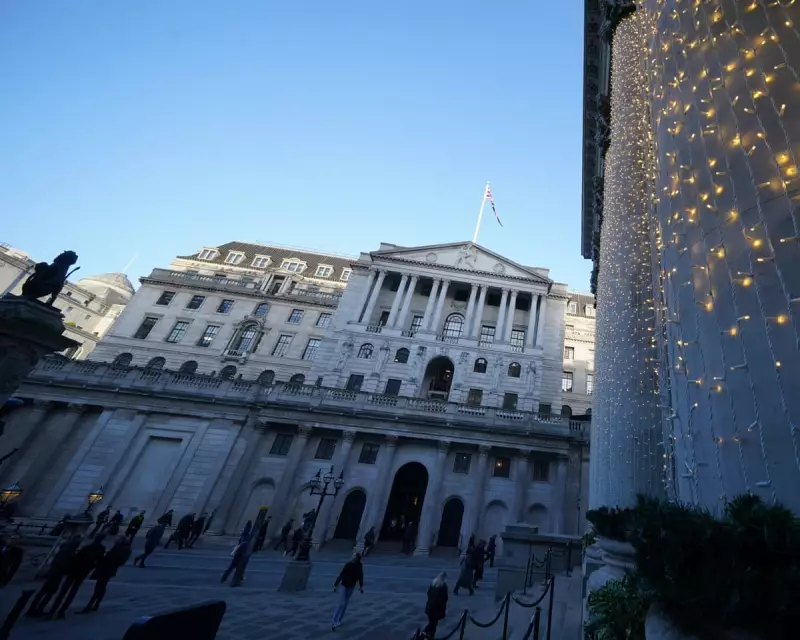
A sharper-than-expected fall in inflation has all but guaranteed the Bank of England will deliver a cut to borrowing costs this week, offering a potential boost to the UK's slowing economy.
Inflation Data Points to December Rate Cut
The annual rate of inflation, as measured by the Consumer Prices Index (CPI), dropped to 3.2% in November, down from 3.6% in October. This significant slowdown has pushed market expectations for a Bank of England rate cut on Thursday above 98%.
The Bank's nine-member Monetary Policy Committee (MPC) announces its decision at noon on Thursday. After a narrow five-four vote to hold rates last month, economists now widely anticipate a reduction of 0.25 percentage points from the current base rate of 4%.

Key details within the Office for National Statistics (ONS) data provided further encouragement. Food price inflation eased to an annual rate of 4.2%, down from 4.9% in October. The ONS noted month-on-month price falls for items like sugar and pasta.
Relief for Policymakers and the Chancellor
The news will be welcomed by Chancellor Rachel Reeves, who faces a challenging economic backdrop of rising taxes and a cooling labour market. The Trades Union Congress had recently called for a "sequence of rate cuts" to provide a vital stimulus.
The MPC has been notably cautious in recent months, concerned that a predicted short-term surge in inflation might become entrenched, particularly while wage growth remained high. The committee cut rates in February, May, and August but paused in November amid intense pre-budget speculation.
Policymakers have also been monitoring the impact of April's £25bn increase in employer National Insurance, introduced by Reeves, to see how much would feed through into consumer prices. Early indications suggest some costs were passed on, but as a one-off change, its inflationary effect should diminish.
Mounting Pressure for Action
However, some MPC members have grown increasingly worried about the damage caused by maintaining a 4% base rate as economic growth falters. External member Swati Dhingra argued in September that the Bank should not be "overly cautious," as much of the UK's inflation was driven by temporary factors.
It was partly with the Bank in mind that Reeves announced measures in last month's budget aimed at curbing inflation, including plans to cut household energy bills from next spring.
The latest inflation snapshot suggests the feared inflationary "hump" may now be receding. The Bank of England is now expected to respond with a rate cut this week, offering hope of restoring some confidence to a fragile economy as it heads into the new year.