

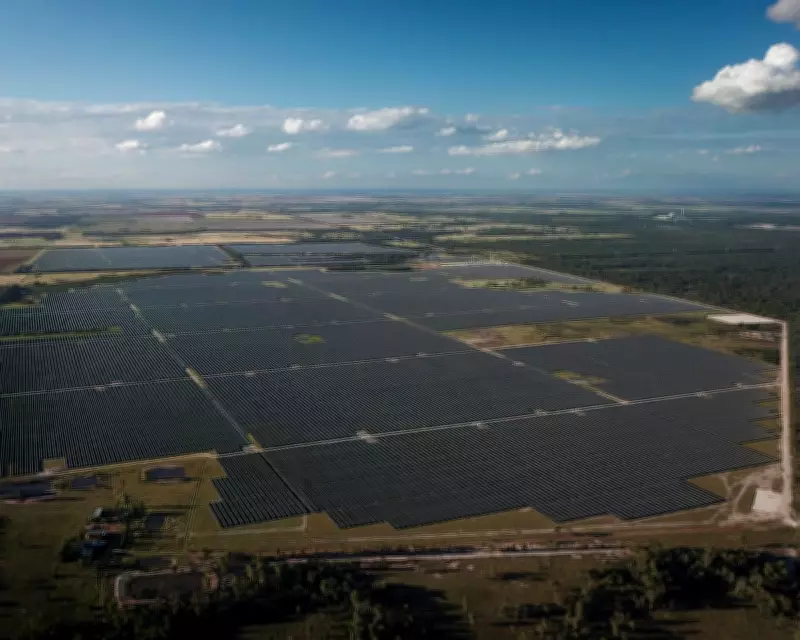
Queensland's transition away from coal-fired power, once moving at unprecedented speed, has suffered a dramatic reversal under the new Liberal National Party (LNP) government, sparking what industry leaders describe as "whiplash." In 2024, a record seven solar and wind farms and seven energy storage projects totaling 3,202 megawatts (MW)—roughly equivalent to four medium-sized coal power stations—reached financial commitment, according to the Clean Energy Council. But after the LNP, led by David Crisafulli, won government in October 2024, the state's energy policy took a sharp turn.
Policy Reversal and Investment Crash
The new government repealed legislated renewable energy targets and unveiled a coal-friendly energy plan in late 2025, extending the operation of state-owned coal plants until at least 2046—a decade longer than the previous Labor government's plan. Plans to decarbonize various sectors were delayed by up to five years. Planning Minister Jarrod Bleijie began calling in renewable projects mid-stream to verify local backing. As a result, investments crashed from 3,202 MW across 14 projects in 2024 to just 510 MW across two projects in 2025.
"We have seen capital fly from Queensland and go to states where policy settings are far more stable," said Jackie Trad, CEO of the Clean Energy Council and former Labor deputy premier. Policy changes, particularly projects being called in after expecting approval, created "a sense of chaos and havoc." Trad noted that the LNP's coal-friendly plan signaled to developers that their investments might not be secure.

Roadblocks and Red Tape
Tristan Edis, director of analysis at Green Energy Markets, said Queensland's advantages—including more space to connect projects and state-driven investments—are "now evaporating." Planning approval "looks like it's becoming a lottery," and steps to keep coal plants running, including a $1.6 billion maintenance fund, mean new solar and wind projects face a "kamikaze battle with the government."
Nationally, renewable investments also fell from 8,290 MW in 2024 to 6,529 MW in 2025, but the drop was far steeper in Queensland. Meanwhile, South Australia saw investments surge from 210 MW to 2,118 MW, highlighting the impact of bipartisan policy support. "That chaos means billions of dollars of investment—and the skills and training that go with it—go elsewhere," Trad warned.
Queensland also faces a federal bottleneck: more than 100 renewable projects await assessment under national environment laws. Katie-Anne Mulder, CEO of the Queensland Renewable Energy Council, noted that 75% of projects submitted since 2021 remain under assessment, and the backlog is growing. A spokesperson for the Albanese government said 43 of 138 approved renewables projects were in Queensland, and that reforms would reduce approval times.
Climate Implications
Queensland is Australia's largest greenhouse gas emitter, accounting for nearly a third of the national footprint. Official emissions dropped 34% between 2005 and 2023, but excluding land-use changes, emissions actually rose. The Crisafulli government maintains a net-zero by 2050 target and retains the previous 2035 goal of a 75% cut from 2005 levels. However, analysis by the Queensland Conservation Council suggests the new energy roadmap may achieve only a 50% cut by 2035.
Ariane Wilkinson, climate and energy policy expert at WWF-Australia, said stepping away from climate targets is not in Queensland's interest. "Queensland needs a credible transition plan that ensures energy security and isn't tied to unreliable coal and expensive gas." She also noted that the state's climate commitments were a key reason the World Heritage Committee decided not to list the Great Barrier Reef as "in danger."
Francesca Muskovic, executive director of policy at the Investor Group on Climate Change, representing over $4 trillion in assets, said Queensland's abundant resources and critical minerals offer a bright outlook. "The 'future made in Australia' could be a future made in Queensland. But the risk is that this isn't realized. Capital will go where it's welcome." She warned Queensland is not only losing to other states but also to global investors, who may take their money away from Australia entirely. "We forget we're in a global race for investment."

The Guardian sought comment from Queensland Treasurer and Energy Minister David Janetzki but did not receive a response.





