

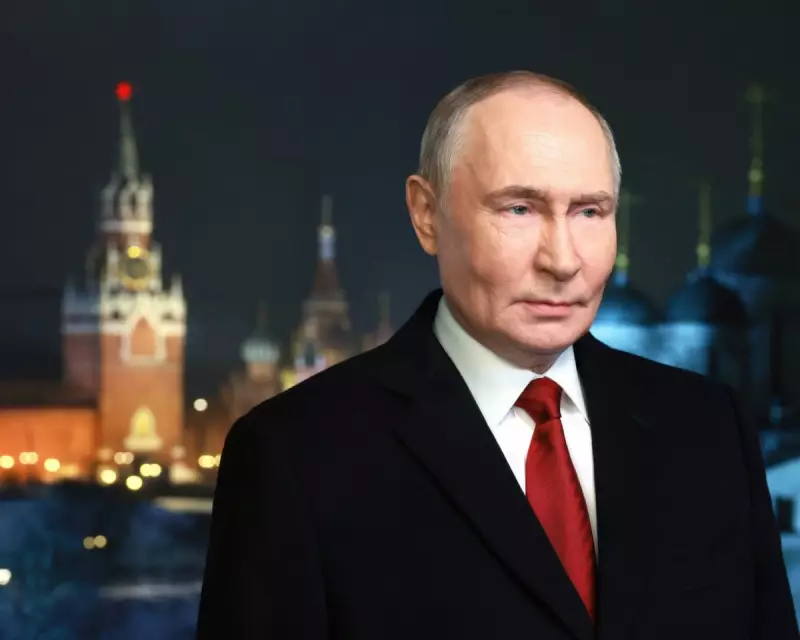
As Vladimir Putin paced the Kremlin on New Year's Eve, global events presented a fresh economic concern: the potential impact of Donald Trump's manoeuvres in Venezuela on the world oil price. For decades, crude oil has been the lifeblood of Russia's finances, far surpassing gas exports to Europe in importance. The prospect of a revived Venezuelan oil industry flooding the market with millions of extra barrels this year threatens to depress global prices and squeeze Moscow's vital income stream.
The Precarious House of Cards?
Optimists, observing four years of conflict in Ukraine, portray the Russian economy as a fragile house of cards, vulnerable to the right gust of economic pressure. They argue that a significant drop in oil prices, combined with existing sanctions, could catastrophically undermine Putin's ability to fund his war machine and break Ukrainian resistance. The financial indicators appear to support a grim picture. Economic growth has slowed to near zero after a burst of military-fuelled expansion triggered inflation, which the Kremlin is now desperately trying to control. The International Monetary Fund predicts meagre growth of just 0.6% in 2025.
The domestic situation is equally strained. Interest rates stand at a punishing 20%, taxes are rising, and a severe labour shortage has pushed unemployment down to around 2%. This exodus of workers, coupled with the drafting of young men, is creating a demographic crisis. While household incomes initially rose due to welfare spending, they are now expected to stagnate. Analysts like Marek Dabrowski of the Bruegel thinktank note that budget cuts are biting, with reductions in regional funding, pension spending, and education. Business leaders complain of a complete lack of investment incentive.

Kremlin's Economic Rewiring and Resilience
However, this analysis overlooks the Kremlin's significant success in fundamentally rewiring its economy since the full-scale invasion began in 2022. While the military campaign faltered initially, the administration has proved far more adept at managing domestic politics and state finances. The strategy resembles a medically induced coma: slowing growth to a standstill to insulate the patient from external shocks.
Although oil revenues have halved from 50% to 25% of state income, Putin has mobilised internal resources to fill the void, primarily through sharply increased taxes on households and businesses. The result is a fiscal picture that, by international standards, remains surprisingly stable. Russia's debt-to-GDP ratio is under 20%, and its annual spending deficit is set to hit about 3.5%—figures that compare favourably with the UK's 95% debt ratio and 11% deficit during the Covid pandemic. Inflation, which soared after the invasion, has been tamed to around 6%, not far from the central bank's 4% target.
Richard Connolly of the Royal United Services Institute (RUSI) underscores this resilience, stating, "We are not near the economy being a decisive factor in the Kremlin's thinking about how to pursue the war." He notes the regime has successfully reframed the conflict as a war with the West, not merely with Ukraine.
The Shadow Fleet and the Road Ahead
Sanctions have undoubtedly had an impact. Russia was forced to assemble a "shadow fleet" of over 400 secondhand vessels to circumvent restrictions on shipping oil to Turkey, India, and others. This fleet has now shrunk by about half since 2024, pushing Moscow back towards using European-insured vessels. If financial centres like London took a harder line on insuring these shipments, Russian revenues could be severely hit.
Yet, Putin retains crucial lifelines. China remains a steadfast friend and buyer of oil, while North Korea supplies military kit. Even as countries like India begin to turn away under a tougher sanctions regime, the Kremlin has the reserves to continue paying soldiers and their families. Meanwhile, Ukraine's funding, bolstered by a €90bn EU promise, is estimated to last 18 months to two years.

The recent launch of hypersonic Oreshnik missiles against western Ukraine signals a stark escalation. The message to Europe is clear: while an economic collapse may not be imminent, tightening the tourniquet on Russian trade and increasing military support for Ukraine is essential. Four years of relatively weak sanctions gave Putin time to reorganise. A tougher, more dynamic approach is now required to work every angle and bring the war to an end, even if the goal is degradation rather than immediate economic collapse.





