

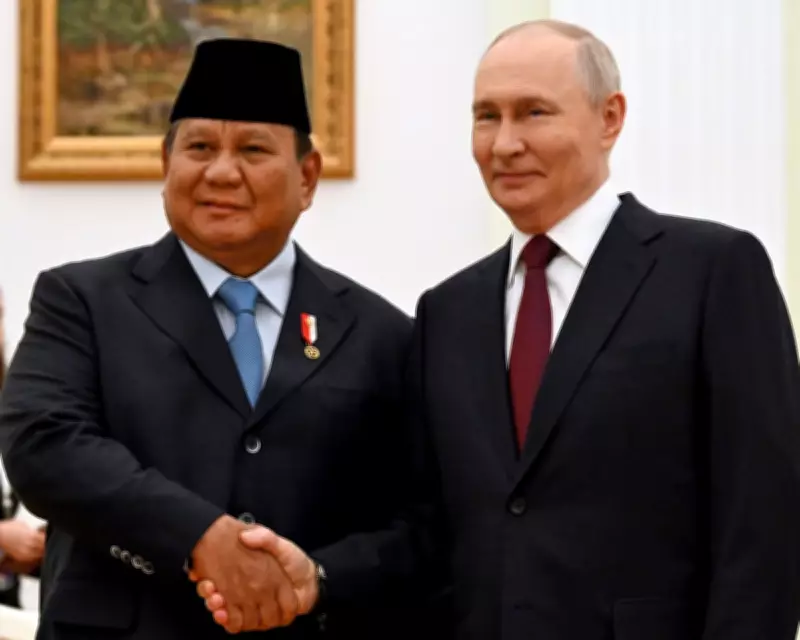
Russian President Vladimir Putin and Indonesian President Prabowo Subianto met in Moscow on April 13, 2026, signaling deepening ties as Southeast Asia seeks alternative energy and fertilizer sources amid the Middle East crisis.
EU Warnings Ignored
The European Union has urged Southeast Asian nations not to rely on Russian oil, warning it would enable Moscow's war in Ukraine. However, countries like Indonesia, the Philippines, Thailand, and Vietnam are pursuing deals with Russia to fill supply gaps left by the conflict in the Middle East.
Indonesia plans to import up to 150 million barrels of Russian crude. The Philippines received its first Russian crude shipment in five years in March. Thailand is negotiating fertilizer purchases, and Vietnam is fast-tracking a nuclear power plant deal with Russia.

Russia's Windfall and Image
The crisis has boosted Russia's profits, with soaring energy prices and a US waiver on sanctioned Russian oil providing billions. Polls show favorable views of Russia in the region, with many seeing Putin as a strong leader defending traditional values.
Russia has long-standing ties with Vietnam and Laos and is viewed positively for its stance on Palestine. However, analysts note limits to its influence due to economic and military constraints compared to the US and China.
Nuclear Energy and Future Prospects
Russia is a major nuclear power player and has signed deals with Myanmar and Vietnam. The Middle East war allows Russia to position itself as a reliable partner for energy and food security.
Symbolically, these deals reinforce Indonesia's non-alignment policy and counter domestic criticism of pro-US moves. For Russia, they demonstrate continued international relevance ahead of a Russia-Asean summit in Kazan.






