

UK Economy Confronts Stagflation Crisis as Growth Momentum Collapses
The United Kingdom's economic outlook has darkened considerably as researchers warn of impending stagflation—a toxic combination of stagnant growth and rising inflation—that threatens to batter the nation's financial stability in the coming months. This alarming development comes as growth across the crucial services sector ground to a complete halt during March, according to comprehensive data analysis.
Middle East Conflict Disrupts Economic Recovery
The ongoing war in the Middle East has delivered a severe blow to the UK's economic output, pushing growth to its slowest level since April of last year. Simultaneously, input price inflation has surged to its highest point since that same period, creating a dangerous economic squeeze. Trade disruption near Iran, a critical global shipping corridor, has reversed months of gradual economic improvements that the UK had been carefully nurturing.
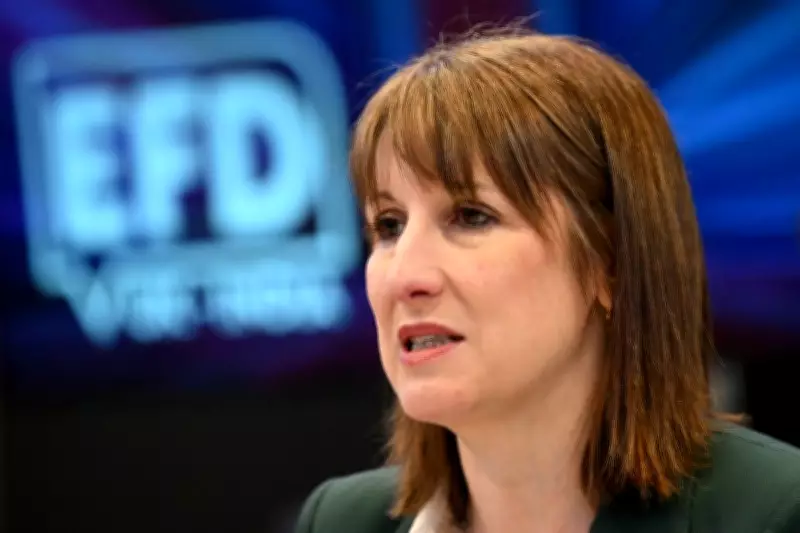
This economic setback represents a significant challenge for Chancellor Rachel Reeves and the Labour government, whose plans to revitalize the private sector now face substantial obstacles. The situation also complicates upcoming decisions for Bank of England policymakers regarding interest rates, as they navigate between controlling inflation and supporting economic activity.

PMI Data Reveals Disturbing Trends
The composite purchasing managers' index (PMI) reading for March registered at just 50.3, barely above the 50-point benchmark that separates expansion from contraction. This figure represents a downward revision from earlier estimates and marks the slowest rate of business activity expansion in six months. More concerningly, overall input costs for UK private sector firms have accelerated at their fastest pace since February 2023, according to S&P Global analysts.
Tim Moore, economics director at S&P Global, emphasized the gravity of the situation: "Stagflation risks appear to have increased, with the final services PMI data signalling slower growth and higher cost pressures than the earlier 'flash' estimates based on data compiled up to 20th March." He added that numerous businesses reported suppliers passing on higher prices for energy, raw materials, and shipping.
Economic Experts Sound Alarm Bells
Thomas Pugh, an economist at accountancy firm RSM, described the UK's trajectory toward another stagflation episode as "inevitable" and warned that recession has become increasingly probable. The convergence of rising inflation, elevated borrowing costs, and fragile conditions in public finances, employment markets, and productivity could significantly deepen the economic crisis by mid-year.
Business leaders participating in the survey highlighted how Middle Eastern turmoil—which has kept oil prices firmly above $100 per barrel for weeks—has resulted in delayed investment decisions and a dramatic slump in client confidence. Export sales have remained subdued while business confidence has plummeted to its lowest level since last June.
Global Political Factors Compound Domestic Challenges
The specter of stagflation threatens to unsettle businesses across the entire UK economy, from high street retailers and essential service providers to City consultants and warehouse managers. All eyes now turn to international developments, particularly President Trump's next moves as another negotiation deadline approaches.
Trump has threatened nuclear action against Iran unless it agrees to a ceasefire and reopens the Strait of Hormuz—a critical waterway through which approximately one-fifth of global crude oil supplies passes, along with other essential materials like helium. This geopolitical uncertainty adds another layer of complexity to an already precarious economic situation.
Meanwhile, the Labour government is reportedly considering an energy support package for lower-income households, though home energy bills are not expected to change until at least July. As the UK economy stands at this dangerous crossroads, policymakers face the formidable challenge of navigating multiple simultaneous crises with potentially far-reaching consequences for businesses and households alike.






