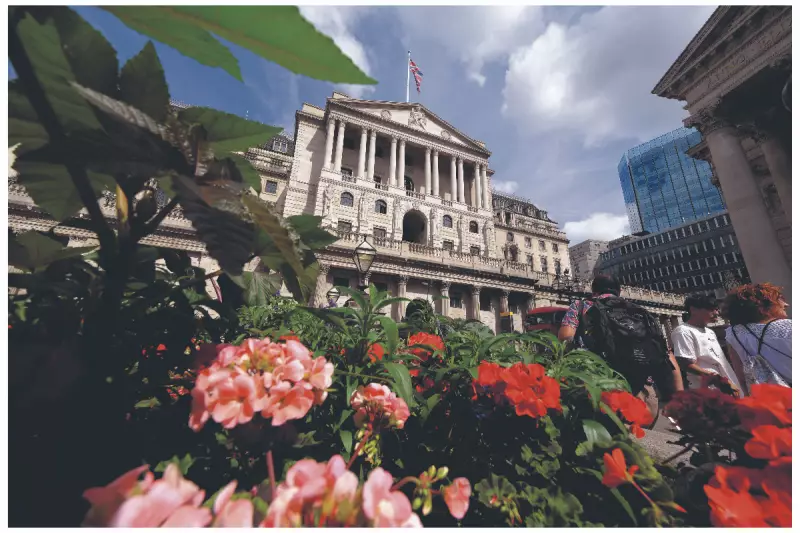
All eyes are on the Bank of England this week as officials prepare to make a crucial decision on interest rates, with new inflation data expected to show persistent price pressures.
Inflation Forecast to Remain Stubbornly High
Fresh data due on Wednesday is anticipated to reveal that inflation remained stubbornly high in November. According to a consensus compiled by Trading Economics, price growth is set to hold at 3.5 per cent for the year to November. This represents only a slight fall from the previous month's figure.
Underlying price pressures are also proving persistent. Year-on-year core inflation, which strips out volatile items like food and energy, is also forecast to remain unchanged at 3.4 per cent. In a further sign of stickiness, Deutsche Bank predicts services inflation could edge up to 4.6 per cent from 4.5 per cent the month before.

A Divided Committee Faces a Critical Call
The official data publication comes just one day before the Bank of England's Monetary Policy Committee (MPC) announces its latest decision on interest rates. The timing ensures the figures will be central to what is expected to be a closely contested debate.
Financial markets have priced in a 25 basis point cut, with Governor Andrew Bailey likely to have the casting vote in a split between doves and hawks. In the Bank's last meeting, Mr Bailey emphasised he was waiting for more economic data before judging whether to cut rates, heightening the significance of Wednesday's release.
Since that meeting, the economic landscape has shifted. The UK economy contracted in October, and surveys have indicated a continued softening in the jobs market. Furthermore, Deputy Governor Clare Lombardelli has suggested that policies announced in the recent Budget by Chancellor Rachel Reeves could reduce headline inflation by 0.5 percentage points from April next year.
Economists Warn of Risks and Uncertainty
Analysts highlight that the Bank's next move remains highly uncertain. James Smith, a UK economist at ING, noted that officials voting to hold rates would be scrutinising food price growth, as it heavily influences consumer inflation expectations.
"The fact that the committee is this divided means that it only takes one or two officials to shift their view to completely reshape the pace of rate cuts," Smith said. He added that the UK's status as an inflation outlier should become less apparent in the coming months.
Economists at Pantheon Macroeconomics, Robert Wood and Elliott Jordan-Doak, warned that "stubborn" inflation levels would likely prompt the Bank to adopt a more cautious tone on cutting rates over the next year. They pointed to a recent Bank survey of firms which suggested high wage growth demands could keep inflation stickier than hoped.
"Weakening survey readings of job growth pose too big a risk for the MPC to ignore this month," they concluded, indicating that despite falling employment potentially dragging down wage growth, the link between jobs and pay remains strong.