

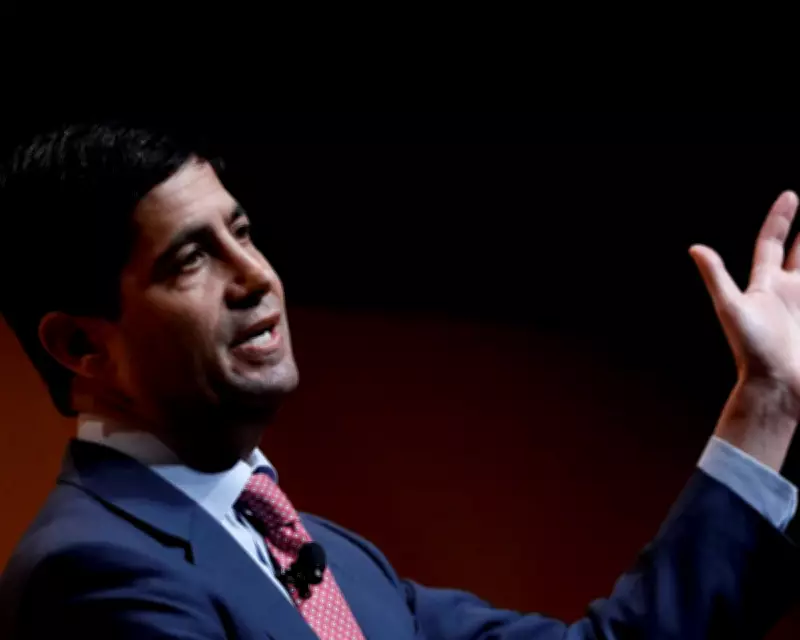
In a significant announcement that concludes months of intense speculation, former President Donald Trump has officially nominated Kevin Warsh as his choice for the next chair of the Federal Reserve. The decision, revealed via Trump's Truth Social platform, positions Warsh to potentially succeed Jerome Powell, whose current term as Fed chair concludes in May.
A Return to the Spotlight for Warsh
This nomination represents a notable comeback for Kevin Warsh, who had previously been a contender for the prestigious role back in 2017. During that earlier selection process, the position ultimately went to Jerome Powell, leaving Warsh as a prominent figure who narrowly missed out on the opportunity. Now, with Powell's tenure approaching its end, Warsh finds himself once again at the forefront of discussions surrounding the leadership of America's central bank.
Warsh's Background and Qualifications
At 55 years old, Kevin Warsh brings a wealth of experience from both governmental and private sector roles. His career includes serving as a Federal Reserve governor from 2006 to 2011, a critical period that encompassed the global financial crisis and its aftermath. During this time, he also acted as the Fed's representative to the G20 group of nations, giving him substantial international economic policy exposure.

Prior to his Fed governorship, Warsh worked as special assistant for economic policy from 2002 to 2006, further solidifying his credentials in economic governance. His professional connections extend deeply into Wall Street, providing him with insights into financial markets that could prove valuable in his potential new role.
Policy Perspectives and Market Reception
Warsh's economic viewpoints have evolved in recent years. While he has historically expressed concerns about inflation risks within the United States, he has more recently aligned with President Trump's criticisms regarding the Federal Reserve's approach to interest rates. Specifically, Warsh has echoed sentiments that the central bank has been too cautious in implementing rate cuts, a position that resonates with the former president's public statements.
Market analysts have begun assessing what Warsh's potential leadership might mean for monetary policy. Stephen Brown, a US economist at Capital Economics, suggested that financial markets are likely to view Warsh as "a relatively safe choice" given his established track record and familiarity with the Federal Reserve's operations.
Current Professional Engagements
Beyond his governmental experience, Warsh maintains an active professional portfolio. He currently serves as a lecturer at the prestigious Stanford Graduate School of Business, where he shares his economic insights with future business leaders. His corporate affiliations include roles at several significant organizations:
- The global courier company UPS
- Coupang, a major Korean e-commerce firm
- The Duquesne Family Office, the investment vehicle of billionaire Stanley Druckenmiller
Personal Connections and Other Candidates
Warsh's personal life connects him to influential business circles through his marriage to Jane Lauder, granddaughter of cosmetics magnate Estée Lauder and daughter of billionaire businessman Ronald Lauder. Notably, Ronald Lauder has interests in Greenland and previously encouraged Trump to pursue acquisition of the territory, highlighting the interconnected nature of business and political relationships.
The selection process for the Federal Reserve chair involved consideration of several other prominent candidates. The shortlist reportedly included:
- Kevin Hassett, former director of the National Economic Council
- Christopher Waller, a current Federal Reserve governor
- Rick Rieder, an executive at the investment management firm BlackRock
Trump's ultimate choice of Warsh suggests a preference for someone with both Federal Reserve experience and alignment with his economic policy perspectives. The nomination comes amid what many observers describe as an unprecedented effort by the former president to influence central bank policymaking, particularly regarding interest rate decisions.

As the nomination process moves forward, attention will focus on how Warsh's potential leadership might shape monetary policy direction, particularly regarding inflation management and interest rate adjustments in the coming years.





