

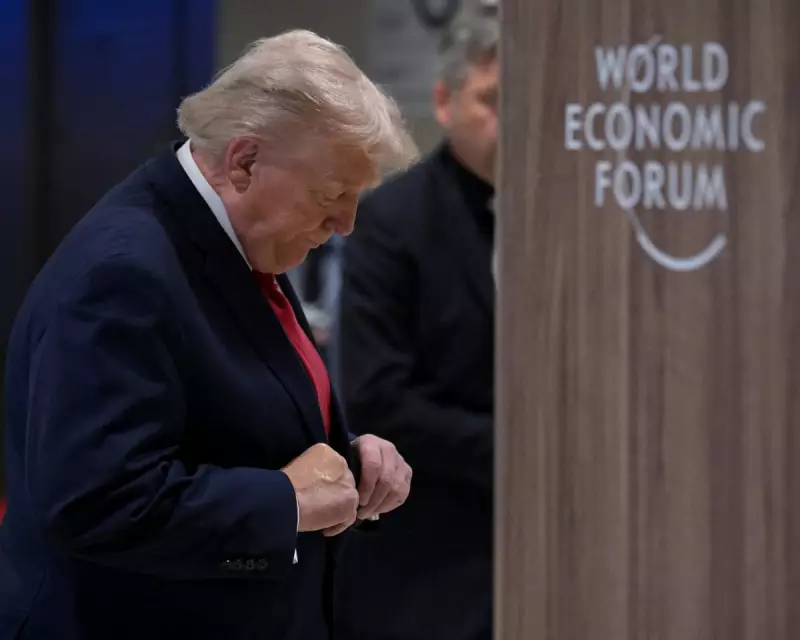
Trump's Davos Appearance Signals End of an Era
Donald Trump's presence at the 56th annual World Economic Forum in Davos, Switzerland on 21 January 2026 served as a stark reminder of how dramatically the global landscape has shifted. The former US president's rambling, hour-long speech highlighted everything the Davos elite opposes – protectionism, climate skepticism, and disdain for multilateral institutions. Yet his appearance merely exposed deeper cracks in a system already crumbling under its own weight.
The Illusion of a Rules-Based Order
For decades, the World Economic Forum has championed what it calls the liberal international rules-based order. However, as French President Emmanuel Macron recently observed, we're moving toward a "world without rules." The irony is profound: this supposedly universal system was largely an American construction with Europe as its junior partner. The United States guaranteed European security through NATO while acting as the world's consumer of last resort.
This arrangement has been breaking down long before Trump entered politics. The institutional framework designed to enforce global rules – including the International Monetary Fund and World Bank – was created in 1944 when American power stood at its zenith. These institutions still operate under governance structures that give the US effective veto power while allowing Europe to appoint key leaders, despite the dramatic economic rise of China, India, and Brazil.

Structural Flaws in Global Governance
The problems extend far beyond personality clashes between Trump and the Davos crowd. The global trade system represents another area where the rules-based order shows its age. Liberalisation deals that reduced tariffs and increased market access were essentially agreements between the US and Europe, with terms then imposed on developing nations. As these nations have grown in economic importance, they've become increasingly resistant to accepting agreements that offer them minimal benefits.
It has been more than three decades since the last comprehensive global trade agreement was reached, reflecting how the system has stagnated. Meanwhile, China's rapid economic growth has seriously challenged American hegemony, while Europe struggles with sluggish growth, limited innovation, and continued dependence on US security guarantees.
Internal Contradictions and External Pressures
The rules-based order faces threats from within as well as without. When liberal democracy supported economies where prosperity was broadly shared, the system enjoyed legitimacy. Today, with wealth concentrating at the top while middle and lower incomes stagnate, that legitimacy has evaporated. Nowhere is this more evident than in the United States itself, where labour's share of national income has fallen to historic lows.
External pressures compound these internal contradictions. Emerging economies see little merit in a system weighted toward wealthy developed nations, while climate change demands global cooperation that the current architecture seems incapable of delivering. Even the original design of the IMF contained fundamental flaws, with adjustment burdens falling disproportionately on debtor nations rather than being shared with creditors.
Building a New System for a Changed World
Creating a functional international order for the 21st century presents enormous challenges. As Canada's Prime Minister Mark Carney noted in Davos this week, the old order "is not coming back." Building something new requires multiple simultaneous reforms:

- Faster and more inclusive economic growth patterns
- Significantly increased investment in public infrastructure
- Financial assistance from wealthy nations to help poorer countries address climate change
- Greater European responsibility for its own defence
- Comprehensive reform of international institutions including the UN, WTO, IMF and World Bank
Complacency represents the greatest danger. Imagining that simply replacing Trump with another leader will restore the old system misses the fundamental point. The structural reasons for the rules-based order's collapse demand attention regardless of who occupies the White House. Davos 2026 may be remembered as the moment when the international community finally acknowledged that patching up the old system is no longer an option – and that building something new, however difficult, has become unavoidable.





