

Trump's Economic Promises Fall Short as Policy Incoherence Grows
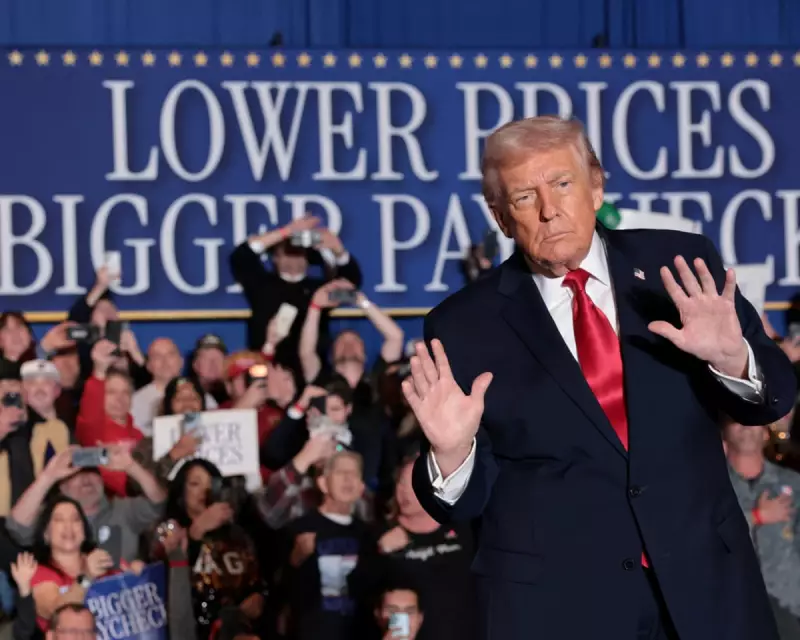
Donald Trump arrived in Pennsylvania in December 2025 to deliver remarks on the US economy and affordability, facing mounting pressure over his administration's performance. The president's bold campaign trail promises have collided with economic reality, creating what analysts describe as a "policy salad" of often contradictory proposals.
Campaign Rhetoric Meets Economic Reality
During the presidential election, Trump promised Americans that "a vote for Trump means your groceries will be cheaper." However, during his first year back in office, food prices actually rose faster than they did during Joe Biden's final year. This pattern extends across multiple economic sectors, with household energy prices increasing by 7.3% under Trump's watch - more than twice the rate during Biden's last year.
The president's central economic promise of bringing "jobs and factories roaring back" through protective tariffs has failed to materialise. Federal Reserve Chair Jerome Powell has noted that these tariffs are actually hindering inflation control efforts, creating additional economic complications.

Public Perception and Political Response
Recent polling reveals significant public dissatisfaction with Trump's economic management. A Wall Street Journal poll found that 49% of Americans believe the economy has worsened over the past year, while 54% disapprove of the president's economic stewardship. A separate CNN survey indicated that 61% of respondents disagree with Trump's economic policies.
In response to these negative indicators, Trump has adopted what observers describe as a "whirling dervish" approach, rapidly generating feel-good policy proposals while simultaneously declaring a "golden age" for the American economy. The president appears focused on signalling empathy with struggling Americans rather than developing coherent economic strategies.
Questionable Policy Proposals
Trump's recent economic initiatives demonstrate significant practical and legal challenges. His proposal to cap credit card interest rates, while appealing to indebted Americans, would likely result in banks restricting credit access for higher-risk borrowers. Similarly, his housing cost reduction plans contain fundamental flaws.
The plan to bar investors from purchasing single-family homes would probably further depress residential construction, while extending mortgages to 50-year terms would increase overall housing costs. Allowing home buyers to use retirement accounts for down payments would likely inflate housing prices by boosting demand without corresponding supply increases.
Radical Departures from Traditional Republican Policy
Trump's economic approach represents a significant departure from traditional Republican free-market principles. His proposals range from mass deportation of immigrant workers to worldwide import tariffs, price caps on pharmaceuticals, and demands for equity stakes in private companies. This collection of policies shows little coherence and strays well outside conventional Republican economic thinking.
The president's recent attacks on Federal Reserve Chair Jerome Powell, including suggestions of criminal investigation, demonstrate the administration's willingness to challenge independent institutions. Similarly, proposals to leverage Venezuelan oil - despite its higher extraction costs and risks - to achieve artificially low oil prices appear detached from economic reality.
Political Strategy Amid Economic Challenges
Trump's approach reflects broader shifts in America's post-globalisation political landscape. The traditional focus on economic efficiency through unfettered trade and investment has been superseded by political imperatives to address the grievances of communities that have lost out during economic transitions.
Historical evidence suggests this strategy can yield political benefits. Trump's campaign promises to reduce food and gas prices helped secure his return to the presidency. Research indicates that even when his 2018-2019 tariff war resulted in job losses, it still provided political advantages for the Republican party.

As economic frustrations continue to mount among American voters, the president appears increasingly desperate for his policy approach to gain traction. Whether Americans will ultimately embrace Trump's scattered economic proposals or reject them based on their practical outcomes remains uncertain, but the administration's commitment to this unconventional strategy shows no signs of diminishing.





