

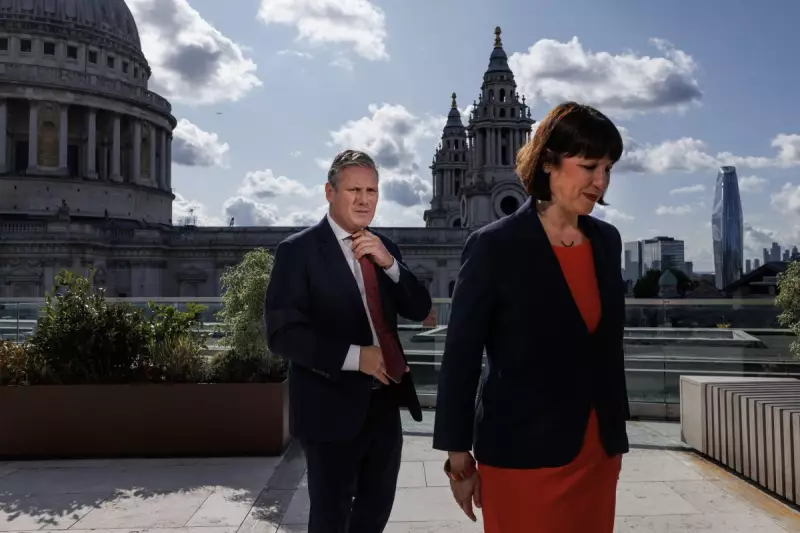
Chancellor Rachel Reeves is under intense political pressure following the release of official statistics confirming that the United Kingdom remains at the bottom of the G7 league table for total investment.
Investment Figures Paint a Bleak Picture
The latest data from the Office for National Statistics (ONS) shows that combined public and private sector investment accounted for just 18.6 per cent of GDP in the third quarter of 2025. This figure solidifies Britain's position in last place among the world's seven largest advanced economies, a persistent trend since the 1990s.
This outcome represents a significant blow for the Labour government and the Chancellor, who came to power with ambitious pledges to turbocharge economic growth through substantial government spending on infrastructure and a national housebuilding programme.

Policy Shifts and Tax Rises Deter Private Investment
Economic analysts suggest the weak investment performance is partly due to private sector caution. Businesses have been unsettled by a series of government policy reversals and tax increases. In April 2025, companies were confronted with a double whammy of higher employers' National Insurance contributions and a rise in the national minimum wage, both announced in Reeves's first Autumn Budget.
The pressure on firms is set to intensify further. The national living wage is scheduled for another increase in April 2026, and energy standing charges are also due to rise that same month, squeezing business margins and limiting funds available for investment.
Forecasts from the Confederation of British Industry (CBI) reflect this pessimism, having downgraded projected business investment growth for 2026 by 1.1 percentage points from a previous estimate of one per cent.
Public Sector Expected to Carry Growth Burden
With the private sector grappling with rising costs, economists now predict that the public sector will become the primary engine for UK economic expansion in the coming years. Consultancy Capital Economics forecasts growth of 1.4 per cent in 2025, slowing to just one per cent in 2026, with the public sector acting as the "main source of growth."
The government has pointed to its own investment plans as a counter-argument. A spokesperson stated: "We are investing in our economic future, with over £120bn more in capital investment compared with previous plans and the highest level of public investment for 40 years." They also highlighted that the National Wealth Fund has invested nearly £4bn, leveraging over £5bn in private capital.
However, Shadow Chancellor Sir Mel Stride offered a starkly different view, telling The Times that the ONS figures "should be ringing alarm bells in Downing Street." He argued, "Low business investment signals a lack of confidence in the future of the economy. That is precisely what we are seeing."
Louise Hellem, Chief Economist at the CBI, struck a cautious note. While the organisation upgraded its 2026 growth forecast to 1.3 per cent following an extra £11bn in state spending announced in the Budget, she warned this should be seen as "cautious optimism" rather than "cause for celebration," citing ongoing challenges in regulation, taxation, and energy.






