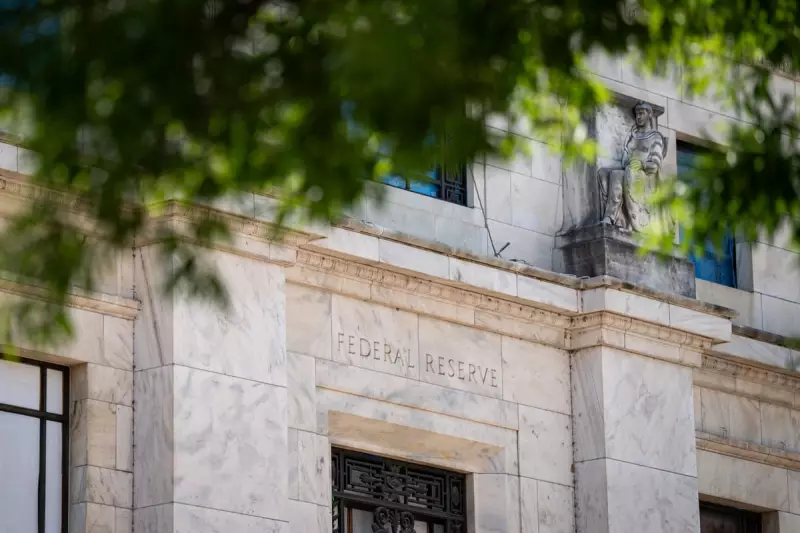
The United States government has taken the unprecedented step of cancelling the official inflation report for October, creating a significant data blackout for policymakers at the Federal Reserve as they debate potential interest rate cuts.
Data Vacuum Creates Economic Uncertainty
The Bureau of Labor Statistics officially announced the cancellation of the highly anticipated Consumer Price Index (CPI) release for October. The decision, made public on Friday, was attributed to the recent federal government shutdown, which was the longest in US history. The agency stated it could not "retroactively collect" the necessary data to compile the report.
This leaves the Federal Reserve, led by Chair Jerome Powell, navigating without a key metric on the economy's health. Powell had previously described the challenge of steering monetary policy without standard data as akin to "driving in the fog." He emphasised a cautious approach, stating, "We're going to collect every scrap of data we can find, evaluate it and think carefully about it. What do you do if you're driving in the fog? You slow down."

Fed Policymakers Weigh Conflicting Signals
Despite the missing data, pressure on the Fed continues. The central bank, which had aggressively raised rates in 2022 and 2023 to combat high inflation, began a cautious cutting cycle late last year. Officials are now weighing their next move amid persistent demands from former President Donald Trump, who has recently taken steps to address affordability concerns after months of denying inflation was high.
Adding to the complex picture, a speech by John Williams, President of the Federal Reserve Bank of New York, lifted market expectations. On Friday, he indicated he still saw "room for a further adjustment in the near term" to interest rates, suggesting a potential rate cut as early as December.
Broader Economic Picture Remains Murky
The data disruption extends beyond inflation. The September jobs report, which was also delayed by the shutdown and released over a month late, presented a mixed economic outlook. It showed 119,000 jobs were added, but the unemployment rate ticked up to its highest level since 2021. Growth estimates for preceding months were also revised lower.
The complete October jobs report will not be released at all. However, data on the number of jobs created or lost in October will be published alongside the full report for November. Crucially, this release is scheduled for a week after the next Federal Reserve meeting, further complicating the immediate decision-making process for policymakers.