

AI Must Augment Rather Than Replace Human Workers, Experts Warn
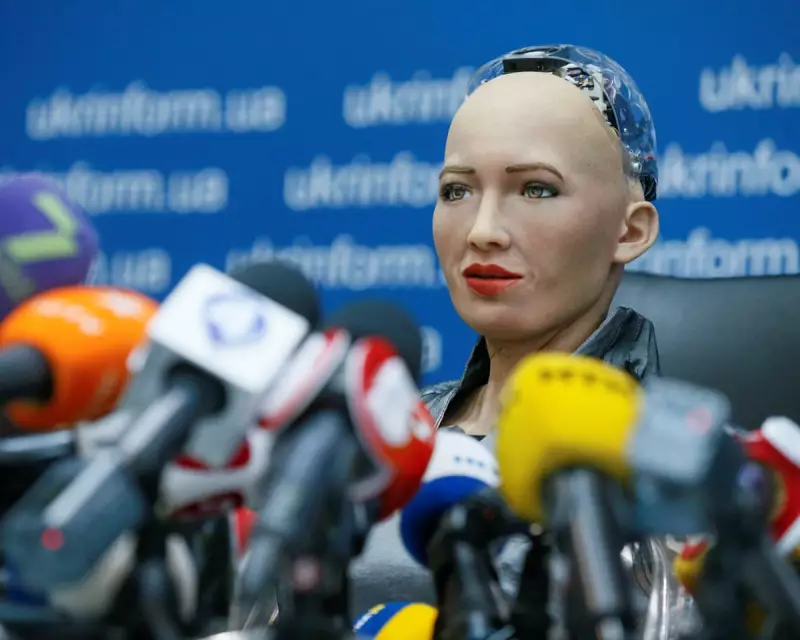
As a humanoid robot recently gave a news conference, a stark warning has emerged from global forums: artificial intelligence must enhance human capabilities rather than replace workers entirely. Policymakers are being urged to nudge companies toward developing powerful tools that empower people, not render them obsolete.
The Davos Debate: Robot Dreams Versus Human Reality
Last week at the World Economic Forum in Davos, Elon Musk enthusiastically envisioned a future with "more robots than people," even suggesting robots could watch over children. However, this robotic utopia vision has been met with significant skepticism. Critics argue that children need human connection and love that gives life meaning, something machines cannot provide.
The debate highlighted how major decisions about technological progress are being taken by a small number of powerful individuals, predominantly men. Notably absent from tough questioning were issues like Meta's $70 billion metaverse investment that has yet to yield results, or concerns about their smart glasses being used for covert filming.

IMF Warning: A Coming Job Market 'Tsunami'
International Monetary Fund managing director Kristalina Georgieva delivered one of the most sobering assessments, telling Davos delegates that AI is "transforming our world faster than we are getting ahead of it." She identified the failure to regulate technology as one of her greatest concerns.
Georgieva warned of an approaching "tsunami" in the labour market as jobs are transformed or eliminated. "The stakes go beyond economics," she emphasized in a blogpost. "Work brings dignity and purpose to people's lives. That's what makes the AI transformation so consequential."
The Augmentation Versus Automation Divide
Erik Brynjolfsson, director of Stanford's digital economy lab, highlighted a crucial dichotomy during a WEF session on "jobless growth." His research suggests workers aged 22-25 in the US are already experiencing AI-related job losses, particularly in sectors where AI automates rather than augments labour.
Brynjolfsson's concept of "The Turing Trap" argues that the traditional goal of replicating human intelligence is misguided. "As machines become better substitutes for human labour, workers lose economic and political bargaining power," he explains. "When AI is focused on augmenting humans rather than mimicking them, then humans retain the power to insist on a share of the value created."
Business Enthusiasm Versus Practical Results
A PWC poll of UK chief executives revealed a significant gap between enthusiasm and results. While 81% identified AI as their top investment priority, only 30% had seen any cost reductions. This discrepancy suggests intense pressure to find savings in coming months, with wage bills likely becoming a primary focus.
Microsoft chief executive Satya Nadella presented an optimistic vision where AI could benefit the global south, describing scenarios where doctors are freed by technology to spend more time with patients. However, he cautioned that AI risks losing its "social permission" if it cannot demonstrably improve people's lives rather than merely enriching a few powerful tech firms.
The Call for Social Responsibility and Worker Protection
Trade unions are demanding urgent conversations about how productivity benefits from AI should be shared across society rather than hoarded by technology companies. Liz Shuler, president of the US union federation AFL-CIO, articulated the worker perspective clearly: "If we can all agree that this is to make our jobs better and safer, easier, more productive, then we're all in. But if you're looking to just de-skill, dehumanise, replace workers, put people out on the street with no path forward, then absolutely you're going to have a revolution."
The IMF recommends governments take three crucial steps:

- Invest significantly in education and reskilling programmes
- Implement robust competition policies to prevent innovation benefits concentrating in too few hands
- Establish strong welfare safety nets to protect vulnerable workers
As Brynjolfsson urges policymakers to use tax incentives and regulation to steer companies toward human-augmenting technologies, the fundamental question remains: will AI become a tool that empowers humanity, or a force that displaces it? The answer may determine not just economic outcomes, but the very social fabric of our communities.





