AI Will Not Replace the Skilled Trades: Young Adults Excel in Hands-On Careers
For many young people entering the workforce, the stigma surrounding hands-on jobs is rapidly fading. These trades now offer a competitive appeal, with contests, rankings, and national titles, all while requiring human expertise that artificial intelligence cannot replicate.
Cale Mouser: From Diesel Repair to National Champion
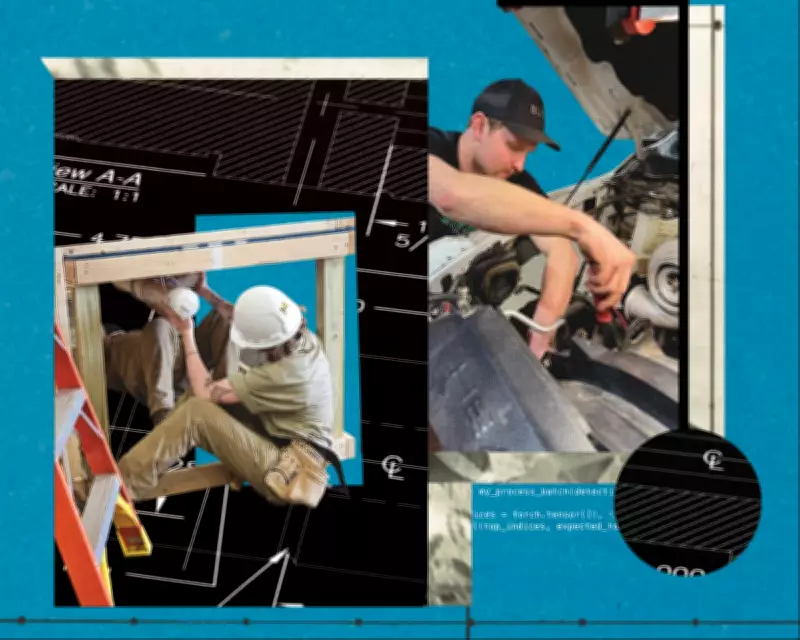
At just 23 years old, Cale Mouser earns well over six figures repairing diesel engines in Minnesota. His career began five years ago with medium- and heavy-duty trucks, leading to a diesel technology degree at North Dakota State College of Science and a faculty position there. Mouser's family background, with a nurse mother and veterinarian father, offered no obvious path into this field, but he now teaches the next generation how to diagnose and repair heavy equipment.
"It's very exciting. I get to go do some sleuthing, like Sherlock and Watson," he chuckles. "There's a lot of awe and wonder involved." Mouser's journey accelerated when he won a SkillsUSA competition, earning a state gold medal and later a national championship. His success highlights the demand for complex cognitive skills, speed, and determination in industries struggling to hire skilled workers.

The Rise of Skills Competitions and Workforce Development
SkillsUSA, the largest nationwide workforce development organization for students, reports unprecedented interest from policymakers and CEOs in work-based learning programs. With over 440,000 members, its annual championships draw thousands of competitors. Chelle Travis, executive director of SkillsUSA, notes, "Everyone is after skilled talent. We see employers asking to increase competitions."
These competitions provide access points for young adults to enter "middle-skill" jobs—roles requiring training beyond high school but not a four-year degree. Professor David Autor of MIT explains that these fields over-index on human expertise, involving problem-solving and high-stakes decisions. They are poised to benefit in an AI-driven economy, where humans collaborate with technology on new work processes.
Eva Carroll: Breaking Barriers in Construction
Eva Carroll discovered the trades through high school electives in construction and electrical work. No one in her family worked with their hands, but a simple potato experiment in class hooked her. Last year, she stood out as the only female national medalist in her division at SkillsUSA, winning silver in the TeamWorks competition.
Carroll's team built an eight-foot by ten-foot mini home in 16 hours, complete with roof, electrical, and plumbing. Despite initial parental concerns about safety and hard labor, Carroll thrives in the field. "I'm in my own world when I'm out there," she says. With potential careers in construction management or estimation, she could earn over $90,000 annually.
Aydrie Ruff: From Forensics to Future Careers
Aydrie Ruff's interest in criminal justice led her to Meridian Technology Center in Oklahoma at age 16. Competing in SkillsUSA crime scene investigations, her team made it to nationals, processing simulated robbery scenes under intense scrutiny. Ruff's studies include blood spatter analysis and forensic entomology, with plans to major in forensics at the University of Central Oklahoma.
"There are hundreds of jobs out there," she says, highlighting opportunities in forensic science, pathology, and toxicology. Her medals, tacked on her bedroom wall, symbolize the growing appeal of hands-on careers among young adults.
Why AI Cannot Replace Skilled Trades
Professor Autor emphasizes that skilled trades require specialized knowledge, judgment, dexterity, and adaptability—qualities very challenging for robotics and AI. While AI excels at computer-based tasks, leaving some knowledge workers exposed, trades like diesel repair and construction rely on human oversight. Mouser confirms this, stating, "I just diagnosed a transmission the other night, where the computer didn't even know anything was wrong. AI will not replace the skilled trades."
As young adults like Mouser, Carroll, and Ruff demonstrate, the future of work includes thriving careers in fields where human expertise remains essential, offering competitive salaries and job security in an evolving economy.