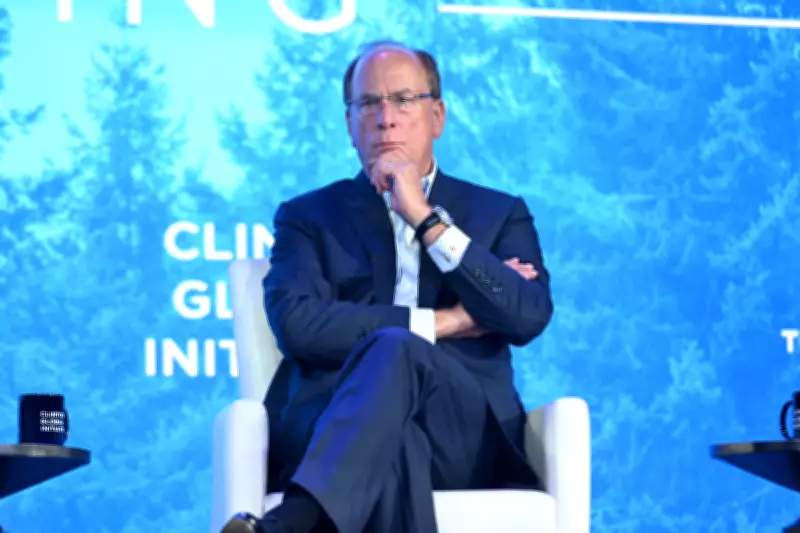
BlackRock CEO Larry Fink Predicts AI Will Transform Job Market, Elevating Skilled Trades
In a recent interview with the BBC, Larry Fink, the chief executive of global asset management giant BlackRock, declared that artificial intelligence is poised to dramatically reshape the employment landscape. Fink, who oversees a staggering $14 trillion in assets, emphasized that society must urgently reconsider its perception of valuable careers as AI advances.
Revaluing Skilled Trades in the AI Era
Fink argued that the United States has historically "overdid" its emphasis on pushing young people toward university education and white-collar professions. He stated that this approach created an unfair hierarchy, devaluing essential manual occupations. "I think what we did wrong… we really put judgement on so many jobs," Fink explained. "We need to be proud that a career can be just as strong in these fields of plumbing and electricians."
He predicted that the ongoing technology boom, driven by AI, will generate significant demand for workers in skilled trades directly tied to physical infrastructure and maintenance. This includes electricians, welders, plumbers, and HVAC technicians. Conversely, Fink warned that many traditional entry-level office positions are likely to diminish as AI tools automate routine administrative and analytical tasks, potentially disrupting conventional career pathways for graduates.

Addressing the Skills Gap and Economic Risks
To help bridge the emerging skills gap, BlackRock has committed a substantial $100 million to fund training programs specifically aimed at preparing workers for these high-demand trade roles. The initiative has an ambitious goal of reaching 50,000 individuals over the next five years.
Fink expressed concern that societies worldwide are not adapting quickly enough to the rapid pace of technological change ushered in by AI. "The speed at which AI is changing, we’re not adapting our society fast enough," he remarked during a recent BlackRock event.
His comments arrive amid concerning data on graduate employment. The unemployment rate for recent university graduates in the U.S. has climbed to approximately 5.6 percent, while job postings targeting early-career candidates have seen a notable decline.
Broader Economic Warnings and AI Investment
Beyond the labor market, Fink issued a stark warning about rising energy prices, labeling them a major risk to the global economy, especially given persistent geopolitical tensions in regions like the Middle East. He cautioned that oil prices surging to $150 per barrel could trigger a "stark and steep recession," while noting that peaceful resolutions could lead to price stabilization. "Rising energy prices is a very regressive tax. It affects the poor more than the wealthy," Fink said, advocating for a pragmatic energy strategy that blends traditional sources with renewable alternatives.
Despite current anxieties in financial markets, Fink dismissed parallels with the 2007-2008 financial crisis, asserting there are "zero" similarities and that today's financial institutions possess far greater resilience.
He also countered fears of an AI investment bubble, arguing that sustained funding is critical for maintaining technological competitiveness on the global stage. "I believe there’s a race for technology dominance," Fink stated. "If we do not invest more, China wins."