

Royal Mail-Owned Courier Faces Employment Tribunal Over Driver Classification
In a significant legal challenge within the gig economy, dozens of drivers employed by eCourier, a courier service owned by Royal Mail, are pursuing an employment tribunal. The case centres on allegations that the company has misclassified 46 drivers as self-employed contractors, thereby denying them essential workers' rights such as the minimum wage and holiday pay.
Drivers Deliver Vital NHS Samples Under Disputed Conditions
The drivers in question are responsible for critical deliveries, including transporting blood and tissue samples to and from NHS hospitals across the UK. They work extensive hours, often around the clock, yet argue that their employment status does not reflect the reality of their working conditions. According to the claimants, features such as job allocation, expectations around availability, and performance monitoring indicate a level of control typically associated with worker status rather than genuine self-employment.
Two anonymous drivers shared their experiences with the media, highlighting the financial and personal strains of the current arrangement. One driver described working 12-hour shifts, five days a week, but sometimes earning less than the minimum wage due to inconsistent job availability. "I can be sitting in my van for five or six hours without work," they explained, noting that they must cover vehicle rental, fuel, and tax costs themselves. Another driver emphasised the need for change, stating, "We deserve to have holiday pay and other benefits. Drivers should be treated with respect."

Legal Representation and Union Support Highlight Broader Issues
The drivers are represented by the law firm Leigh Day, which previously secured a landmark victory for Uber drivers in a similar case. In February 2021, the Supreme Court ruled that Uber drivers should be classified as workers, not self-employed contractors, setting a precedent for gig economy disputes. Mandy Bhattal, an employment partner at Leigh Day, commented, "We believe eCourier is misclassifying their drivers. If found to be workers, they could claim holiday pay and the national minimum wage."
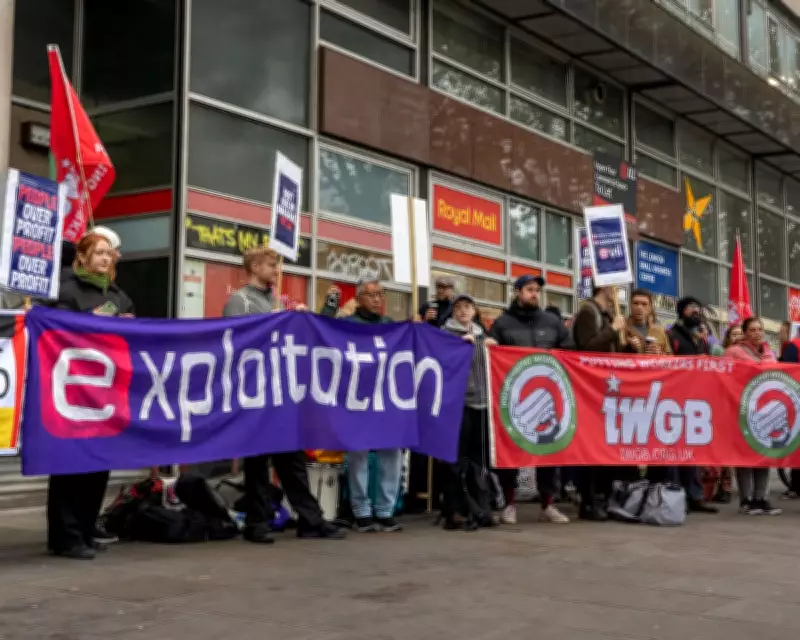
The Independent Workers Union of Great Britain (IWGB) is supporting the claim, with its president, Alex Marshall, criticising the government's approach to gig economy regulation. "This case underscores the failure to address injustices in the gig economy," Marshall said. "Companies are still allowed to opt out of basic workers' rights, leaving many without fair pay or protections."
Company Response and Ongoing Litigation
In response to the tribunal, an eCourier spokesperson stated that the company is unable to comment on ongoing litigation but noted that couriers have the option to engage as workers or self-employed contractors. "Most have preferred the independent contractor arrangement," the spokesperson added, though this claim is contested by the drivers involved in the case.
The employment tribunal, scheduled for later this year, could have far-reaching implications for the courier industry and gig economy at large. If successful, it may lead to improved working conditions for drivers and set a new standard for employment classification in similar sectors.
This dispute follows earlier protests by eCourier strikers and union representatives outside a Royal Mail delivery office in Whitechapel, east London, in November 2024, highlighting ongoing tensions over workers' rights in the delivery industry.






